
Kevin Warsh gives his first Jackson Hole speech Friday with markets split on a rate hike — and a president still demanding cuts
The new Fed chair walks into the Tetons caught between three of his own policymakers who voted to raise rates, a bond market that just pushed 30-year yields to a 19-year high, and a White House that expected him to cut. Wall Street puts the odds of a September cut at roughly 1 percent.
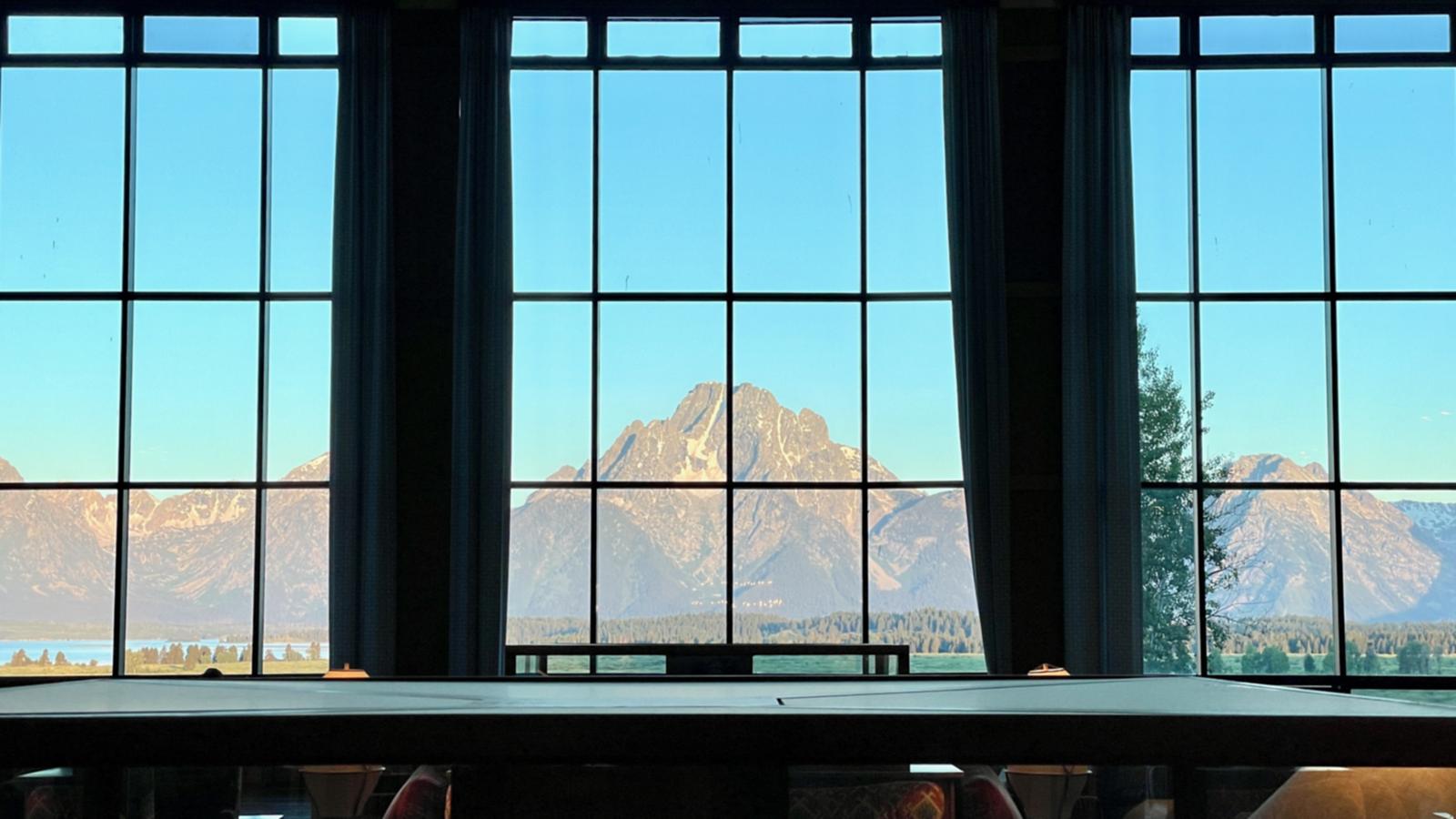
Kevin Warsh will step to the lectern at Jackson Lake Lodge on Friday morning to deliver the most closely parsed speech of his young chairmanship — his first Jackson Hole keynote as head of the Federal Reserve, 19 days before a rate decision that Wall Street genuinely cannot call.
The Kansas City Fed's annual symposium in Grand Teton National Park, which runs August 27–29 this year under the theme "Financial Innovation: Implications for Payments and Policy," has long been the stage where a Fed chair sends the clearest signal about what comes next. Ben Bernanke teed up quantitative easing here. Jerome Powell used it to declare, in three different years, three different battles. What makes the 2026 edition remarkable is the direction of the suspense.
For most of the past year, the assumption ran one way. President Trump had spent months attacking the Fed for keeping rates too high — in July he called the board "hostile" and said it was "doing the wrong thing" — and in Warsh he finally installed a chair of his own choosing. Rate cuts, the thinking went, were a matter of time. The market has priced in something close to the opposite. As of Friday, fed funds futures put the odds of a September cut at roughly 1 percent — and the odds of a rate hike at anywhere from 28 to 39 percent, depending on the venue and the day.
The first three-way dissent in a decade
The current target range of 3.50 to 3.75 percent is where Powell left it. His Fed cut a quarter point three times — in September, October and December of 2025 — and the committee has held at every meeting since. What changed underneath the hold is the committee's center of gravity.
Warsh was confirmed 54–45 on May 13, the closest and most partisan Fed chair confirmation of the modern era, with Pennsylvania Sen. John Fetterman the lone Democrat in favor. He was sworn in May 22 as the 17th chair. Powell, whose chair term simply expired, kept his separate board seat, which runs to 2028 — an awkward arrangement with little precedent in recent decades.
At Warsh's first meeting in June, the committee voted unanimously to hold, and the new chair's fingerprints were immediately visible: the post-meeting statement was dramatically shortened, and the language leaning toward future easing was stripped out. The projections told the sharper story. Nine of 18 policymakers penciled in at least one rate increase by the end of 2026; six saw two.
In July the fight came into the open. The committee voted 9–3 to hold, with Dallas Fed President Lorie Logan, Cleveland's Beth Hammack and Minneapolis's Neel Kashkari all dissenting in favor of a quarter-point hike — the first time three policymakers dissented in the same direction since September 2016. Warsh, notably, did not talk the dissent down. He called it a "good family fight" and rejected the suggestion that holding rates amounted to a pause: "I wouldn't characterize what we did as anything like a pause. I would characterize what we did as a rigorous review of the economic situation."
There is no soft implicit target, not on this committee's watch.
That line, delivered at the July press conference, was aimed at anyone who suspects the Fed will quietly settle for inflation above 2 percent. After more than five years above target, it is the closest thing the Warsh Fed has to a mission statement.
An economy pulling in two directions
The case for the hawks arrived on August 12: consumer prices rose 3.4 percent in the year through July, with core inflation at 2.5 percent — both down a tenth from June, but still well above target, with shelter driving about two-thirds of the monthly increase and the energy-price shock from this year's Middle East conflict still working through the pipeline.
The case against them arrived five days earlier. July payrolls fell by 23,000 — against expectations of an 83,000 gain — dragged down by a 53,000 drop in government jobs, and the prior two months were revised down by a combined 103,000. The three-month average gain is now just 20,000. The unemployment rate ticked down to 4.1 percent, but for the wrong reason: the labor force shrank by 264,000, and participation fell to 61.4 percent, the lowest since February 2021. Wage growth, at 3.2 percent, is the slowest since May 2021.
That report knocked the hike trade back hard. Goldman Sachs now calls a September increase "very unlikely," expects the Fed to hold through the end of 2026, and has pushed its forecast for the next cut into 2027. A committee staring at above-target inflation and a stalling labor market at the same time has no good options — only degrees of uncomfortable ones.
The bond market votes early
Whatever the committee decides in September, the long end of the Treasury market has already cast its ballot. The 30-year yield surged to about 5.31 percent on Monday, its highest level since 2007, part of a global selloff in long-dated government debt fueled by sticky inflation, heavy issuance, deficit worries and a rising term premium — the extra compensation investors demand for holding long bonds when they doubt the policy path.
The administration's response raised its own questions. On August 19, Treasury Secretary Scott Bessent expanded buybacks of long-dated Treasurys in an effort to pull yields down — a maneuver economists warned edges fiscal policy onto the Fed's territory and could shift government borrowing toward short-term bills. Gold, the traditional refuge when confidence in policy wavers, hit $4,569.40 an ounce this week, a fifth straight weekly gain. Stocks closed Friday higher — the Dow up 518 points, the S&P 500 and Nasdaq each up 0.4 percent — but all three major indexes still posted weekly losses.
Three audiences, one speech
Hanging over all of it is the relationship between the chair and the president who picked him. Bloomberg reported this month that Trump has spoken with Warsh repeatedly since May, on everything from the economic fallout of the Iran conflict to artificial intelligence; on August 10, Trump said he had spoken to Warsh only once, "briefly" — contradicting his own advisers. Senate Democrats have demanded a full accounting of the calls. Every conversation, disclosed or not, feeds the same market anxiety now visible at the long end of the yield curve: whether the Fed's decisions are still entirely its own.
Warsh has said he wants Friday's speech to "frame the big questions" rather than get "caught up in the myopic" — Fed-speak for: do not expect a September verdict from the podium. But he will be speaking to three audiences at once. His own committee, openly split for the first time in a decade. A White House that believes it was promised easier money. And a bond market charging the highest long-term rates in 19 years partly because it is no longer sure who is in charge of fighting inflation. For a chair 98 days into the job, saying nothing about September may itself be the loudest thing he can say.
Market-implied rate probabilities cited in this article are as of Friday, August 21, and move daily; figures are drawn from CME fed funds futures and prediction-market pricing reported by CNBC and Bloomberg.