
Nvidia signed a $105 billion guarantee so OpenAI can lease an Ohio data center. The bond market spent the week repricing what that makes Nvidia
The chipmaker's stock fell four straight sessions — shedding roughly $190 billion in value — as 30-year Treasury yields hit their highest since 2007 and credit investors studied a filing that turns the world's most valuable company into the AI boom's guarantor of last resort. Earnings arrive Wednesday.
The deal Nvidia announced on Monday was, by the numbers, the largest credit commitment any technology company has ever made. Under a 20-year lease arrangement disclosed in an SEC filing, OpenAI will occupy the PORTS-Pike Technology Campus in Pike County, Ohio — a data-center complex built and operated by SB Energy, targeting some 8 gigawatts of capacity — and Nvidia will stand behind it with an aggregate payment obligation capped at $105 billion, per CNBC's reading of the 8-K. The guarantees back an initial 4.25 gigawatts of compute, with an option for 3.75 more; the first 800 megawatts are expected online in 2028; Nvidia is the exclusive chip supplier for the initial phase and is separately investing $1.5 billion in SB Energy itself.
Ohio, for its part, got the sales pitch version: 35,000 construction jobs and 2,500 permanent positions, per OpenAI's announcement — an Appalachian county repurposed as a national AI campus. The PORTS site itself carries its own symbolism, sitting on land once occupied by a Cold War uranium enrichment plant. The infrastructure of one strategic technology race, handed to the next one.
The market's response was not celebration. Nvidia fell Tuesday, Wednesday, Thursday — four consecutive declines from Monday's close near $225, cumulatively about 3.6%, roughly $190 billion in market value — underperforming the Nasdaq in a week when a global bond selloff was already punishing everything with long-dated cash flows. The 30-year Treasury touched 5.34% on Tuesday, its highest since 2007; Japan's long bond hit an all-time high. For a stock trading at roughly 33 times trailing earnings — a 3% earnings yield against 5.3% on the long bond — the arithmetic of discounting got harder all by itself. The guarantee gave the selling a thesis.
From chipmaker to counterparty
The structure matters more than the headline number. These are residual-value guaranties supporting lease and power payments — Nvidia pays only if OpenAI defaults — not a funded loan. Nvidia's defenders note the company carries just $8.5 billion of debt against $10.6 billion of cash, and that $105 billion is roughly two quarters of its operating cash flow. Jensen Huang, in a blog post titled "Securing the Infrastructure of Intelligence," met the criticism head-on: "OpenAI will pay the lease." By his own accounting, OpenAI's commitments now amount to roughly $600 billion of Nvidia compute through 2030.
But the path to Monday's number tells its own story about nerves. Bloomberg reported a ~$250 billion backstop under discussion in late July — a report that knocked Nvidia 5% in a day, briefly handed Apple back the most-valuable-company crown, and sent Nvidia's five-year credit-default swaps to a record. By mid-August the Wall Street Journal had the figure below $120 billion; the signed deal landed at $105 billion, $145 billion smaller than first reported. Fortune framed the shrinkage itself as a signal: someone in the negotiation was worried about how much artificial demand for chips a guarantee can manufacture before it stops being demand.
It is worth being precise about what shrank. The chips OpenAI intends to buy did not get cheaper, and the Ohio campus did not get smaller — the option structure covers the same 8 gigawatts. What got negotiated down was how much of the risk Nvidia formally owns. That is the variable every mega-deal in this cycle now turns on, from Broadcom's Anthropic financing to Google's Marvell warrants: not whether the AI buildout happens, but whose signature backs it when the music slows.
You buy from me, I invest in you, and everything's fine unless one of us has a problem — in which case both of us have a problem.
That is Bernstein's Stacy Rasgon's standing description of circular AI financing, and his note after Monday's announcement predicted the deal would "clearly fuel" those concerns. The circularity critique has followed Nvidia since its September 2025 letter of intent to invest up to $100 billion in OpenAI alongside 10 gigawatts of chip deployments. What is new in 2026 is who is doing the worrying: Nvidia's CDS — an instrument that barely traded a year ago — has become, in Yahoo Finance's phrase, the talk of Wall Street, quoted at levels that make no sense for a company with net cash unless the market is pricing the ecosystem's contingent liabilities rather than Nvidia's balance sheet. Which, of course, it is.
Buying the builders
The week's other Nvidia story pointed at where the money goes next. Per reporting from Newcomer and The Information, Nvidia struck a $6 billion licensing deal with Poolside — the AI coding-model startup — for its Model Factory training platform, plus a $1 billion investment at a $12 billion pre-money valuation, with about 109 Poolside employees receiving Nvidia job offers. The founders insisted, in an investor letter, that "this is not an acquisition and it is not an acquihire" — a denial that describes the transaction more precisely than any confirmation could. Bloomberg separately reported Huang met the founder of Rebellions, Korea's inference-chip startup, about a possible collaboration, investment or acquisition. The pattern is consistent: Nvidia is no longer just selling the picks and shovels; it is financing the mines, guaranteeing their leases, and hiring the miners.
Wednesday's bar
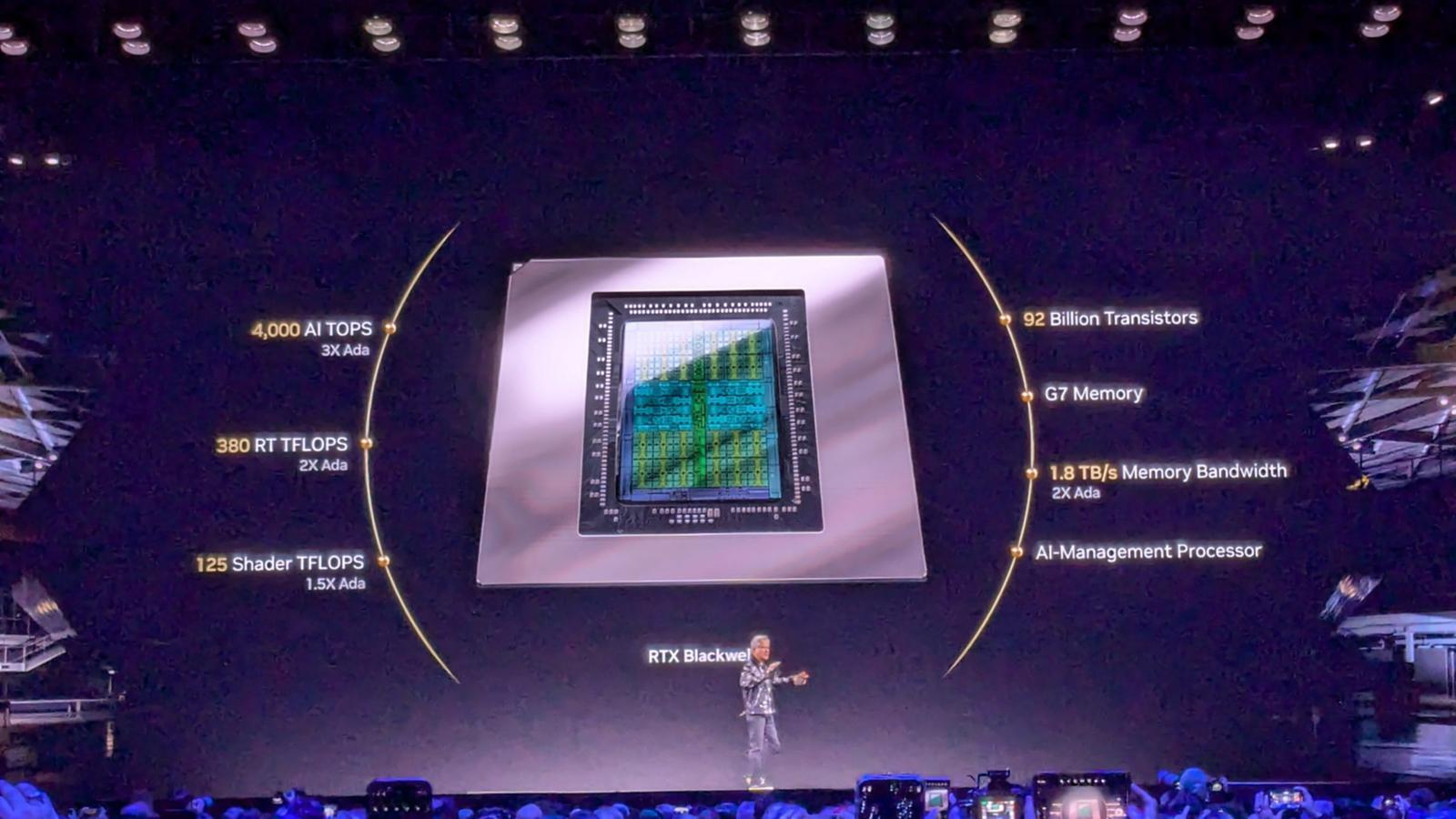
All of it lands on the desk ahead of earnings this Wednesday, August 26. Consensus expects roughly $92 billion in revenue, up about two-thirds from a year ago, as the Blackwell ramp continues from last quarter's $81.6 billion. Bank of America's Vivek Arya reiterated his buy and $350 target into the print, calling the valuation compelling. But the revenue number may matter less than the disclosures around it: how much vendor financing, how many guarantees, how much of the demand curve Nvidia is now underwriting itself. Those lines, not the beat, are what the credit market will read first.
There is precedent for the anxiety being wrong. Vendor financing has a disreputable history — Lucent and Nortel wrote the cautionary chapters in 2001 — but it also built the railroads and electrified the grid, and the companies doing the financing this time carry cash positions those firms never had. The distinction that matters is whether the guaranteed demand is real when it arrives. On that, Nvidia holds better evidence than its critics: every quarter for three years, the compute has sold out.
The deeper question the week posed has no line item. Nvidia's margin structure — the most profitable large-scale hardware business ever built — was constructed on scarcity: customers begged for allocation and paid cash. A company that must guarantee $105 billion of a customer's lease obligations to secure its biggest order is describing a different market, one where demand at this scale exists only if the supplier helps finance it. That may still be a spectacular business. It is not the same business. Four red days and a record CDS quote are the sound of investors beginning to price the difference — two trading days before Jensen Huang has to put numbers on it.
TNN Analysis is Torbrook News Network's original-reporting desk. Deal terms are from Nvidia's SEC Form 8-K as reported by CNBC, Axios and Fortune; the Poolside arrangement is reported by Newcomer and The Information and unconfirmed by the companies. Market figures are as of Thursday's close and drawn from Bloomberg, Reuters, CNN Business and TheStreet as cited.