
Disney hands the CEO job to theme-parks chief Josh D'Amaro as streaming finally turns profitable
After a decade of failed successions, Bob Iger finally handed Disney to Josh D'Amaro — the man who runs the rollercoasters. The choice says everything about what Disney now believes it is: streaming finally profitable, the box office back on top, sports economics unproven, and the safest money in entertainment coming from churros and cruise ships. An analysis of the handover and the company underneath it.
Every figure in this article is drawn from Disney's earnings releases and SEC filings, or from reporting by CNBC, Variety, Deadline, The Hollywood Reporter, CBS News, NPR, Forbes and Disney's own announcements as attributed. Sections marked as analysis are identified as such.
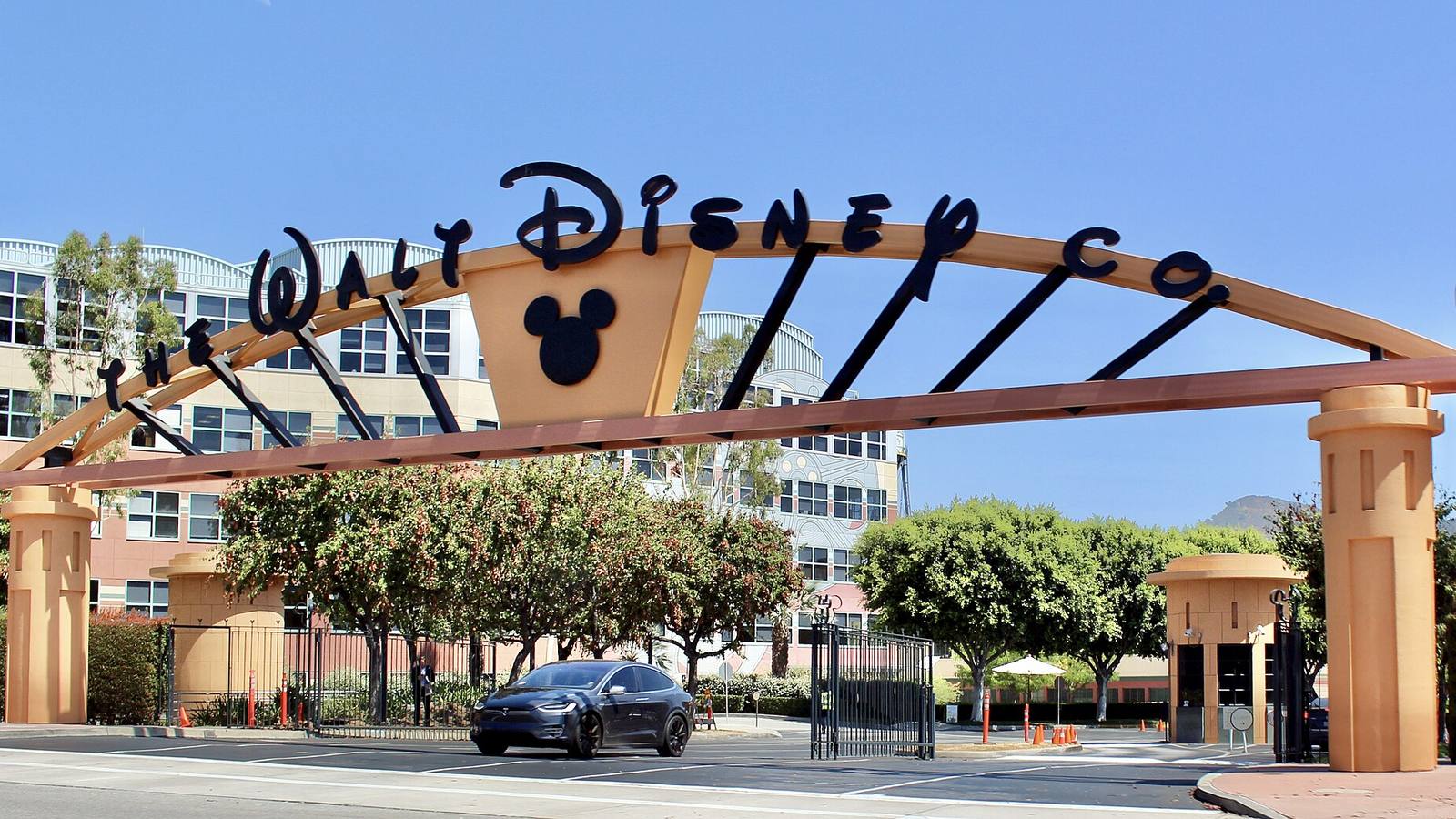
Bob Iger's last great project at Disney was finding someone to replace Bob Iger, a task at which he had famously failed once already. On February 3 the company announced its answer: Josh D'Amaro, the 28-year Disney veteran who ran the theme parks, became chief executive on March 18. Iger stays as a senior adviser and board member through the end of 2026. Dana Walden, the television executive many expected to win, received a new enterprise-wide role as president and chief creative officer — reporting to D'Amaro.
"Josh D'Amaro is an exceptional leader and the right person to become our next CEO," Iger said in the announcement. The more interesting statement was the unspoken one: after a decade in which Disney's wars were fought over streaming, franchises and cable decline, the board handed the Magic Kingdom to the man whose division sells admission to it.
The company he was handed
By the numbers, D'Amaro inherited Disney at its healthiest in years. The June quarter, reported August 5: revenue $25.2 billion, up 7 per cent, with total segment operating income up 21 per cent to $5.6 billion. His old division did the heavy lifting — Experiences posted a record quarter, nearly $10 billion of revenue and $3.0 billion of operating income — while Entertainment's operating income jumped 64 per cent.
The bottom line needs one caveat: GAAP earnings per share fell 48 per cent on one-time charges, while the adjusted figure rose 28 per cent to $2.06 — a divergence worth noting whenever Disney's headline numbers appear. Guidance for the full year: roughly 12 per cent adjusted earnings growth and buybacks raised to at least $9 billion. Fiscal 2025 closed with $94.4 billion of revenue and $17.6 billion of segment operating income, up 12 per cent.
Streaming finally pays — and goes quiet
The transformation Iger promised and never quite delivered arrived on his way out the door. Disney's streaming operation, a money pit for half a decade, earned $712 million in the June quarter — roughly double a year earlier — at a 12.9 per cent margin, on track for its first double-digit-margin year. The engine turned just as the company turned off the lights: Disney stopped reporting subscriber counts this fiscal year, following Netflix. The final disclosed figures, from last November: 132 million Disney+ subscribers, 196 million including Hulu.
ESPN's streaming service — launched August 21, 2025, at $29.99 a month for the full network — is the harder test. It began life with roughly 25 million subscribers migrated from the old ESPN+, and Iger called the launch "a real success," noting 80 per cent of new sign-ups took the bundled offer. But Disney has since stopped reporting ESPN streaming metrics too, and the sports segment's operating income fell 17 per cent last quarter as NBA rights costs ramped faster than the revenue meant to cover them. The economics of moving ESPN from the cable bundle to the open market remain, on the published numbers, unproven.
The leverage battles that transition provokes played out in public last autumn: Disney's channels went dark on YouTube TV for two weeks — through an election night — before a November deal restored them. The notable concession ran the other way: YouTube TV's base subscribers get ESPN's full streaming service included by the end of 2026, at no extra charge. It is hard to sell a $29.99 subscription the distributor gives away.
The box office turned back on
The studio, meanwhile, had its best run since the pandemic. Disney finished 2025 as the number-one studio globally at roughly $6.6 billion — its first $6 billion year since COVID — powered by *Zootopia 2*, which went on to gross nearly $1.9 billion, the biggest Hollywood animated film ever, *Lilo & Stitch* at just over a billion, and the Disney-distributed *Avatar: Fire and Ash* at roughly $1.5 billion. The failures were real but survivable: *Snow White* grossed $205 million against a budget reported near $250 million. This year, *Toy Story 5* has already crossed a billion dollars — 2026's biggest film so far — with *Avengers: Doomsday* waiting for December.
The AI whiplash
No Disney storyline of the past year swung harder than artificial intelligence. In June 2025 Disney sued the image generator Midjourney for copyright infringement. Six months later it executed a full reversal: a three-year licensing agreement giving OpenAI's Sora video app access to more than 200 Disney, Pixar, Marvel and Star Wars characters — talent likenesses excluded — alongside a $1 billion equity investment in OpenAI. It was the first major Hollywood IP licence for generative video, and it drew immediate criticism from parts of the creative community.
Then the ground moved again: OpenAI shut the Sora app down in March to cut costs, with Bloomberg-attributed reporting indicating the Disney partnership wound down alongside it. Disney has not detailed what survives of the arrangement. The sequence — sue the technology, license to it, watch the product vanish — compressed the entire industry's AI confusion into fifteen months.
Analysis: what D'Amaro's Disney is for
The following section is analysis, drawn from the reported facts above.
Choosing a parks operator was not a sentimental decision; it was a capital-allocation statement. Experiences produced about $36 billion of revenue in fiscal 2025 and is the destination of Disney's $60 billion, ten-year expansion plan — new lands at every domestic park, a growing cruise fleet, and an Abu Dhabi resort structured so that a partner pays to build it while Disney collects royalties: theme-park economics with software margins. Add buybacks of $9 billion and the picture is a company that has decided its moat is physical, experiential and licensed — not the streaming wars' arms race.
The risks live where the disclosures stopped. Investors can no longer see subscriber counts, ESPN streaming numbers, or the line between sports costs and sports revenue with any precision — a retreat from transparency that arrives, not coincidentally, exactly as those numbers became the hard ones. And the one business D'Amaro cannot run like a park is the one Iger left him unfinished: turning the world's most valuable sports brand into a profitable direct-to-consumer product while the cable bundle that funded it dissolves.
Still, the handover itself deserves to be marked. Iger leaves with streaming profitable, the studio on top, the parks at records, and — on the second attempt — a successor the board actually chose with conviction. The kingdom D'Amaro inherits is in better order than the one Iger reclaimed in 2022. Whether a company built on stories is best led by the man who builds the places people visit them — that is the experiment now under way in Burbank.
Sources
- Disney press release, February 3, 2026 — Josh D'Amaro named CEO effective March 18, 2026; Iger senior adviser and board member through December 31, 2026; Dana Walden appointment; Iger and D'Amaro quotes; CNBC and Variety coverage.
- Disney Q3 FY2026 earnings release and Form 8-K, August 5, 2026 — revenue $25.2B (+7%), segment OI $5.6B (+21%), Experiences ~$10B revenue and $3.0B OI, Entertainment OI +64%, streaming OI $712M at 12.9% margin, Sports OI −17%, GAAP EPS $1.51 vs adjusted $2.06, FY guidance including ≥$9B buybacks; CNBC coverage.
- Disney FY2025 results, November 13, 2025 — revenue $94.4B, segment OI $17.6B, final subscriber disclosures (132M Disney+; 196M with Hulu); Variety — end of subscriber reporting.
- ESPN Press Room, August 2025 — DTC launch and pricing; Deadline, November 2025 — Iger's "real success" remarks and bundle attach rate; Front Office Sports, May 2026 — end of ESPN streaming metrics.
- Variety, CBS News and Forbes, October–November 2025 — the YouTube TV blackout (October 30–November 14) and settlement terms, including ESPN Unlimited for base subscribers by end-2026.
- Deadline, December 2025 — Disney #1 studio at ~$6.6B; Variety — 2025 winners and losers including Snow White; Variety, July–August 2026 — Toy Story 5 past $1B; later-run Zootopia 2 (~$1.9B) and Avatar: Fire and Ash (~$1.5B) figures per 2026 trade reporting.
- Disney and OpenAI announcements and CNBC/NPR, December 11, 2025 — the Sora character licence, $1B equity investment, talent-likeness exclusions; CNBC/Bloomberg, March 2026 — Sora app discontinued; partnership wind-down per Bloomberg-attributed reporting, not company-detailed.
- The Hollywood Reporter, 2023, and Disney earnings commentary, 2026 — the $60B/10-year Experiences plan; Disney announcement, May 2025, and The National/Forbes, 2026 — the Abu Dhabi royalty-model resort.
Figures are in U.S. dollars as reported; Disney's fiscal year ends in late September. GAAP and adjusted earnings diverged materially in the June quarter due to one-time charges. Late-run box-office totals are trade-press figures and may settle modestly higher. The status of the OpenAI arrangement after Sora's shutdown is per press reporting; Disney has not itemised it.