
Meta's revenue rose 28% — and its profit fell 14%. The gap is Zuckerberg's superintelligence bet
Meta's revenue grew 28 per cent last quarter. Its profit fell 14. In between sits everything Mark Zuckerberg is spending to chase what he calls personal superintelligence: a capital budget nearing $145 billion, hundred-million-dollar hires, eight thousand layoffs — and a courtroom in Oakland where, this week, the bill for the last era came due.
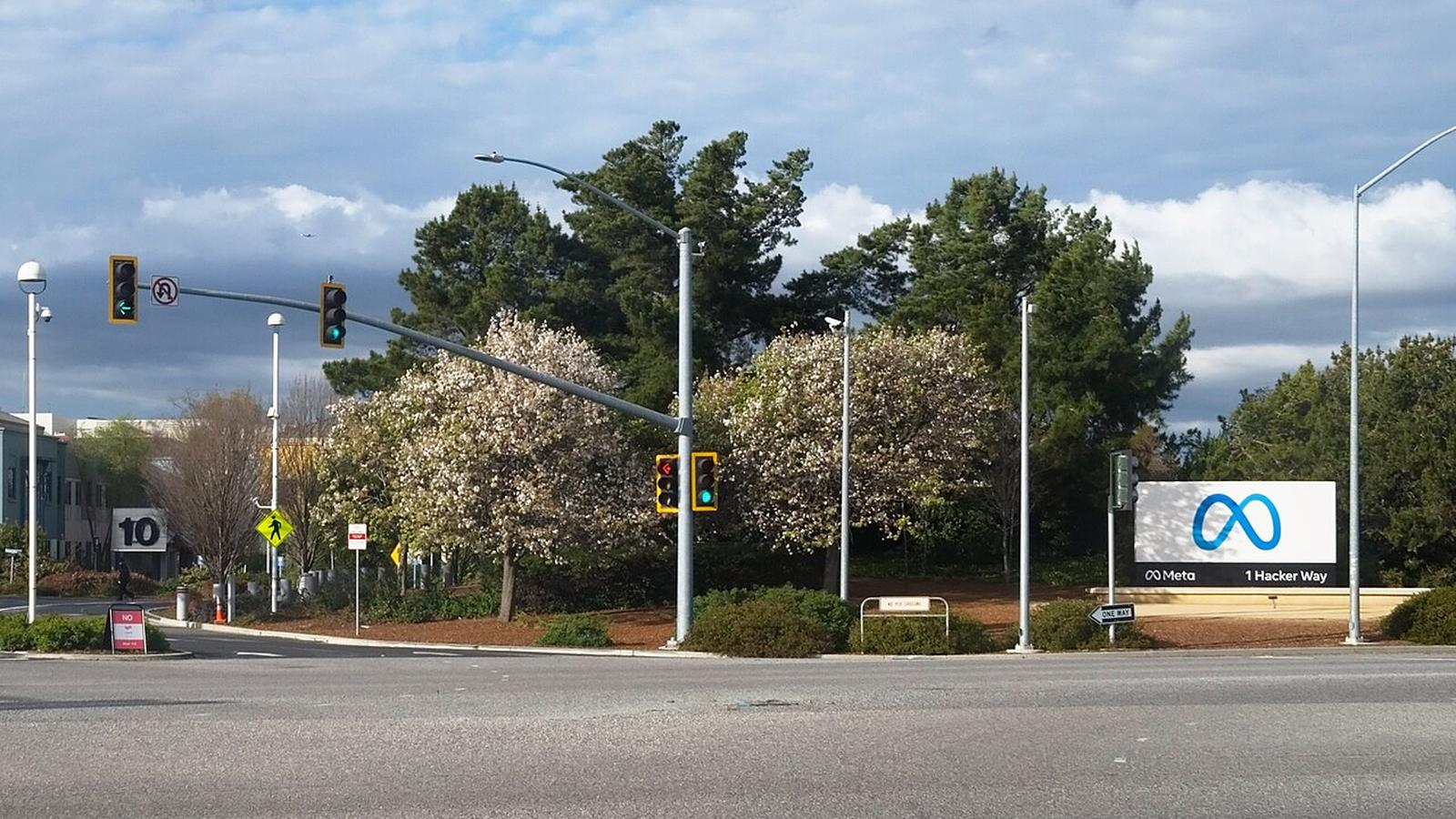
Every figure in this article is drawn from Meta's earnings releases and SEC filings, or from reporting by CNBC, Bloomberg, NPR, Axios, CNN, Al Jazeera, TechCrunch and the Washington Post as attributed. Sections marked as analysis are identified as such.
Two numbers from Meta's July earnings report tell the whole story, provided you read them together. Revenue for the second quarter rose 28 per cent, to $60.8 billion — almost all of it advertising, growing faster than it did when the company was half this size. Net income fell 14 per cent, to $15.8 billion.
A business does not grow 28 per cent and earn less by accident. It happens by decision. The gap between those two numbers is the price of Mark Zuckerberg's superintelligence project, and everyone connected to Meta — shareholders, employees, the open-source community, arguably the courts — is paying a share of it.
The size of the bill
Meta spent $31.1 billion on infrastructure in the quarter — servers, data centres, power. Full-year capital spending guidance was raised in July to $130 to $145 billion, roughly double the $72.2 billion of 2025, itself a record. Total expenses are guided to as much as $169 billion. Reality Labs, the augmented- and virtual-reality division, lost another $4.6 billion in the quarter, on its way from a $19.2 billion loss in 2025. And the quarter absorbed $2.4 billion in legal charges and $1.18 billion in severance — more on both below.
The scale of the ambition was captured, inadvertently, at a White House dinner last September, where a hot microphone caught Zuckerberg telling the president his US spending commitment — at least $600 billion through 2028 — with the aside: "I wasn't sure what number you wanted to go with." The pledge was later formalised. The candour was the memorable part.
Buying a lab, one signing bonus at a time
The spending is not only concrete and silicon. In June 2025 Zuckerberg created Meta Superintelligence Labs, paid $14.3 billion for 49 per cent of Scale AI, and installed its 28-year-old founder Alexandr Wang as Meta's chief AI officer. The recruiting drive that followed reset the market for AI researchers: OpenAI's Sam Altman claimed Meta dangled signing bonuses of up to $100 million; Bloomberg reported Apple's foundation-models chief Ruoming Pang was poached with a package above $200 million.
The human cost landed elsewhere on the payroll. In October 2025 Wang's reorganisation cut about 600 AI-unit roles. Then, on May 20, 2026, Meta cut roughly 8,000 jobs — about 10 per cent of the company — its largest layoffs since 2022, explicitly framed by reporting as funding the AI push, with some 7,000 remaining employees redirected into new AI engineering pods. Headcount at midyear was 75,472, down more than three thousand from December. Reporting has also described friction at the top — a parallel applied-AI organisation under the chief technology officer, outside Wang's command — though Meta has not confirmed that account.
Along the way, the company that made open-source AI a cause has gone quiet about it. Llama 4's largest model was delayed and never publicly released; Zuckerberg said last July that Meta "likely won't open source all" of its superintelligence work; subsequent reporting describes a closed frontier model in development. The open-weights champion now behaves, increasingly, like everyone else.
One courtroom exits, another opens
Meta's legal year has been a study in whiplash. In November, Judge James Boasberg handed the company a decisive victory in the Federal Trade Commission's antitrust case, ruling after a six-week trial that "Meta holds no monopoly in the relevant market" — Instagram and WhatsApp stay, and the decade-defining threat of a breakup is gone.
This week, the next threat arrived. On August 17 and 18, opening arguments began in Oakland in the largest social-media addiction trial yet — state attorneys general against Meta, with roughly 1,600 related cases pending behind it. The run-up has not been encouraging for the company: in March, a Los Angeles jury ordered Meta and Google to pay $6 million to a woman who argued the platforms addicted her as a child — the first verdict of its kind — and in May the industry settled the first school-district case before trial. Meta's $2.4 billion quarterly legal charge went unitemised; the company has not said what it covers.
What the money is buying
It is not buying users — there are almost none left to buy. Daily active people across Meta's apps averaged 3.60 billion in June, up 3 per cent: nearly half of humanity, growing at the rate of humanity. Revenue growth now comes almost entirely from better ad targeting and pricing, which is to say from AI — the one place where the spending already, demonstrably pays.
The clearest new product win is on faces rather than in feeds: EssilorLuxottica sold more than 7 million Meta AI glasses in 2025, triple the two prior years combined, with capacity targeted at 10 million a year and a new $299 jointly branded line launched in June. It is Meta's first genuinely successful hardware category — and a fraction of a rounding error against the capital budget.
Zuckerberg's own framing, from the July release: "AI is accelerating our core business today, powering our next generation of products, and opening the door to entirely new enterprise opportunities." In January he was more direct about the destination: "I'm looking forward to advancing personal superintelligence for people around the world in 2026."
Analysis: who pays, and when the answer arrives
The following section is analysis, drawn from the reported facts above.
Every moonshot needs a funding source, and Meta's is the least ambiguous in tech: an advertising machine attached to 3.6 billion people, growing 27 per cent, with no meaningful competitor for its inventory. That machine is why Meta can cut profit 14 per cent on purpose and face no rebellion — the money is real, recurring and its own.
But the tax structure is worth naming. Shareholders pay in forgone earnings. Eight thousand employees paid with their jobs in a year of record revenue — humans traded, quite literally, for GPUs. The open-source community pays in retreating access to frontier models it was promised. And unlike Microsoft, whose AI bet now shows a $678 billion contracted backlog, or Alphabet, whose cloud grows 82 per cent, Meta's superintelligence project has no invoice to point to — its returns are a thesis about products that do not yet exist, funded on the credit of products that cannot stop working.
That is not a criticism so much as a description of the wager's purity. Meta is the only company spending at this scale on AI with no cloud business to sell it through. If personal superintelligence becomes a product, the ad machine will have financed the century's biggest consumer franchise. If it does not, 2026 will be remembered as the year the tax was collected and the goods never shipped. Either way, the bill is being paid now, and the receipt is dated later.
Sources
- Meta Q2 2026 earnings release, July 29, 2026 — revenue $60.8B (+28%), advertising $59.4B, net income $15.8B (−14%), Reality Labs loss $4.6B, capex $31.1B, FY2026 capex guidance $130–145B, expense guidance $165–169B, $2.4B legal and $1.18B severance charges, DAP 3.60B, headcount; Zuckerberg quote.
- Meta Q4/FY2025 earnings release, January 28, 2026 — fiscal 2025 revenue $201.0B, net income $60.5B, Reality Labs FY loss $19.2B, capex $72.2B; Zuckerberg superintelligence quote.
- CNBC, June 30, 2025 — Meta Superintelligence Labs memo; Scale AI $14.3B for 49%, Alexandr Wang appointment. Bloomberg, July 9, 2025 — Ruoming Pang package above $200M; Altman's $100M signing-bonus claim as reported.
- Axios, October 22, 2025 — ~600 AI-unit cuts. NPR and Al Jazeera, May 20, 2026 — ~8,000 layoffs (~10%), AI-pod redeployments. The parallel AI-org account is attributed to press reporting and unconfirmed by Meta.
- TechCrunch, July 30, 2025 — Zuckerberg on not open-sourcing all superintelligence models; subsequent closed-model development per press reports.
- CNBC and Washington Post, November 18, 2025 — FTC v. Meta ruling and Boasberg quote.
- CNN and NPR, August 17–18, 2026 — opening arguments in the state attorneys-general addiction trial; ~1,600 pending cases; PBS, March 2026 — the $6M Los Angeles verdict; May 2026 school-district settlement per press reports.
- Axios, September 5, 2025, and Yahoo Finance/formal follow-up, October 2025 — the $600B U.S. commitment and hot-mic remark.
- CNBC, February 11, 2026 — EssilorLuxottica: 7M+ Meta AI glasses sold in 2025; June 2026 Meta Glasses launch per company announcements.
Figures are in U.S. dollars as reported. Meta does not itemise its legal charges, and no causal link between the $2.4B charge and any specific litigation is asserted. Internal-organisation accounts and closed-model plans are press-reported, not company-confirmed.