
The Iran war handed Exxon $14.5 billion and Chevron its biggest quarterly profit ever. Now Trump is promising 'economic warfare' that could push oil higher still
America's two oil supermajors are earning at rates unseen since 2022 while gasoline sits at a record $4.10 for late August. With the president preparing what he calls an economic D-Day against Tehran and windfall-tax bills circulating in Congress, the question is no longer whether the war premium is real — it's who gets to keep it.
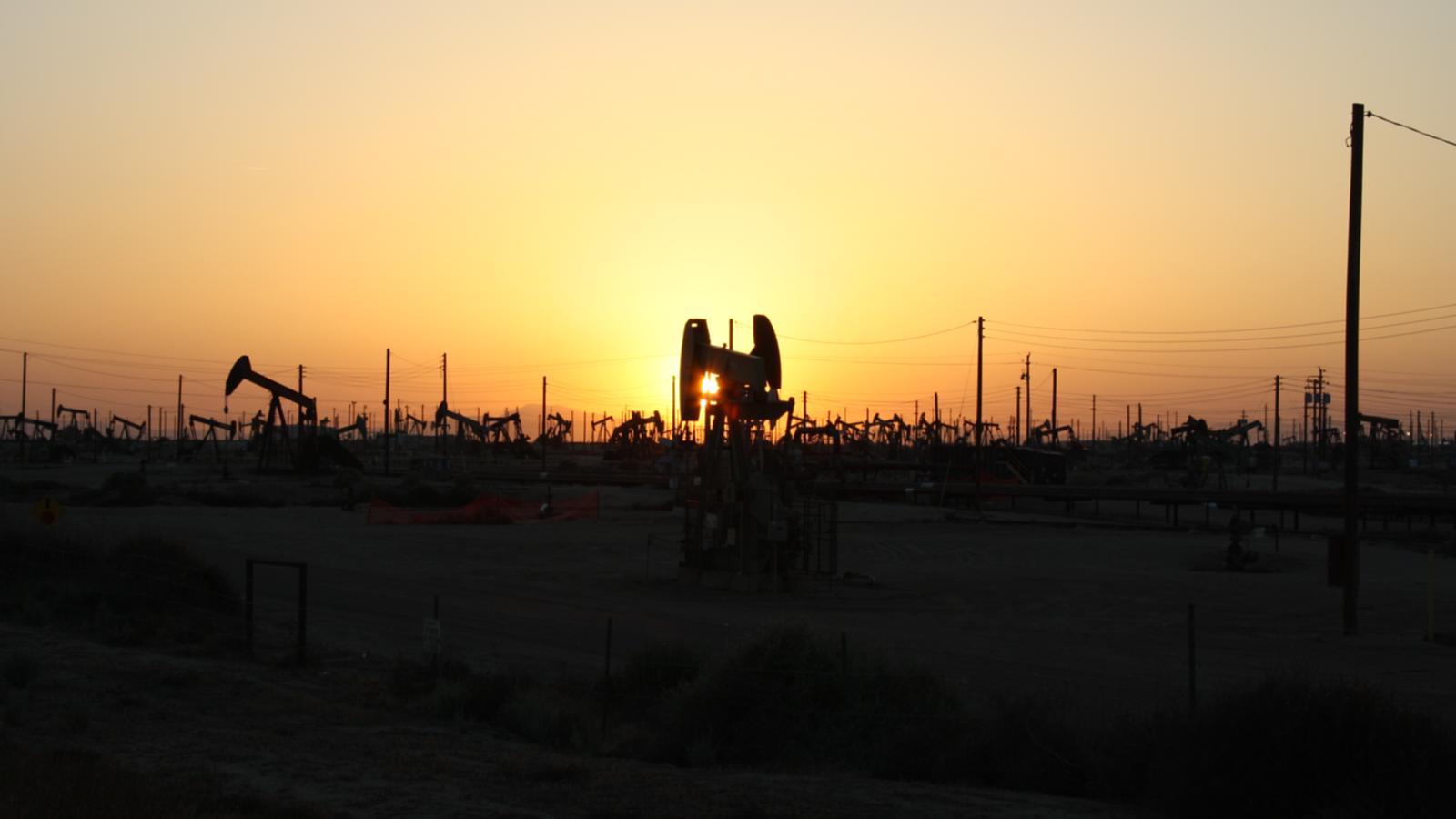
ExxonMobil earned $14.5 billion in the second quarter — more than double a year earlier, its best quarter since the Russia-Ukraine price spike of 2022, and roughly $160 million a day, as CNN Business framed it. Chevron did something rarer: its $12.1 billion quarter, nearly five times the prior year's $2.5 billion, was the largest profit in the company's history. Both numbers were reported on the last day of July. Three weeks later, they are more relevant, not less — because the force that produced them is about to get deliberately stronger.
On Tuesday, President Trump announced on Truth Social what he called the "most crushing economic operation ever" against Iran — "economic warfare and isolation on an unprecedented scale," targeting oil smuggling, swap lines, cash transfers, exchange houses, ship registries and front companies, with penalties threatened against any nation helping Tehran evade sanctions. He has taken to calling the campaign, an extension of the "Operation Economic Fury" sanctions drive underway since April, an "economic D-Day." Treasury Secretary Scott Bessent is due to detail the measures Monday. Markets spent the back half of the week positioning for them: Brent opened Thursday at $91.54 and touched about $95.40 intraday, while WTI climbed past $86, per Trading Economics and Fortune.
The sanctions architecture is aimed at what remains of Iran's shadow trade — the ghost fleet of re-flagged tankers, the exchange houses that settle cargoes in dirham and yuan, the swap arrangements that move Caspian barrels south. On Wednesday the US added new Hezbollah-linked designations as a down payment. Analysts' question for Monday is less whether the measures bite than how much Iranian crude, already reduced to a trickle, is actually left to remove — and whether Washington is prepared to sanction the Chinese buyers who take most of it.
How the premium got into the barrel
The arithmetic of 2026's oil market was set in late February, when US and Israeli strikes on Iran killed Supreme Leader Ali Khamenei and ignited the war. Iran mined the Strait of Hormuz in March; the US ran an aerial campaign to reopen it and imposed a naval blockade in April. At least 17 merchant ships have been damaged in the strait and seven abandoned, and navigation remains unstable. The result, per the International Energy Agency: total OPEC+ output collapsed from 42.8 million barrels a day in February to 33.1 million in May, with the group's spare capacity — concentrated in Saudi Arabia and the UAE — itself trapped behind the same strait. Brent has traded across an extraordinary $40 range this year, spiking as high as $105 on July 23 when a ceasefire broke down.
Refining tightened the screw further. Between the war and Ukrainian drone strikes on Russian refineries, the world has lost an estimated 6 to 7 million barrels a day of refining capacity, analyst Andy Lipow told CNN — which is why product prices have outrun crude and European refining margins set records in August. For American drivers the outcome is a national average of $4.10 a gallon, per AAA — up three cents in a week and the highest ever recorded for this point in the year.
That number is the political center of gravity of this entire story. Sub-$3 gasoline was a first-term applause line for this White House; $4.10 is the kind of figure that shows up in midterm attack ads regardless of which party is running them. It is also, not incidentally, the reason Walmart executives spent Thursday's earnings call talking about customers making trade-offs once fuel crosses $4 — the war premium is now visible in grocery baskets.
Why the money pools in Texas
The war premium flows disproportionately to the two companies whose barrels never touch Hormuz. Exxon's Permian Basin production is running at 1.8 million barrels a day — about 40% of its global output — alongside record volumes from Guyana. Chevron pumps more than a million Permian barrels a day, roughly a quarter of its total. US production overall is holding near its record of about 13.6 million barrels daily, per the EIA. Every dollar of geopolitical risk priced into Brent lands on those barrels as nearly pure margin, without a single ship transiting a war zone.
The shareholders are being paid accordingly. Exxon returned $9.4 billion in the quarter — $4.3 billion in dividends, $5.1 billion in buybacks — on a pace of roughly $37 billion a year. Chevron paid out $6.5 billion between dividends and repurchases, kept its $10-to-20 billion full-year buyback target, and used the windfall to cut debt by a record $8.4 billion in a single quarter — a number its executives deploy, pointedly, against the word 'windfall.'
Demand destruction is not obvious to me at any significant scale.
That was Chevron chief executive Mike Wirth on the July 31 call, per Fortune — a quiet way of saying the high prices are sticking. His Exxon counterpart Darren Woods was more diplomatic: "Ultimately, the world has to resolve the conflict there and get to a stable situation." Until it does, both companies are structurally long instability.
The IEA's August report adds a warning neither CEO volunteered: global observed inventories have been drawing at rates the agency calls unsustainable, and the market's usual shock absorbers — OPEC spare capacity, strategic reserves, refinery flexibility — are all thinner than at any point since 2022. In that configuration, prices respond to headlines with unusual violence in both directions, which is exactly what a $40 annual trading range describes.
The political bill arrives
Washington has noticed. Trump — who scolded both companies on August 3 as "making too much money," telling reporters, "I'll say it loud and clear. I'm not happy about it" — ordered the Justice Department in June to probe price gouging. On the other side of the aisle, the windfall-tax drafts are multiplying, per NPR: Senator Sheldon Whitehouse and Representative Ro Khanna would levy a 50% excise on Brent above its 2025 average of $69; Representative Brad Sherman's Iran War Oil Crisis Windfall Profits Tax Act goes to 100% above $75; and a Wyden-Schumer-Bennet proposal would raise the buyback excise tax from 1% to 25% for large oil companies. None has a clear path in this Congress. All of them get easier to pass every week gasoline stays above $4.
The bind is that the administration's own policy points the other way. Choking off Iran's remaining export channels — the stated goal of Monday's package — removes supply from a market the IEA already describes as running on historically thin spare capacity. Iran's foreign minister, Abbas Araghchi, dismissed the threats — "doubling down on failed policies will only bring further defeat" — but markets are not pricing defiance; they are pricing barrels. The EIA still projects Brent averaging about $85 this quarter before easing toward $69 in 2027 as production recovers, a forecast that treats the premium as war-contingent, not structural. Every escalation postpones the second half of that sentence.
Which leaves the strangest earnings setup in the market. Exxon shares actually dipped on their blowout report; Chevron's rose 2%. Investors understand that these profits are a wasting asset with a peace deal attached — and that the same White House engineering the squeeze reserves the right to be publicly furious at the companies collecting it. For one more quarter at least, the cash will keep arriving at $160 million a day. Who ultimately keeps it — shareholders, drivers or the Treasury — is now a live vote in three different buildings in Washington.
TNN Analysis is Torbrook News Network's original-reporting desk. Figures are drawn from company earnings releases of July 31, 2026, the IEA August Oil Market Report, EIA and AAA data, and reporting by CNBC, CNN Business, Reuters, Bloomberg, Fortune, Al Jazeera and NPR as cited.