
Fifty percent tariffs on Canadian plywood, cement, wine and hockey sticks took effect after midnight Saturday. Carney suspended the talks and said Canada will match them on September 8
The two governments were hours from a deal that would have cut the steel, aluminium and auto tariffs. Then Washington changed the terms. The instrument the administration used is a 1930 statute nobody has needed in decades, and it strips the exemption that has protected North American trade since NAFTA.
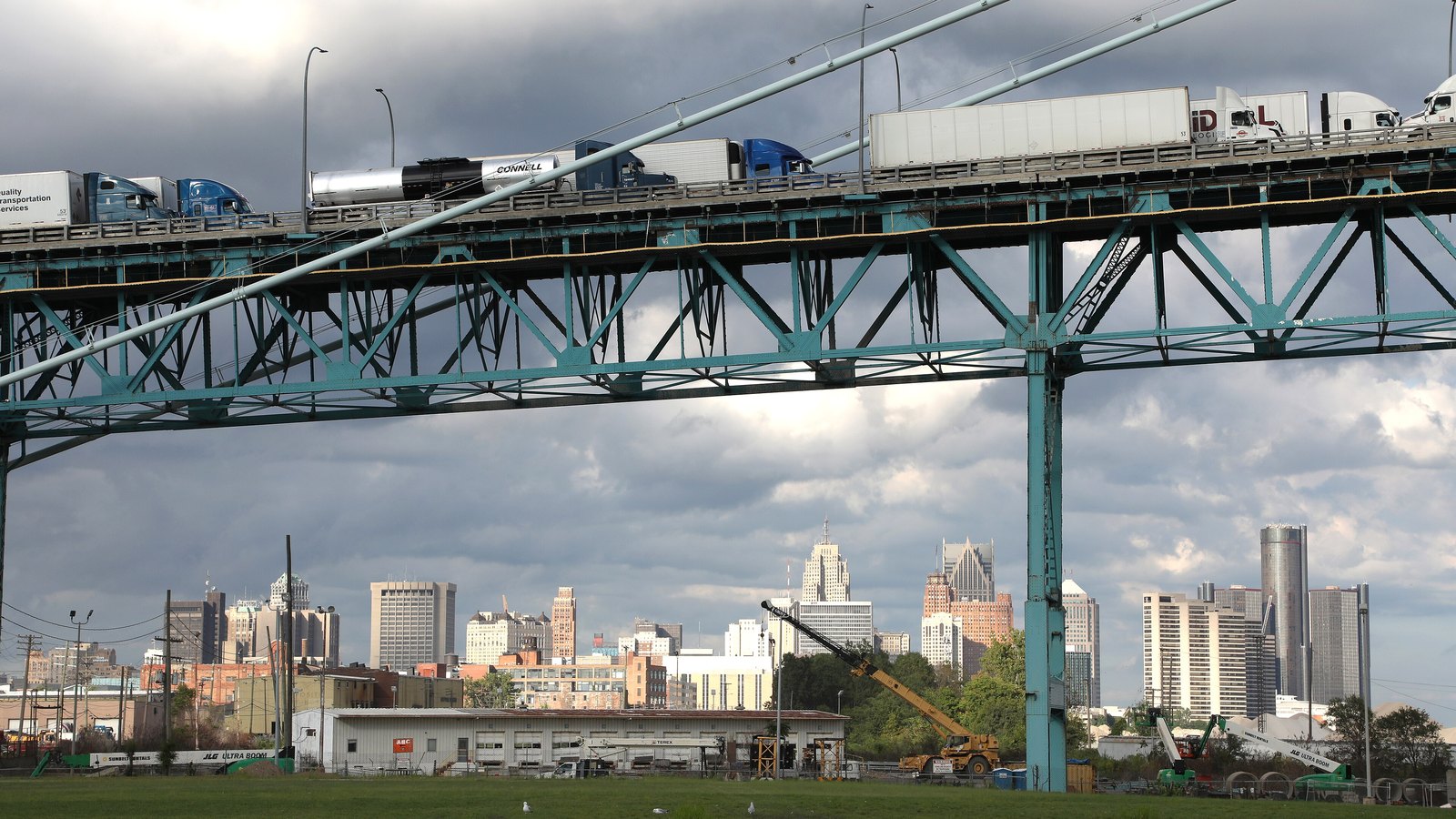
The deal was close enough that both sides said so. Canadian and American negotiators had spent three days in Washington against a Friday-night deadline, and the shape of an agreement was known: the United States would lower the sectoral tariffs that have been crushing Canadian steel, aluminium and automobiles, and in return Ottawa would deliver more access to Canada's dairy and lumber markets and press the provinces to end their bans on American alcohol. On Friday afternoon President Trump told reporters the deal was "moving along."
At one minute past midnight Eastern on Saturday, tariffs of 50 percent took effect on hundreds of Canadian products instead. Al Jazeera put the value of the affected trade at nearly $20 billion in US dollars; CBC News counted a list worth more than $28 billion. The categories are the ones that make the policy legible to ordinary people: plywood, cement, wine, hockey sticks.
Why the talks collapsed depends on who is describing them
Prime Minister Mark Carney's account, delivered at a news conference in Ottawa on Saturday, was that Washington moved the goalposts at the last moment. "I have decided to suspend trade negotiations with the U.S. and have directed Canada's negotiators to return to Ottawa," he said in a statement, adding that "last-minute changes in the U.S. proposed terms were unfair, uneconomic, and called into question the reliability of any deal."
Pressed for specifics, Carney pointed to eleventh-hour changes on car imports and, more strikingly, to language restricting Canada's ability to sign trade agreements with anyone else. "We're the partner of choice in many respects for countries around the world, and the Americans wanted to restrict that," he said. "They had language that wanted to restrict that. Unacceptable." His summary of the whole exercise was blunter: "They asked too much and they offered too little."
You're at war when you get attacked. We got attacked.
The American account, from US Trade Representative Jamieson Greer, is that Canada walked. "Tonight, Canada declined to finalize the trade deal under the terms agreed earlier this week, despite the U.S. offer to Canada to receive the best treatment of any major exporter to our market," Greer said, accusing Ottawa of "new demands and walk backs of other commitments" and of maintaining "flat out prohibitions on certain American goods and services." On Saturday he told Fox News there are no further talks planned, and that Washington would be "moving forward with measures" in response to Canadian retaliation. Sources briefed on the talks told CBC that Commerce Secretary Howard Lutnick had been dissatisfied with the deal on the table as of Thursday night.
The legal instrument is the story within the story
The new duties are imposed under Section 338 of the Tariff Act of 1930 — the Smoot-Hawley Act, written during the Great Depression and left largely unused since. The provision lets a president impose tariffs of up to 50 percent on countries found to be discriminating against American commerce. Previous rounds in this dispute have generally landed nearer 10 or 20 percent.
The second feature matters more than the rate. Goods compliant with the Canada-United States-Mexico Agreement have historically been exempt from these actions. As of Saturday, many of them are not. That is the part of the weekend that will outlast the headline number, because the exemption is the mechanism by which continental supply chains have been organised for thirty years. A tariff can be reversed in an afternoon. The demonstration that the exemption is discretionary cannot be.
It is worth being precise about what Section 338 requires, because the requirement is thin. The president must find that another country discriminates against American commerce. There is no injury test of the kind that governs anti-dumping duties, no investigation by the International Trade Commission, no phased remedy. President Trump announced the 50 percent rate on July 20, accusing Canada of "discriminatory treatment" in its trade policies. The administration has separately attributed tariff decisions on Canada to drug trafficking, to television advertisements and to wildfire smoke — a range of rationales Carney pointedly listed on Saturday.
Where the damage lands
Canada's electronics sector is the largest single exposure: more than $4 billion US of exports fall under the new list, with electrical boards and controllers the biggest affected category of all. Plastics — bottles, floor coverings, household goods — account for roughly $3 billion more. British Columbia is disproportionately hit, with wood and paper products alone representing more than 13 percent of its total exports to the United States, a higher share than any other province. Quebec has roughly 10 percent of its exports exposed, on top of the pre-existing 50 percent tariffs on steel and aluminium that already sit on one of its largest industries.
"This will be a body blow to North American competitiveness in this self-defeating trade saga," the Canadian Chamber of Commerce said. "A whopping, non-absorbable tariff is not sustainable or viable for business." The phrase to notice is non-absorbable. A 10 percent tariff can be split among an exporter, an importer and a customer. At 50 percent, on goods with single-digit margins, there is nobody left to absorb it; the trade simply stops.
The Canadian dollar slid as the weekend's news landed, which is the market's way of pricing the same arithmetic. A currency that falls offsets part of a tariff automatically — but only part, and only by making everything Canadians import more expensive.
The damage is not symmetrical, and both governments know it. Canada sends roughly three-quarters of its exports to the United States; the United States sends well under a fifth of its exports north. In a straight contest of pain tolerance, the larger economy wins, which is the arithmetic that has shaped every Canadian response since 2025. What the smaller economy has instead is concentration: Canadian goods are not evenly spread across American states but clustered in the industrial Midwest and in supply chains — automotive above all — where a part crosses the border several times before it is finished. A 50 percent tariff applied to a component that crosses three times is not a 50 percent tariff.
That is also why the exemption question is the one to watch. Sectoral tariffs on steel, aluminium and autos have been in place for months and manufacturers have adjusted to them. What changed on Saturday is that goods which qualified as North American under CUSMA — the paperwork by which a Windsor plant proves its content is continental — stopped being protected by that qualification for many product lines. Every treaty obligation now reads as provisional, and firms plan accordingly: not by moving factories in a week, but by declining to build the next one on the wrong side of a border that has stopped meaning what it meant.
September 8, and what Ottawa chose to hit
Carney promised a "focused response" beginning September 8, matching the American measures dollar for dollar and falling on steel, dairy, appliances, agricultural equipment, pulp and paper, and electronics. The list reads as a political document as much as an economic one. Dairy and agricultural equipment reach the American farm belt; appliances and electronics reach consumers; steel answers steel.
It is also a list that will cost Canadians money, and Carney did not pretend otherwise. "We take this step reluctantly," he said, after describing a negotiation in which Canada had been "pragmatic, patient and persistent." Two weeks between announcement and implementation leaves a window for someone to blink. Greer's comment that no talks are scheduled suggests Washington does not intend to use it.
The larger argument Carney is making
The prime minister has spent a year arguing that the transformation of American trade policy is structural rather than personal, and Saturday gave him his clearest statement of it. "Our government understood before many that America would transform all of its commercial relationships, that it would put a series of tariffs on its closest allies and use economic integration as a weapon," he said. On the reliability of any agreement signed under these conditions, he offered a line that will follow the administration into its next negotiation with anyone: "We recognise that, sometimes, its signature was written in pencil."
His answer is diversification — the "middle powers" argument he has made since taking office in 2025, in which countries of Canada's size band together as a counterweight to Washington and Beijing. "We can't control the storm that blows in from Washington," he said. "We can, however, chart a new course by building Canada strong and diversifying our trading relationships abroad." That is a project measured in years. The tariffs are measured in days.
Asked by a reporter why it felt as though he were going to war, Carney did not soften it. "You're at war when you get attacked," he said. "We got attacked." Between two economies that send roughly three-quarters of a trillion dollars across the same border every year, that is an extraordinary sentence for a Canadian prime minister to say out loud — and the most accurate summary anyone offered of the weekend.
Trade values are as reported: Al Jazeera cited nearly $20 billion in US dollars, CBC News more than $28 billion for the affected product list. Sector exposure figures are CBC's analysis of Canadian export data.