
Tiger Woods has taken a five-year driving ban and a $1,000 fine by pleading no contest to reckless driving — because the test he refused in March is the one that would have proved the DUI
Prosecutors dropped both original charges. The state attorney explained why with unusual candour: two forensic toxicologists found insufficient proof of impairment, and without a urine sample nobody could say what was in his bloodstream.
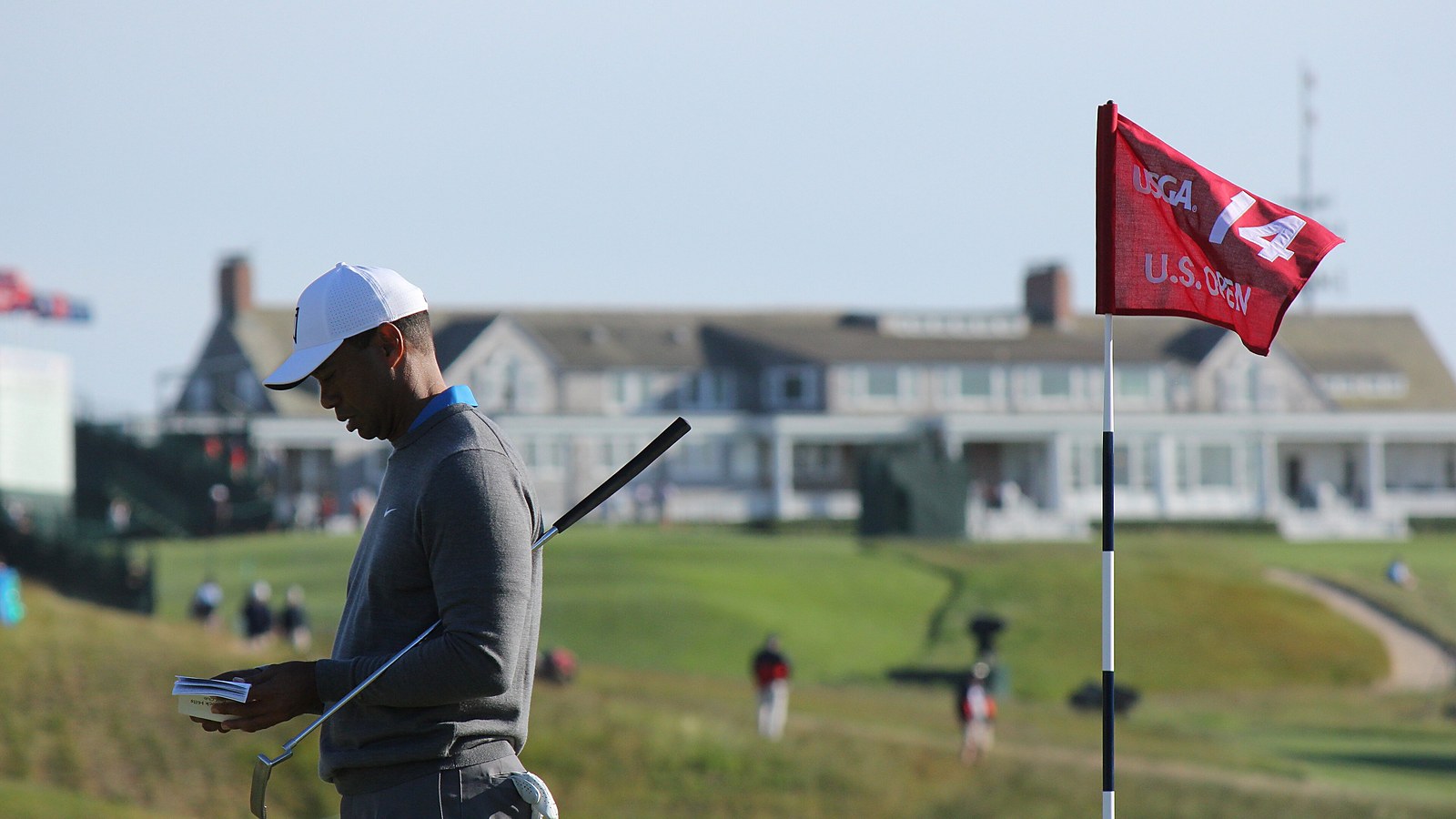
Tiger Woods walked out of the Martin County Courthouse in Florida on Wednesday with a five-year suspension of his driving licence and a $1,000 fine, having pleaded no contest to a single count of reckless driving. He was seen smiling during the hearing. Both charges he originally faced — driving under the influence with property damage, and refusal to submit to a lawful test — were dropped as part of the agreement.
The plea deserves precision, because it has already been reported loosely. No contest is not guilty. A defendant who pleads it declines to admit or deny the allegation while accepting the punishment. Woods has not conceded that he was impaired, and the state has not established that he was.
The test he did not take
The crash happened in March on Jupiter Island. Woods's Land Rover clipped a truck and rolled onto its side on a beachside residential road with a 30 mph limit; the arrest report said he had been travelling at high speed and caused about $5,000 in damage to the vehicle he hit. Nobody was injured. Woods had to crawl out through the passenger door to free himself. Bodycam footage released in April shows him kneeling calmly beside the wreck, telling officers: "I looked down at my phone, and all of a sudden, boom."
At the scene, deputies believed his normal faculties were impaired by an unknown substance. He agreed to a breathalyser, which registered zero alcohol. He declined a urinalysis screening for other drugs. He told officers he had taken "a few" prescription medications that morning and listed them; that portion of the footage was redacted. Two white pills later identified as hydrocodone, an opioid painkiller, were found in his pocket. Martin County Sheriff John Budensiek confirmed the refusal at the time.
That single decision — breathalyser yes, urine no — is why the case ended the way it did, and it is worth understanding the mechanism rather than treating the outcome as a celebrity discount.
Why a drug DUI is a different prosecution
An alcohol DUI is close to arithmetic. There is a per se threshold, a standardised instrument, and a body of validated science tying a measured blood alcohol concentration to impairment in the general population. A prosecutor with a reading above the limit does not have to prove much beyond the reading.
A prescription-drug DUI has none of that scaffolding. There is no per se limit for hydrocodone. There is no roadside instrument. And because tolerance to opioids develops with sustained therapeutic use, the same concentration in two different people can mean impairment in one and ordinary function in the other. The prosecution therefore has to prove impairment as a fact, not infer it from a number — and it needs a sample to have anything to reason from at all.
State Attorney Thomas Bakkedahl of Florida's 19th Judicial Circuit laid out the resulting problem in detail after the hearing. Without a urine test, he said, officials "don't know what exactly was in his bloodstream" at the time of the crash. Records showed the painkillers Woods admitted taking were prescribed to him and were being taken as instructed. Two forensic toxicologists asked to review the case concluded there was "insufficient proof" of impairment, advising that Woods likely had a tolerance to hydrocodone and so was not impaired by it.
The behavioural evidence was similarly vulnerable. Difficulty walking is a standard indicator in a field sobriety assessment; in a defendant who has had multiple back and knee surgeries and a leg reconstruction, it is also an unremarkable fact about his body. Bakkedahl said the defence would have been able to offer innocent explanations for exactly the behaviours the deputies documented.
The refusal charge that went with it
There is a hard irony in the second dropped count. Refusal to submit to testing exists as a separate offence precisely to remove the incentive to decline — the law's answer to a driver who reasons that no sample means no evidence. In this case the calculation worked anyway. The refusal deprived prosecutors of the material they needed to prove the DUI, and the charge created to punish that refusal was surrendered alongside it in the plea agreement.
That is not a loophole peculiar to Woods; it is the ordinary shape of drug-impairment prosecutions in Florida and most other states. Refusal penalties are calibrated against the strength of the case they are meant to protect, and when the underlying case collapses, the refusal count usually becomes a bargaining chip rather than a standalone prosecution. Anyone who declines a urine screen in comparable circumstances is running the same play.
Today I resolved case involving a man who drives a golf ball for a living. Tomorrow, I'll resolve a case in the same matter for a man who drives a nail for a living.
Bakkedahl was pre-empting the obvious objection, and he said explicitly that he had striven to treat Woods like any other defendant. "I'm completely confident and comfortable with the resolution of this case," he told reporters, describing it as "a particularly difficult DUI to prove."
It is also why the charge Woods actually pleaded to fits the facts better than the one he was arrested on. Reckless driving does not require the state to establish what was in his body. It requires wilful or wanton disregard for safety, and for that the evidence was never in doubt: excessive speed on a 30 mph residential street, a phone in his hand, a rolled vehicle and a struck truck. The substitution moved the prosecution from a charge that depended on a missing sample to one that depended only on what the road showed.
The counter-argument
The prosecutorial reasoning is coherent, and it still leaves something unresolved. A driver was recorded travelling at high speed on a residential street with a 30 mph limit, rolled a vehicle, and told officers he had been looking at his phone and changing the radio station. Distraction of that kind is not a technicality — it is the conduct the reckless driving statute exists to reach, and it is what Woods has now accepted punishment for.
The five-year licence suspension is also not a token. It is a long ban by the standards of a first reckless driving conviction, and it is the part of the sentence that will actually constrain his daily life for the rest of the decade. Whether $1,000 constitutes a fine for a man of his means is a question the fine schedule was never designed to answer, and reasonable people will find the sum absurd.
What the outcome does not establish, in either direction, is what condition Woods was in that morning. The state has said it could not prove impairment. That is a statement about the evidence, not an exoneration — and Woods's own conduct afterwards suggested he did not treat it as one.
The wider criticism of the outcome is not really about Woods at all. It is that a defendant with the resources to retain expert toxicologists, to produce complete prescription records on demand, and to have counsel who understood on day one which test to decline, extracted a result that a defendant without those resources would not have. Bakkedahl's answer — that he applies the same evidentiary standard to the man who drives a golf ball and the man who drives a nail — is true about the standard and silent about the resources brought to meet it. Both things can be the case at once.
The pattern this sits inside
This was Woods's second arrest on suspicion of driving under the influence. In 2017 he was found asleep behind the wheel of his car by Florida police and later said he had taken a bad mix of painkillers. In 2009 his SUV struck a fire hydrant and a tree outside his home near Orlando. In 2021 he survived a crash in Los Angeles that damaged his right leg so severely that he said doctors had considered amputating it. Vehicles and painkillers have been braided through his adult life for close to two decades.
After the March crash he posted that he understood the seriousness of the situation and was "stepping away for a period of time to seek treatment and focus on my health," adding that it was necessary "in order for me to prioritise my wellbeing and work toward lasting recovery." He made his first public appearance after treatment in June, introducing the PGA Tour's plans to revamp its schedule for 2028.
Woods is 50. He became the first person of Black heritage to win the Masters in 1997 and remains among the most consequential figures the sport has produced. The legal chapter closed on Wednesday on terms that reflect what the state could prove rather than what happened on that road. The durable fact is the one nobody contested: he was going too fast, on a residential street, looking at his phone.
This report is based on proceedings at the Martin County Courthouse on September 2, 2026, the post-hearing press conference given by State Attorney Thomas Bakkedahl of Florida's 19th Judicial Circuit, the March arrest report and bodycam footage released by the Martin County Sheriff's Office in April, as reported by CBS News and the BBC. Some outlets initially described the plea as guilty; court records and subsequent corrections establish it as no contest, which is a material distinction. Sentencing terms are as stated by prosecutors and the court on the day.