
The US Mint has struck a $1 coin bearing Donald Trump's portrait, making him the first living president on American coinage since Calvin Coolidge in 1926 — and it sold out within hours
The federal ban most often cited against putting a sitting president on the money is a printing statute, and a coin is not printed. That distinction — along with an obverse-versus-reverse reading of a 2020 law — is what allowed the anniversary coin to exist. The harder legal question is the $250 note Treasury has already floated.
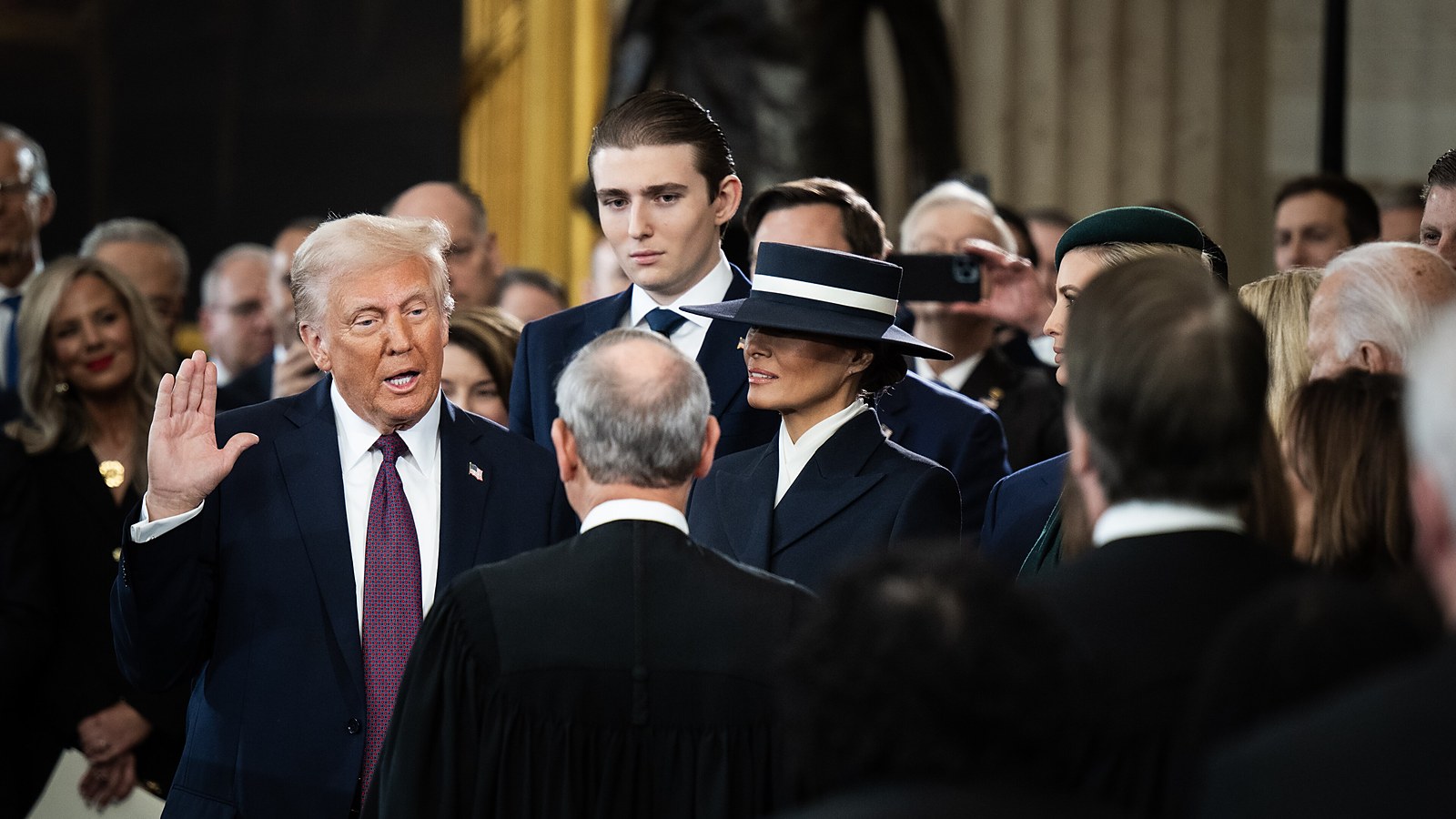
The US Mint put a $1 coin bearing President Donald Trump's portrait on sale on Wednesday, and within hours of it going live the product was listed on the Mint's own website as not currently in stock. The Mint had already said the coin would not be entering circulation. Those two facts sit oddly together, and understanding why they do is the whole of this story: the object that sold out this week is not a change to American money. It is a collectible, sold at a premium, that happens to be spendable.
The coin is stamped with Trump's likeness alongside the words LIBERTY and IN GOD WE TRUST, and was issued to mark the 250th anniversary of American independence. It makes Trump the first living president to appear on a US coin in a century. The BBC, which first reported the details of the launch, said the Mint described the piece as a "once-in-a-generation anniversary design" created to mark "this historic national milestone".
The statute everyone cites does not cover coins
Almost every objection raised to a living president appearing on American money runs through a single provision: 31 U.S.C. § 5114(b), a rule descended from an 1866 amendment. Its text is one sentence long, and it is unambiguous about what it forbids.
Only the portrait of a deceased individual may appear on United States currency and securities. The name of the individual shall be inscribed below the portrait. — 31 U.S.C. § 5114(b)
The difficulty for anyone invoking that sentence against this coin is where the sentence lives. Section 5114 is headed "Engraving and printing currency and security documents," and it governs the work of the Bureau of Engraving and Printing — the agency that produces banknotes. Coins are not engraved and printed. They are struck, by a different agency, the US Mint, under a different part of the same title of the code. The provision most often quoted as a ban on this coin is, on its face, a rule about paper.
That is not a loophole so much as an artefact of how the law was assembled. Congress wrote the portrait restriction into the printing statute in the nineteenth century, when the live controversy was whose face went on the notes. Coin designs were, and still are, handled separately. The result is that the general principle Americans believe exists — the dead only, on the money — was never enacted as a general principle at all.
An argument from silence about heads and tails
The administration has not rested on that structural point alone. According to the BBC's account, it has cited the Circulating Collectible Coin Redesign Act of 2020, passed during Trump's first term, together with a design clause in the legislation authorising the 250th-anniversary commemoratives.
The 2020 statute does address living people and coins. What it says, per that reporting, is that portraits of living people may not appear on the reverse — the tails side. It does not explicitly address the obverse, the heads side, which is exactly where Trump's likeness sits on the new dollar.
This is the legal load-bearing wall of the entire issue, and it is worth being precise about what kind of wall it is. The argument is not that Congress authorised a living president's portrait on the obverse. It is that Congress, having restricted the reverse, said nothing about the obverse — and that silence is being read as permission. Arguments from statutory silence are real arguments, routinely made and sometimes won. They are also considerably weaker than a grant of authority, and they invite a court to ask whether the omission was a decision or an oversight.
Coolidge, 1926, and the shape of the exception
There is a precedent, and the administration has leaned on it. In May, Treasury Secretary Scott Bessent noted that a living president had appeared on US currency before: a half-dollar issued in 1926 to commemorate the 150th anniversary of American independence carried a portrait of then-President Calvin Coolidge.
The parallel is closer than it first appears, and instructive in a way that cuts both directions. In 1926 and again in 2026, the vehicle is the same — a round-numbered national anniversary, authorised as a one-off commemorative rather than as a change to the circulating coinage. The exception that lets a sitting president onto the metal has, both times, been a birthday. That is a genuine precedent. It is also a narrow one, and it does not travel: an anniversary clause justifies an anniversary coin and nothing beyond it.
What the coin is made of, and what it costs
The physical object is unremarkable. Despite its golden colour, it contains no gold. The Mint gives the composition as 88.5 per cent copper, with the balance made up of zinc, manganese and nickel — the same family of alloys used in ordinary modern dollar coins.
The pricing is more revealing. The Mint offered the coins at $61 for a roll of 25 and $154.50 for a bag of 100. Those work out to roughly $2.44 and $1.55 per coin respectively — both well above the $1 face value, and, notably, not the same premium. A buyer taking the small roll pays about 58 per cent more per coin than one taking the bag.
That spread is the clearest signal of what is actually being sold. Circulating money does not have a price; it has a face value. Numismatic products do have prices, set to cover production and to capture what collectors will pay, and they are routinely tiered so that the smallest quantity carries the fattest margin. The Mint's own framing — not for circulation, but usable as legal tender — is the standard description of a commemorative, not of currency.
Distribution matched the framing. Alongside the website listing, the coins were sold from vending machines at the Mint's store in Washington, DC. The Mint has not said how many were struck, which means the speed of the sell-out cannot yet be read as a measure of demand; a small mintage sells out quickly by design.
The note is the real test
Two earlier moves put the coin in context. In March, the Treasury announced that US paper money would carry Trump's signature — a first for a sitting president, though signatures on notes are a Treasury official's prerogative and raise no portrait question. In May, Bessent said his department was planning a new $250 bill bearing Trump's portrait.
The $250 bill is a different legal proposition entirely, and the distinction is the one this piece began with. A banknote is engraved and printed. It is squarely inside § 5114, squarely inside the words "currency and securities," and there is no obverse-and-reverse asymmetry to work with — a portrait on a note is simply a portrait on a note. Whatever one makes of the coin, the arguments that carried it do not carry the bill.
The case on the other side
The strongest version of the administration's position is not a technicality. A 250th anniversary is a real national milestone; commemorative coinage marking milestones is ordinary practice in every country that mints coins; Congress has repeatedly authorised anniversary designs outside the normal rules; and a non-circulating collectible changes nothing about the money supply, the currency, or what anyone carries in a pocket. On that reading the coin is a souvenir with a legal tender backstop, and the objection is aesthetic rather than legal.
The case against does not really dispute any of that. It disputes the direction of travel. A signature in March, a coin in September, a portrait on a proposed note pending — each step is individually small, each is justified by a clause that addresses only itself, and each makes the next one easier to argue for. The concern is not that a commemorative dollar debases anything. It is that the reasoning used to authorise it is reusable.
What holds
Strip out the forecasting and a short list of things is true and will stay true. The coin exists and was struck by the United States Mint. It carries a sitting president's portrait, which no US coin has done in a hundred years. It is legal tender and it is not circulating. It sold at a premium over face value, and it sold out on the first day.
The durable point is narrower than the argument around it. A commemorative coin is a small object with a small mintage and no monetary consequence at all. What compounds is not the coin. It is the finding — untested in court — that the rule Americans assume protects the money from living politicians is a printing regulation that never reached the metal in the first place.
This report is based on the US Mint's product listing and statements, reporting by the BBC published on 3 September 2026, and the text of 31 U.S.C. § 5114 as published by the Office of the Law Revision Counsel. The BBC said it had contacted the US Mint, the Treasury and the White House for further detail; the Mint has not published a mintage figure, and no court has ruled on whether the obverse-and-reverse reading of the Circulating Collectible Coin Redesign Act of 2020 is correct. Prices and stock status are as reported on the day of launch and may change.