
Eli Lilly's revenue grew 48% to $23 billion in a quarter on two injections — and in April it launched the pill designed to replace them
Mounjaro alone sold $9.94 billion in three months, up 91 per cent. Zepbound added $4.93 billion. Lilly raised full-year guidance to as much as $87 billion and has committed more than $50 billion to American manufacturing since 2020. The interesting decision is the newest one: an oral GLP-1, approved in April, that competes with its own injections. An analysis of a company scaling faster than any drugmaker in history.
Every figure in this article is drawn from Eli Lilly's second-quarter 2026 results, published 5 August 2026, its SEC filings and its own product and investment announcements, or from CNBC and BioPharma Dive as attributed. Sections marked as analysis are identified as such.
Eli Lilly's second-quarter revenue rose 48 per cent to $23.0 billion. That is roughly $7.4 billion of additional revenue in a single quarter compared with a year earlier — more than the total annual sales of most pharmaceutical companies — and it came almost entirely from two molecules.
Mounjaro, sold for type 2 diabetes, generated $9.94 billion, up 91 per cent. Zepbound, the same compound approved for obesity, generated $4.93 billion, up 46 per cent. Lilly raised full-year guidance to $85 to $87 billion.
The scale problem, and what it cost to solve
For most of the past three years the binding constraint on this business has not been demand or approval. It has been the ability to physically manufacture enough sterile injectable peptide, in enough pens, to meet prescriptions that were being written faster than anyone could fill them. Both Lilly and its principal competitor spent 2023 and 2024 with their products on shortage lists.
The response has been one of the largest industrial buildouts in the history of the industry. Lilly's committed US capital expansion has passed $50 billion since 2020, with new sites across several states; it has pledged $3 billion in China, roughly $3 billion in the Netherlands, and more than $1.2 billion to expand its Puerto Rico plant. The Houston site is designated for the oral product.
Spending of that order changes what kind of company Lilly is. A pharmaceutical business traditionally allocates its capital to research and lets contract manufacturers handle volume; Lilly has instead built an industrial base, which ties up cash, creates fixed costs that must be covered for decades, and is extremely difficult to reverse if demand disappoints. It is a bet on durability, not just on the drugs.
| Eli Lilly Q2 2026 | Revenue | Change |
|---|---|---|
| Mounjaro | $9.94bn | +91% |
| Zepbound | $4.93bn | +46% |
| Total revenue | $23.0bn | +48% |
| FY2026 guidance | $85–87bn | raised |
The pill
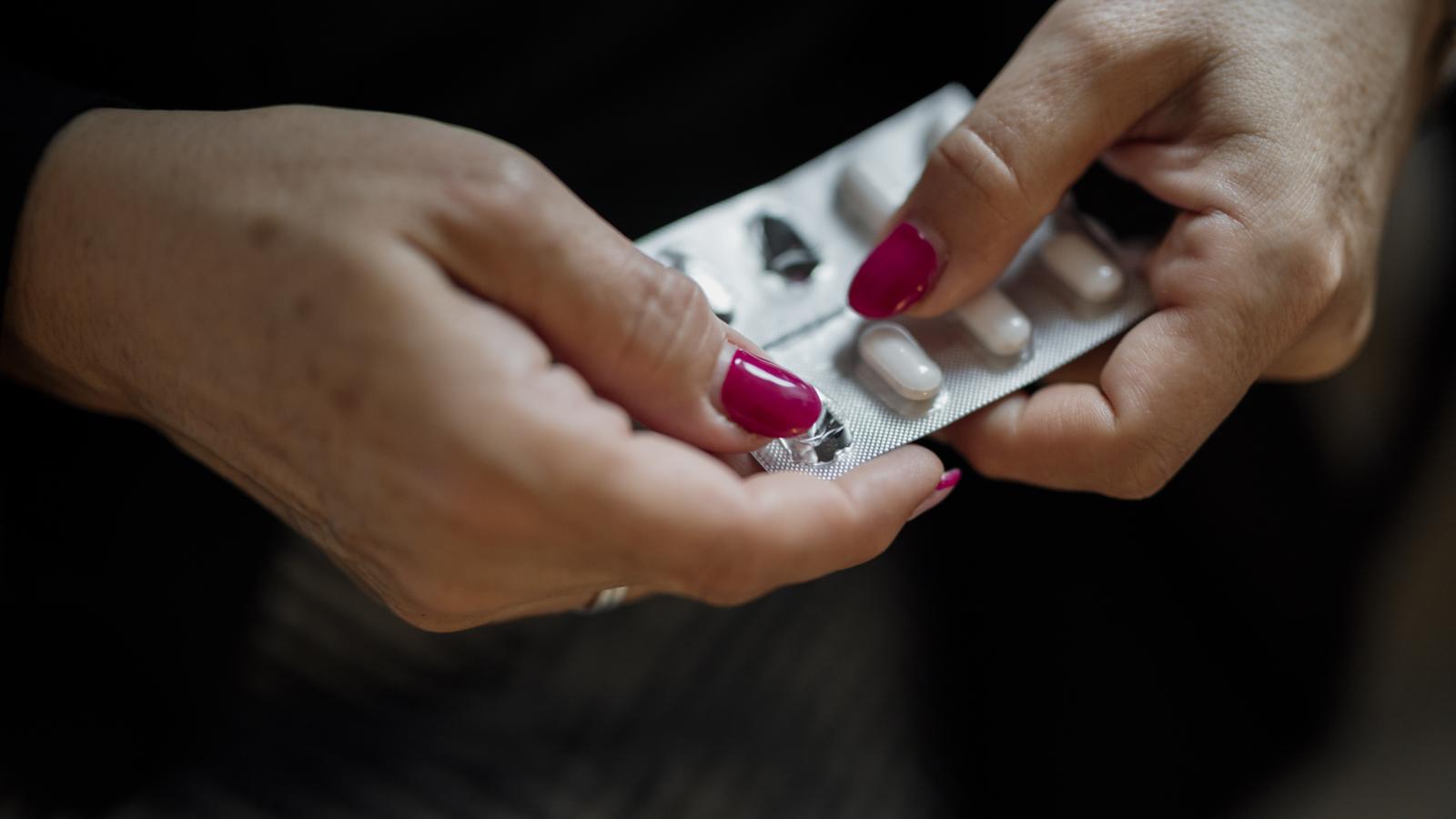
On 1 April the Food and Drug Administration approved orforglipron, marketed as Foundayo — a once-daily oral GLP-1 for adults with obesity or who are overweight with a weight-related condition. It is the only GLP-1 pill that can be taken at any time of day, with or without food or water.
The efficacy is below the injections and is not trivial: the Phase 3 ATTAIN programme showed average weight loss of up to 12.4 per cent — about 27 pounds — at the highest dose over 72 weeks. Submissions for type 2 diabetes are in progress in the United States, and for obesity in Japan and the European Union.
Regulators approving an obesity pill with no food or water restrictions is a bigger deal clinically than the weight-loss percentage suggests. The previous generation of oral GLP-1 therapy required patients to take the tablet on an empty stomach with a specific amount of water and then wait before eating — a regimen that many people simply stopped following. Removing it converts a drug that works in a trial into one that works in a life.
The strategic point is the form factor rather than the potency. A peptide injection requires cold-chain distribution, a device, a prescriber conversation about needles and a patient willing to self-inject weekly for years. A small-molecule tablet requires none of those things, can be made in vastly greater volume at lower cost, and reaches populations — and countries — that an injectable never will.
Analysis: deliberately competing with yourself
Launching an oral drug that partly substitutes for two products generating $15 billion a quarter is the sort of decision companies usually avoid until a competitor forces it. Lilly did it early and on purpose, and the reasoning is sound in a way worth spelling out.
The obesity market is not a fixed pool of patients being divided up. It is a market where the overwhelming majority of eligible people are not being treated at all, for reasons that are mostly practical — supply, cost, reimbursement, and reluctance to inject. Each of those barriers is lowered by a pill. The addressable population expands by more than the cannibalised revenue shrinks, provided the manufacturing exists.
There is a competitive reading as well. If Lilly had not launched an oral GLP-1, somebody else would have, and the company holding the injectable franchise would have found itself defending an inconvenient product against a convenient one. Cannibalising your own revenue is unpleasant; watching a rival do it is worse, and pharmaceutical history is largely a record of firms that learned this too late.
Which is why the capital expenditure matters more than any single trial result. A small molecule can be produced at a scale peptides cannot approach, and the company that has already spent $50 billion building capacity is the one positioned to serve a market measured in hundreds of millions of people rather than millions.
Analysis: the risks that a 48 per cent growth rate conceals
The first is concentration. Tirzepatide — the single compound sold as Mounjaro and Zepbound — is the great majority of Lilly's growth and an enormous share of its value. Any safety signal, manufacturing failure or unexpected regulatory action against one molecule would be a company-level event, not a product-level one.
The second is price. GLP-1 medicines are the most politically visible drugs in the world, and their US list prices have been the subject of sustained pressure from employers, insurers, state health programmes and the federal government. Volume growth of this magnitude eventually invites price concessions; the question is only how much and when.
The unusual feature of this particular pricing fight is that both sides have an argument that lands. Payers point to a drug taken indefinitely by a very large share of the adult population, which is a budget problem no health system has faced before. Manufacturers point to obesity's downstream costs in diabetes, cardiovascular disease and joint replacement, which these medicines plausibly reduce. Neither position is obviously wrong, which usually means the outcome is decided politically rather than analytically.
The third is that the patent clock is running. Tirzepatide's core protection does not last forever, and the buildout under way is being financed against a revenue stream with a defined end date. Lilly's answer is the pipeline behind it — the oral, the next-generation combinations, and indications beyond weight in sleep apnoea, heart failure and liver disease — and how much of that answer arrives on time will determine whether this decade is a peak or a plateau.
None of which changes what the second quarter actually showed. A pharmaceutical company of this size does not grow 48 per cent; it grows in single digits and explains why that is respectable. Lilly has added the equivalent of a large-cap drugmaker's entire annual revenue in twelve months, and it has done so while building the capacity to do it again.
For a sense of what that has meant outside the accounts: a drug class that barely existed five years ago is now reshaping food companies' volume forecasts, airline weight calculations, apparel sizing and life-insurance actuarial tables. Very few products change the numbers in other industries' models. Two of them are currently made by the same company, and the third is a tablet it approved in April.