
Uber is cutting about 3,300 jobs — 10% of its workforce — in its largest layoff since the pandemic, and the money is going to robotaxis
Dara Khosrowshahi told staff the company had outgrown its own management structure. The numbers underneath say something sharper: Uber is profitable, cash-generative and growing, and is cutting anyway to fund a $10 billion bet on removing the driver.
Uber told its employees on Wednesday that it is eliminating roughly 10% of its workforce — about 3,300 jobs against a headcount of around 34,000 at the end of 2025 — in a restructuring that chief executive Dara Khosrowshahi framed as a fight against the company's own internal complexity. It is the largest cut Uber has made since May 2020, when the collapse of ride-hailing demand during the pandemic took out roughly 6,700 people, close to a quarter of the company.
The difference between those two moments is the entire story. In 2020, Uber was cutting because the business had stopped. In 2026, it is cutting from a position of unambiguous strength — and investors read it that way immediately, sending the shares up nearly 2% in morning trading.
A company that does not need to cut
Uber's second-quarter results, reported in early August, were the strongest in its history. Gross bookings rose 24% year over year to $58.0 billion. Revenue grew 12% to $14.2 billion. GAAP income from operations was $1.9 billion, non-GAAP operating income $2.1 billion, up 40%. Most importantly, trailing twelve-month free cash flow passed $10 billion for the first time — a threshold the company spent a decade and tens of billions of dollars of investor money trying to reach.
None of that is the profile of a business under cost pressure. Which is why the memo Khosrowshahi sent staff is worth reading for what it does not say as much as for what it does.
"The changes we're making today are designed to do two things: make Uber simpler and faster, and create more capacity to invest in our future," he wrote. That second clause is the operative one. Uber has already committed to spending more than $10 billion on autonomous vehicles in the coming years. A layoff at a company generating $2.8 billion of free cash flow in a single quarter is not a solvency measure. It is a reallocation.
What is actually being reorganised
The mechanics are unusually specific, and they describe a surgical strike on middle management rather than a broad reduction. Teams with only one or two direct reports are being cut by roughly half. Employees more than seven layers down from the chief executive are being trimmed by 20%. The overall number of managers falls by about a fifth, and some of those managers will stay at the company as individual contributors rather than leaving.
Uber is also collapsing divisions into each other — engineering, science and delivery are being combined, and delivery operations across restaurants, retail and direct are being merged into a single organisation. Employees are being concentrated into hubs, principally New York and San Francisco. Fewer than 1% of staff will be permitted to continue working remotely, which for practical purposes ends remote work at Uber.
A leaner organization will mean clearer ownership, faster decisions, and more time spent building rather than coordinating.
The diagnosis in Khosrowshahi's memo is that scale itself created the problem: "that growth has also brought complexity: more layers, more coordination, more fragmented ownership, and in some cases structures that made sense when businesses were smaller but no longer serve us well at our current scale." It is the same argument Alphabet and Amazon have made in their own delayering exercises over the past three years, and it has become the standard vocabulary of large-cap technology restructuring.
The remote work decision is the part employees will feel most immediately, and it is doing separate work from the layoff. Consolidating staff into New York and San Francisco raises the cost of every remaining role — those are the two most expensive labour markets Uber operates in — which is a strange choice for a cost exercise and a rational one for a speed exercise. Management is buying the thing that layers were supposed to substitute for: people in the same room, deciding faster.
It is also, in practice, a second reduction that will not appear in the announced number. A company that ends remote work loses staff who took the job because it was remote, and those departures are voluntary, unannounced and spread over the following year. Every large employer that has made this move has absorbed some version of it.
The thing Khosrowshahi did not blame
Notably, he did not attribute the cuts to artificial intelligence. That is a departure from the pattern of the past eighteen months, in which a long series of technology employers have explicitly tied headcount reductions to AI-driven productivity. Uber's stated rationale is organisational geometry — spans and layers — not automation of the jobs being eliminated.
That distinction matters for how the cut should be read. An AI-justified layoff is a claim that the remaining workers can do more. A delayering is a claim that some of the work being done was never necessary in the first place: coordination overhead generated by the org chart itself. The second claim is harder to verify and easier to reverse, because the layers tend to grow back as the business adds products.
There is also a less flattering reading available. Seven layers below a chief executive is a long way down, and a company that has accumulated that many rungs while its revenue was compounding did so by choosing growth over discipline. The restructuring corrects a problem Uber built during the good years, and the 3,300 people absorbing the correction are not the ones who built it.
Where the money is going
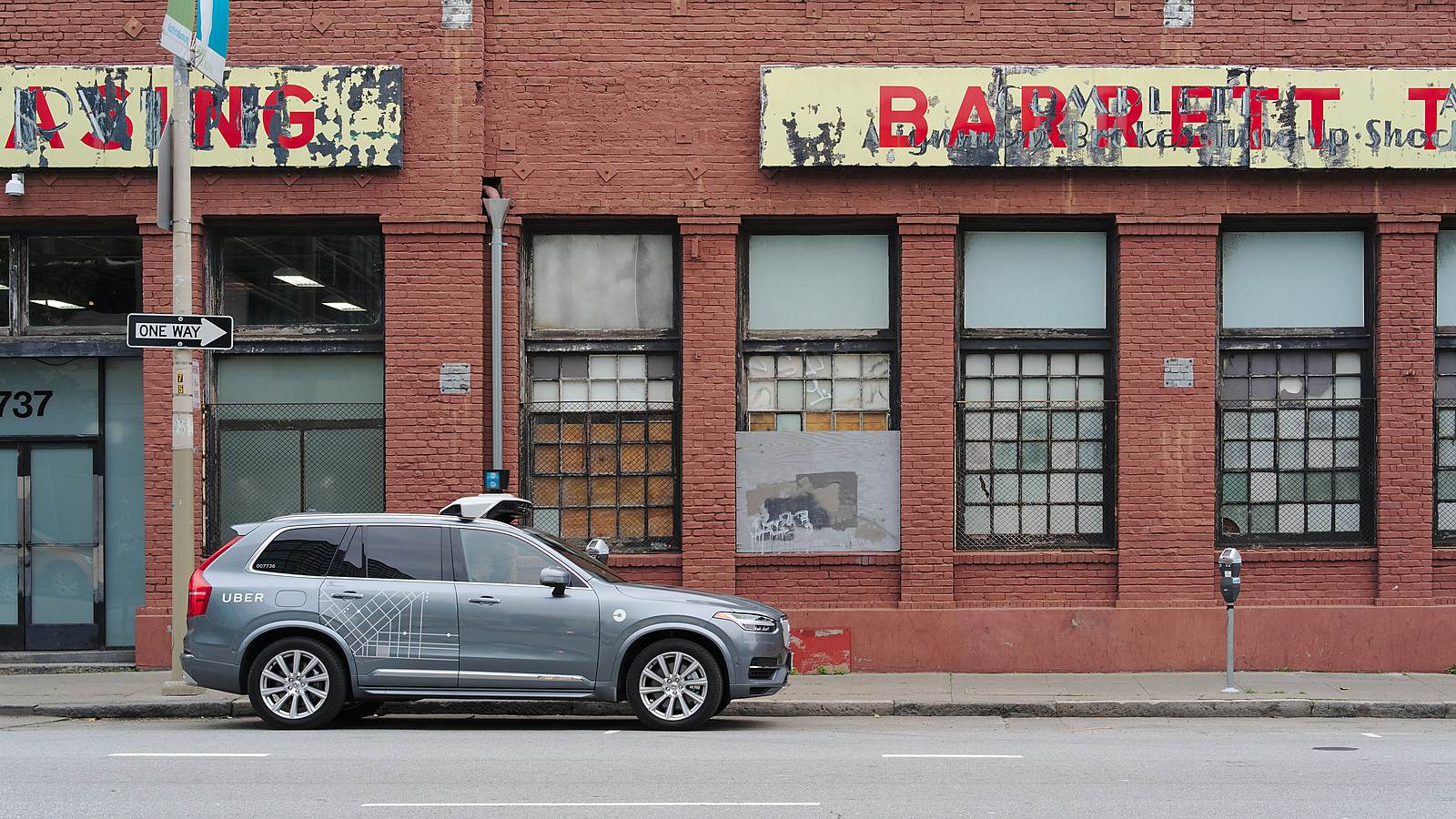
The autonomous vehicle commitment is the reason this restructuring is happening now rather than in two years. Uber's strategic position on driverless cars is unusual: having abandoned its own self-driving development programme in 2020, it has spent the years since positioning itself as the demand layer — the app, the rider base and the dispatch network — on top of other companies' autonomy stacks, while investing to secure that position.
That is a capital-intensive posture. It requires funding partnerships, fleet operations, depot infrastructure and market-by-market launches, and it produces no revenue until vehicles are actually carrying passengers. Free cash flow of $10 billion a year is what makes it fundable without returning to the capital markets, and every dollar of structural operating cost removed is a dollar available for it.
The counter-argument is straightforward, and Uber's own history supplies it. The company has repeatedly announced expensive strategic bets and then exited them — its in-house autonomy unit and its flying-taxi programme were both sold off in 2020 — after concluding the capital was better deployed elsewhere. A restructuring justified by a robotaxi build-out is a restructuring justified by a forecast, and forecasts about autonomous vehicle deployment timelines have been the least reliable numbers in the industry for a decade. If the robotaxi timeline slips again, Uber will have shed 3,300 people to fund a bet that pays out later than promised.
There is a second risk in the strategy that has nothing to do with timing. Uber's position as the demand layer is only defensible for as long as autonomy providers need someone else's riders. A company that has built a fleet and solved the technology has every incentive to run its own app and keep the whole fare, and Uber's leverage in that negotiation rests on the size of its network rather than on anything it owns in the vehicle. Spending $10 billion to be indispensable to partners who would prefer not to need you is a coherent plan, but it is a plan with a clock on it.
The durable point
Uber declined to confirm the number of jobs affected, which is itself telling — the company is comfortable announcing the percentage and the organisational logic, and less comfortable attaching a headcount to it. But the shape of the decision is not ambiguous.
A business that is growing bookings at 24%, generating record cash and beating its own guidance has cut a tenth of its staff in order to move faster. That is a statement about what management believes the next five years require, and it is a colder statement than any of the language in the memo. The pandemic layoff was about survival. This one is about deciding, while there is still money and time to decide, what kind of company Uber intends to be when the driver is no longer part of the product.
This report is based on Uber's announcement of September 2, 2026 and on the internal message from chief executive Dara Khosrowshahi as reported by CNBC, TechCrunch and Bloomberg, together with figures from Uber's second-quarter 2026 results released on August 5, 2026 and its most recent annual filing. Uber has declined to confirm the number of affected roles; the figure of approximately 3,300 is derived from the stated 10% and reported headcount, and could be revised. Autonomous vehicle spending plans are company statements of intent, not commitments.