
US Army lieutenant colonel arrested in Britain on suspicion of spying for Russia was caught in a sting at NATO's largest UK base, officials say
US officials have named the suspect as Lt. Col. Brandon Tyner, 41, a decorated Afghanistan veteran based at the Allied Rapid Reaction Corps headquarters in Gloucestershire. British charges are expected within days, and then the Army wants him back. No one has yet said publicly what, if anything, reached Moscow.
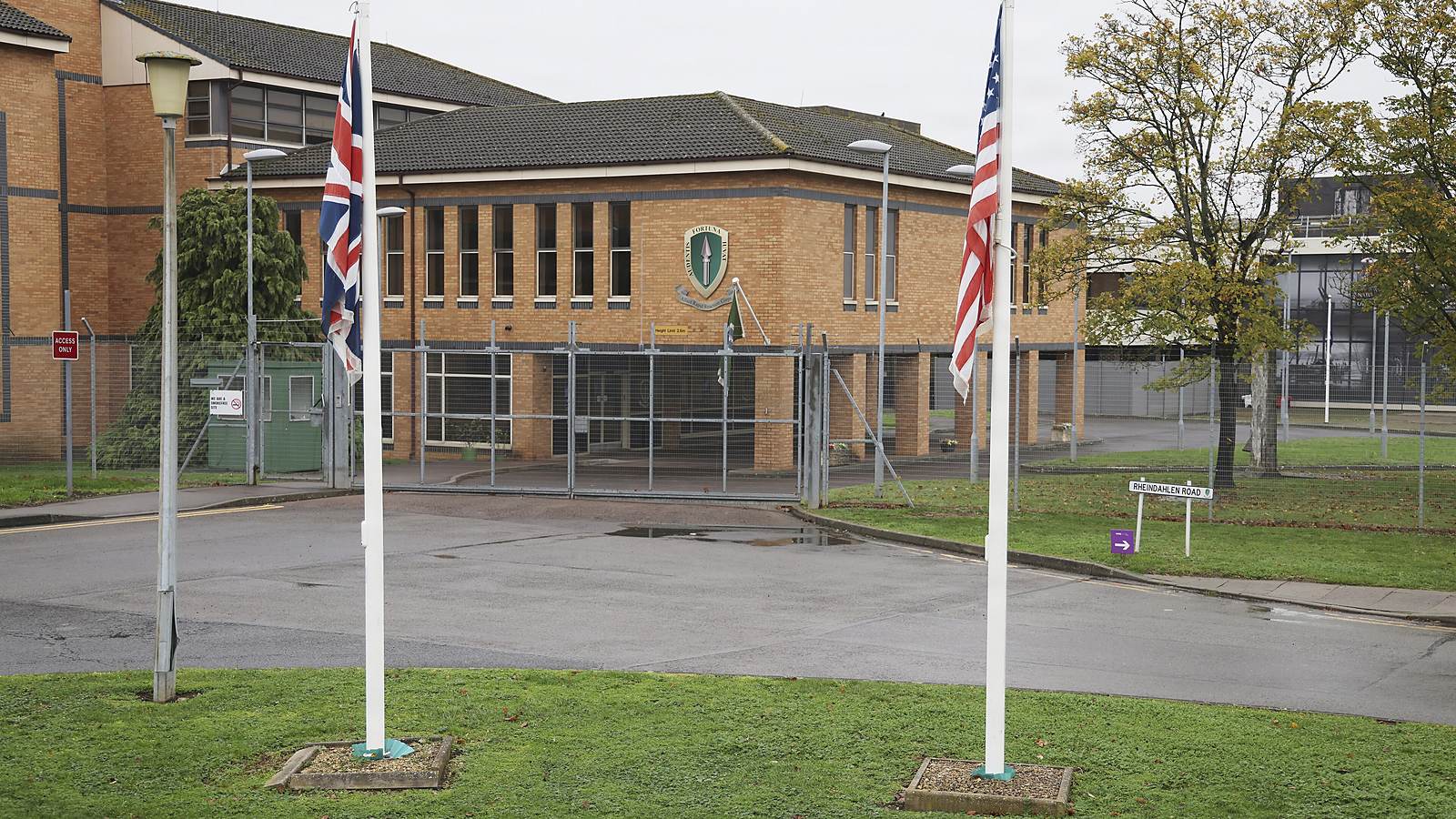
The most important word in the case of the US Army officer arrested in England this week is sting. Two American officials told the New York Times that Lt. Col. Brandon Tyner, 41, was caught in an operation set up by investigators, not after a leak was traced back to him. That changes what the case is likely to be about. A sting tests what a suspect is willing to do. It does not, by itself, show that anything was ever handed to a foreign government, and on Thursday the New York Times reported that it was unclear whether any sensitive information had actually reached Moscow.
What is not in doubt is where the officer worked, and who is now running the case. The suspect was based at the headquarters of NATO's Allied Rapid Reaction Corps at Imjin Barracks in Gloucestershire, about 100 miles west of London. British counterterrorism police, the FBI and US Army Counterintelligence Command are all involved, and both governments say charges are coming.
What the police have said
The Metropolitan Police announced on Tuesday that a 41-year-old man had been arrested on suspicion of offences under Section 1 and Section 3 of the UK's National Security Act 2023. Section 1 covers obtaining or disclosing protected information; Section 3 covers assisting a foreign intelligence service. Police said the suspected activity relates to Russia and that officers were searching two addresses in Gloucestershire. British police have not publicly named the suspect, which is normal practice before charge.
A US official identified him to CBS News as Lt. Col. Brandon Tyner, a senior human resources officer at Imjin Barracks. The official said he was arrested near Gloucester and is expected to be charged on Sunday or Monday. Brig. Gen. Sean Stinchon, the commanding general of US Army Counterintelligence Command, said the officer was being held at a London police station.
"The allegations are serious and our investigation is very much ongoing." — Deputy Assistant Commissioner Vicki Evans, senior national coordinator for UK Counter Terrorism Policing
FBI Director Kash Patel said in a statement that the bureau had 'no tolerance for anyone who breaks their oath to the United States'. The Kremlin denied any involvement. Spokesman Dmitry Peskov told reporters in Moscow on Wednesday that the arrest had 'nothing to do with us'.
Who the suspect is
According to the Times and CBS, the officer joined the Army in January 2008 as a human resources officer. He deployed to Afghanistan for a year from December 2013, served in Iraq in 2019 and 2020, and was deployed to Qatar before that. His awards include the Bronze Star Medal and the Defense Meritorious Service Medal. The Times reported that phone numbers for him and his wife had been disconnected. The Wall Street Journal was first to report that he had been caught in a sting.
A personnel officer is not an obvious espionage target in the way a signals analyst or a weapons specialist is, but that can be misleading. A human resources role at a multinational headquarters can mean access to who is posted where, who holds which clearances and who is moving into which job. Those are the details foreign intelligence services use to find and approach other people. None of the officials who have spoken so far has said what material, if any, the officer had access to or tried to pass on.
Why this base matters
The Allied Rapid Reaction Corps is a NATO corps headquarters that the Times describes as the alliance's largest presence in Britain, with personnel from 20 allied nations. Its job is to plan for and command forces in a fast-moving crisis. A headquarters of that kind holds plans, deployment schedules and lists of people, not weapons. That is exactly why counterintelligence agencies treat it as a priority target.
The arrest also comes at a moment of heavy pressure on Western intelligence services in Britain. Last month, MI5 director general Sir Ken McCallum used his annual threat update to accuse Russia of 'escalating their attempts at hybrid warfare' and called it 'aggressor number one' among the threats facing the UK. British police have also dealt with two recent security cases near air bases used by the US military: the alleged Iranian-linked plot against RAF Fairford, in which the US Justice Department announced charges against three people on Tuesday, and the arrest in October of two Latvian men who breached the perimeter at RAF Molesworth. Police said this week's arrest is not related to either case.
Two countries, one suspect
The case raises an unusual jurisdictional question. US forces in Britain are covered by the 1951 NATO Status of Forces Agreement, which the UK gave legal effect through the Visiting Forces Act 1952. In broad terms, the agreement gives Britain and the United States concurrent jurisdiction over offences by visiting service members. Each side has primary rights in certain categories, and either can waive them.
According to the officials who spoke to the Times, the plan is for both systems to act in sequence. Britain will charge the officer first. The US Army will then seek to charge him under the Uniform Code of Military Justice and transfer him to the United States. How that handover works, and which country ends up trying the most serious allegations, has not been announced. It may depend on what investigators can show about where the alleged conduct took place and whose secrets were involved.
The British law is also new. The National Security Act 2023 replaced most of the old Official Secrets Acts, which critics had long said were unsuited to modern state threats. Under the new law, the Section 1 offence of obtaining or disclosing protected information carries a maximum sentence of life imprisonment, up from 14 years under the old regime. Section 3, assisting a foreign intelligence service, was created so prosecutors no longer have to prove that a specific secret changed hands. Conduct intended to materially help such a service in UK-related activities can be enough, which matters in a sting case where nothing real may have been passed.
How sting cases have gone before
Sting operations have a long record in espionage cases on both sides of the Atlantic. The best-known British example is David Ballantyne Smith, a security guard at the British Embassy in Berlin. After a letter he wrote to the Russian military attaché was intercepted, investigators posing as Russian contacts approached him, and German police arrested him in August 2021. He was extradited to the UK, pleaded guilty to eight offences under the Official Secrets Act, and was sentenced at the Old Bailey in February 2023 to 13 years and two months.
The most relevant American precedent is Peter Debbins, a former Army Green Beret who admitted giving Russian intelligence information about his Special Forces unit and the names of fellow soldiers over a period running from 1996 to 2011. He pleaded guilty under the Espionage Act and in May 2021 was sentenced to 188 months, about 15 years and eight months, in federal prison. In court, his lawyers argued that the damage he caused was minimal. Prosecutors had asked for 17 years.
Those cases show the range of outcomes. In Smith's case, the sting confirmed conduct that had already happened: he had already been passing material to the Russians before investigators approached him. In other prosecutions, the sting is itself most of the case. It was not clear on Thursday which kind this is.
What could change
There are good reasons to be cautious. The suspect has not been charged, has not spoken publicly and has not been named by British police. The identification rests on unnamed US officials speaking to CBS News and the New York Times. The legal threshold for arrest in Britain is reasonable suspicion, which is far below the standard needed for a conviction. Defendants in sting cases also often argue that investigators created the offence they are charged with, an argument that can matter at sentencing even when it does not lead to an acquittal.
The timing matters too. The arrest came as American, Russian and Ukrainian negotiators began a new round of talks aimed at ending the war in Ukraine, the first in about nine months. A public espionage case involving Russia and an American officer at a NATO headquarters is not helpful to anyone trying to keep those talks on track. That is not evidence about the case itself, but it explains the speed of Moscow's denial.
The lasting point is the one that will not change, whatever the charges say. Russia's intelligence services keep looking for people inside Western military headquarters, and investigators in Britain and the United States are now willing to pose as those services to find out who answers. This week, according to two governments, one officer at NATO's largest British headquarters did.
This report is based on statements from the Metropolitan Police and UK Counter Terrorism Policing, the FBI, US Army Counterintelligence Command and the Kremlin; reporting by CBS News and the New York Times, citing unnamed US officials; and court records and contemporaneous reporting on the David Ballantyne Smith and Peter Debbins cases. The suspect has not been charged and is presumed innocent. His identity has not been confirmed by British police. Details of the alleged conduct, the charges and the eventual jurisdiction are expected to change as the case proceeds.