
Trump bans imports of Canadian whisky, wine, beer and motorcycles from September 29, hours after Canada's $20 billion retaliatory tariffs took effect
A string of executive orders replaces 50 per cent tariffs on a list of Canadian goods with outright import bans. Ottawa's own tariffs on more than 700 American products landed the same day. The two measures are not the same kind of instrument, and the difference is the story.
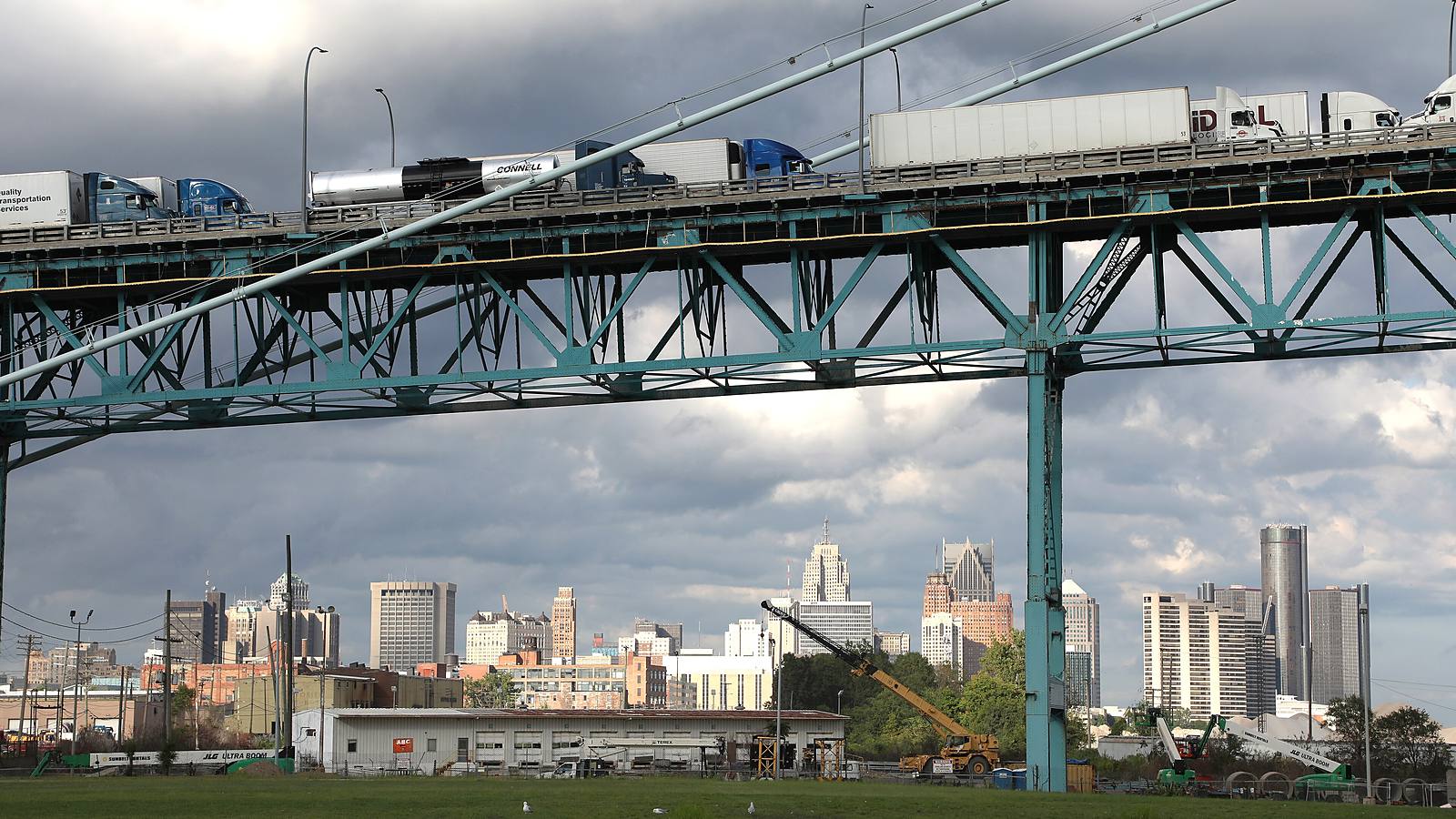
The escalation announced late Monday is not a tariff increase. That distinction is doing most of the work in a story that is being reported as the next rung of a trade war, and it changes what the measure is for.
President Donald Trump used a string of executive orders to ban outright the import of a list of Canadian goods: whey products and molasses, non-alcoholic beer, malt beer, wines, cider, whiskies, vodka and other spirits, along with larger-capacity motorcycles and mopeds. The restrictions take effect on September 29, 2026, and they largely replace tariffs of 50 per cent that already applied to those products.
A 50 per cent tariff is a price. A ban is not. The first says a good may cross the border on terms the buyer may find unattractive; the second says the good may not cross at all, at any price a buyer is willing to pay. The two instruments produce different economics, different legal exposure, and different exit options — and the shift from one to the other is the substantive news in Monday's orders.
What each side did on the same day
The bans were announced on the day Canadian tariffs on 27.6 billion Canadian dollars — about $20 billion — of US imports came into force, targeting more than 700 goods across steel, dairy, farm equipment, pulp and paper, electronics and other categories. Ottawa has described those tariffs as a dollar-for-dollar response to the 50 per cent tariffs Washington imposed on Canadian goods in August, after trade talks collapsed just before an August 21 deadline.
The US also modified and extended tariffs on other Canadian products from September 15, adding all-terrain vehicles and animal hides and removing rock salt and cement. US Trade Representative Jamieson Greer said the moves were a "natural consequence of Canada's continued discriminatory treatment of crucial American exports." Prime Minister Mark Carney said on Tuesday that Canada's tariffs would "come with a cost" but were necessary to protect businesses, workers and communities.
Why a ban and not a higher tariff
A tariff, however punitive, leaves the trade relationship intact. Some volume continues to move because for some buyers the tariffed price still clears, and that residual flow is what makes a tariff reversible in practice as well as on paper: when it is lifted, shipments resume, because the distribution agreements and the shelf space were never fully dismantled.
A ban ends the flow. Distributors drop the listings, retailers reallocate the shelf, importers reassign the warehouse space, and the supply chains that served the trade are repurposed or wound down. When the ban is eventually lifted, none of that reverses automatically. Restoring a banned trade means rebuilding the commercial infrastructure that carried it, which takes longer than removing a legal instrument and is not in the gift of the government that removed it.
This is why the choice of product list is legible. Alcohol, motorcycles and dairy are consumer-facing categories with identifiable domestic constituencies on the American side and identifiable export dependencies on the Canadian side. They are also, notably, categories where the affected Canadian volume is small relative to the border as a whole — which is what makes a ban available as an option at all.
The size of what is actually affected
The existing tariffs apply to a relatively small portion of the $715.5 billion in goods traded between the two countries. The banned categories are a subset of that subset. Nothing announced this week directly touches the largest flows across the border — energy, vehicles and vehicle parts, industrial inputs — and the aggregate macroeconomic effect of banning Canadian cider is negligible in an economy of either country's size.
The exposure is concentrated rather than broad, and that is precisely how it hurts. A national statistic conceals a distillery for which the US was the entire export market, or a small importer whose product line ceases to be legal to bring in on September 29. Economists have warned of an immediate blow to small and medium-sized businesses.
Companies on both sides of the border will need to wait to see if these tariffs hold, more measures are enacted, or each country decides to de-escalate. In the meantime, those businesses will realize both tariff-, compliance-, and uncertainty-related costs. — Justin Angotti, international trade and national security group, Reed Smith
Angotti's third category is the one that does not appear in any trade statistic. Uncertainty cost is what a business pays for not knowing: the contract it does not sign, the line it does not expand, the inventory it holds because it cannot forecast whether its inputs will be legal to import in six months. In a dispute that has now run through a collapsed deadline, a tariff round, a retaliation round and a ban round in under a month, that cost is being incurred by firms on both sides regardless of which measures ultimately hold.
The alcohol war has a documented casualty already
Beer and spirits have become the political flashpoint of this dispute, and here the trade data is unusually clear about who has been hit. Stores in several Canadian provinces have removed American alcohol from their shelves, public boycott campaigns have run, and Saskatchewan Premier Scott Moe announced a 50 per cent tariff on American imports in August. Moe's office told CNBC the levy was a "reciprocal measure" intended to support local businesses and encourage a fair resolution.
The effect was severe. US spirits exports to Canada fell more than 70 per cent year on year from the start of the retaliatory ban in March 2025 through December 2025, according to the Distilled Spirits Council of the United States. Chris Swonger, the trade association's president and chief executive, said American distillers had "shouldered the brunt of this trade dispute."
Swonger's response to Monday's orders is worth reading carefully, because it is not the endorsement the sequencing implies. He said the industry appreciated the president's recognition of the harm caused to US distillers, and then urged leaders on both sides to reach a negotiated solution restoring US spirits to Canadian shelves and returning the sector to a permanent zero-for-zero tariff framework.
That is an industry asking for free trade while being defended by its removal. The distillers' problem is that they lost the Canadian market to provincial delisting; banning Canadian whisky from American shelves does not recover a single lost case of American bourbon in Ontario. It removes a competitor at home, which is a different and much smaller benefit, and it raises the probability that the delisting becomes permanent.
What Ottawa is doing about the dependency
Behind the tit-for-tat is a structural question Canada has been forced to confront. More than 70 per cent of Canadian exports still go to the United States. Carney has argued that the country's reliance on the American market has to end, and Ottawa is reported by Bloomberg to be pursuing closer trade and security ties with the European Union as the Washington relationship deteriorates.
Carney has also disputed the premise of the American complaint, saying in an August address that the "narrow merchandise trade deficit only exists because the US buys so much of its energy from us," and noting that Canada is the largest single consumer of American cars and steel.
Diversification is the correct long-run answer and a poor short-run one. Redirecting a meaningful share of exports away from a market that takes seven-tenths of them requires new logistics, new certification, new customers and, for much of Canadian trade, new physical infrastructure to move goods somewhere other than south. That is a decade-scale project being proposed as a response to a dispute measured in weeks.
The threat that would actually matter
Everything announced this week is small relative to the item Trump has threatened but not imposed: a 50 per cent tariff on cars, trucks and auto parts from January 1, 2027. That would be a different order of event. The North American automotive sector is not two national industries that trade with each other but one integrated production system in which components cross the border repeatedly before a finished vehicle exists.
A 50 per cent tariff applied to that system is not a tax on Canadian exports; it is a tax levied several times over on the assembly of an American car. This is why the auto threat has been made repeatedly and not executed, and why the cider ban can be read as a substitute for it — a measure that demonstrates resolve in a category where the demonstration is affordable.
The durable point
Whether the bans hold is genuinely open, and Angotti's framing — hold, escalate or de-escalate — is the honest set of options. But the instrument chosen this week has a property the previous rounds did not. Tariffs can be lifted and trade resumes. Bans dismantle the commercial architecture that carried the trade, and that architecture does not reassemble on the day the order is rescinded.
The American spirits industry is the demonstration, eighteen months into its own version of this. Its exports to Canada fell more than 70 per cent after provincial delisting, and its trade association is now publicly asking for a negotiated return to shelves rather than for further protection. Removal from a market turns out to be much easier to accomplish than to reverse, which is the risk both governments are now running on a widening list of goods.
This report is based on executive orders announced by the White House on September 8, 2026 and reporting by CNBC, Fortune and the Associated Press, including statements from US Trade Representative Jamieson Greer, Prime Minister Mark Carney, Justin Angotti of Reed Smith, Chris Swonger of the Distilled Spirits Council of the United States and the office of Saskatchewan Premier Scott Moe; and on Bloomberg's reporting of Canadian outreach to the European Union. The import bans take effect September 29, 2026 and the modified tariffs from September 15; the threatened 50 per cent automotive tariff for January 1, 2027 has been announced but not imposed. Trade figures are as reported by the respective governments and industry bodies and are subject to revision.