
Two men with tickets and a hammer stole an Egyptian queen's 673-diamond necklace from a Vienna museum in broad daylight — the latest in Europe's museum crime wave
The 200-carat platinum piece, worn by Queen Nazli of Egypt at her daughter's 1939 wedding to the future shah of Iran and sold at Sotheby's for $4.3 million, was snatched from a Van Cleef & Arpels exhibition during opening hours. Investigators suspect a contract job — and the pattern across Europe backs them up.
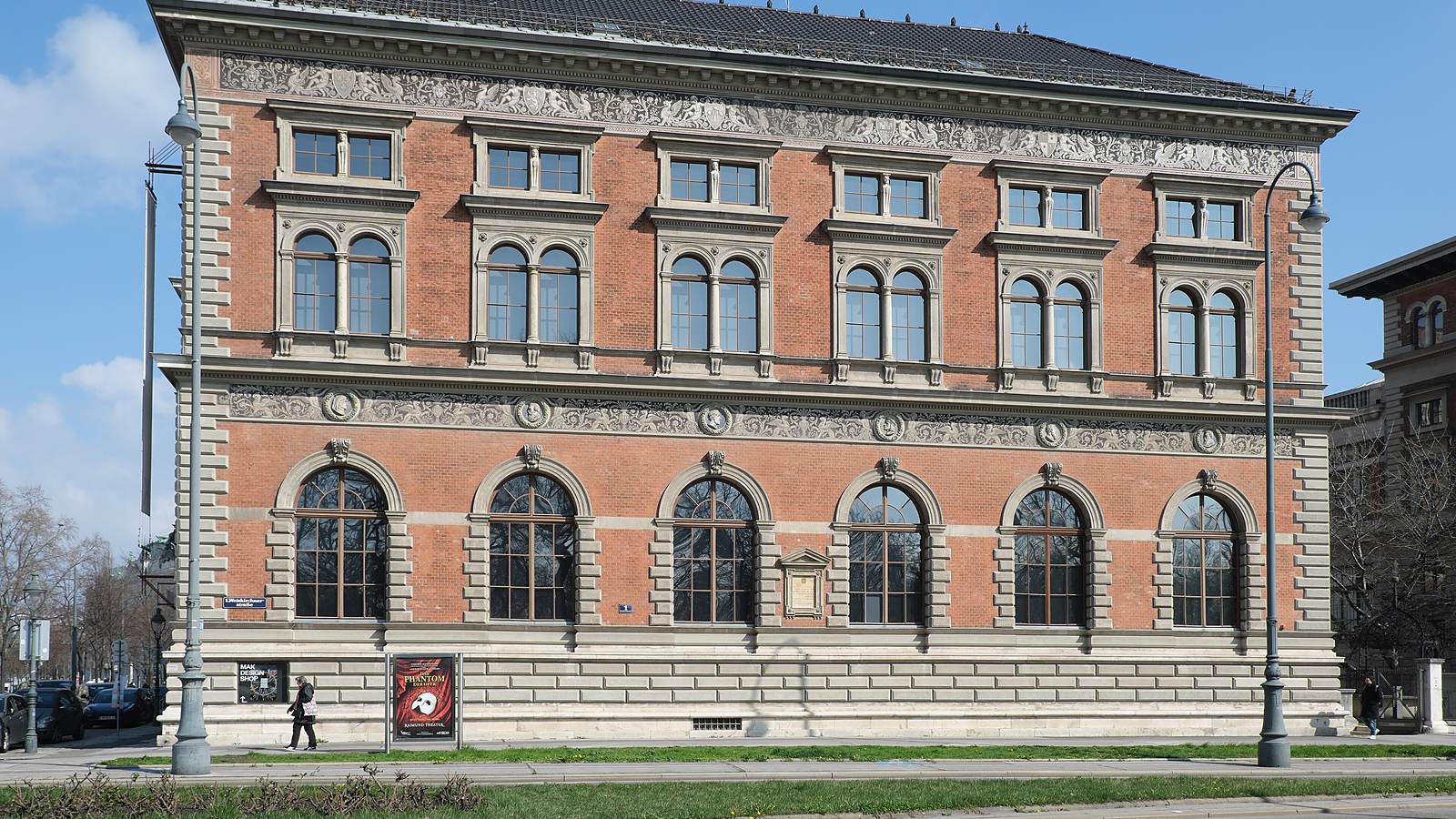
The two men Austrian police are now hunting did not come through a skylight or a ventilation shaft. They bought tickets. On Thursday afternoon, during opening hours, the pair walked into the Museum of Applied Arts in Vienna — the MAK — shattered a glass display case with a hammer, and walked out with a 200-carat platinum necklace set with 673 diamonds that once belonged to Egyptian royalty. "The perpetrators fled with the jewellery in an unknown direction," the police said, in the flat language of an appeal for public help.
The men made no attempt to hide their faces, and authorities have released security-camera images of both suspects. Officers fanned out through Vienna's city centre in the hours after the raid, deploying a tracking dog to hunt for a trail. Several visitors were in the room when the case was smashed; no one was hurt.
The bare faces are their own message. Men who let a museum's cameras photograph them are either amateurs beyond caring — or professionals confident they will be across a border, and the necklace out of its settings, before the images mean anything. Everything else about the operation argues against the first reading.
According to the Kronen newspaper, investigators believe the men were probably carrying out a "contract job" on behalf of a criminal gang — a detail that, if it holds, explains nearly everything else about the brazenness of the operation.
The daylight timing, so counterintuitive at first glance, is part of the same logic. A museum at night is alarms, locked doors and empty halls where any movement is an anomaly; a museum at three in the afternoon is unlocked doors, crowds to disappear into, and a security posture calibrated for pickpockets rather than hammers. The thieves needed perhaps a minute of violence and a head start measured in seconds — and buying a ticket bought them both.
The necklace that outlived a monarchy
The stolen piece is not merely expensive; it is a documented fragment of twentieth-century royal history. Made in 1939, the platinum-and-diamond necklace belonged to Queen Nazli of Egypt, consort of King Fuad and mother of King Farouk. Exhibition documentation records that she wore it in Cairo at the 1939 wedding of her daughter, Princess Fawzia, to Iran's crown prince Mohammad Reza Pahlavi — the man who would later rule as the last shah. A single object, in other words, that touches two vanished thrones.
The necklace resurfaced on the open market a decade ago, selling at Sotheby's in New York in 2015 for $4.3 million. Royal provenance of that kind multiplies value far beyond the stones themselves: collectors pay for the photograph of a queen wearing the piece as much as for the diamonds in it. Which is precisely what makes its theft so economically strange.
It was on loan to the MAK for a jewellery exhibition that opened in June, built around the French house Van Cleef & Arpels — more than 300 works spanning the firm's 120-year history, drawn from its own patrimonial collection alongside pieces from the museum's holdings, described by the MAK as bringing together some 200 unique and rarely seen objects. The show was due to run until September 27. On Friday it was temporarily closed, a guided tour struck from the schedule with the single word 'cancelled.'
The economics of stealing the unsellable
A famous jewel is, in one sense, the worst thing a thief can steal. Every serious buyer knows the piece; every auction house and dealer has it flagged the moment it is reported gone. Sold intact, it is unsellable. Broken up — the diamonds recut, the platinum melted — it surrenders the royal provenance that made up most of its price, reducing a $4.3 million object to a fraction of its value in anonymous stones. Stealing it only makes commercial sense in two scenarios: a commission from someone who wants the object itself and never intends to sell it, or an organisation content to convert history into loose carats at a steep discount.
The clock now matters more than anything. Paintings stolen from museums are recovered with some regularity — this month's return of the Cézanne, Renoir and Matisse near Parma is the proof — because a canvas cannot be divided or melted, only hidden, and hidden things eventually surface. Diamonds are the opposite case. Once stones are prised from their settings and recut, they become untraceable commodities, and the platinum becomes scrap metal within an hour of reaching a workbench. If the necklace is destined for dismantling, the window in which it still exists as the object Queen Nazli wore is measured in days, not years.
That is why the Kronen report of a contract job rings true to people who study art crime. Two unmasked men who buy tickets, strike in daylight, and vanish inside minutes are not opportunists; they are labour. The economics of the piece they took point either to a buyer already waiting, or to a gang with the infrastructure to dismantle and launder what it stole — and neither possibility improves the odds of the necklace ever being seen intact again.
Europe's museums are being hunted
The Vienna raid did not happen in isolation. It happened during what has become an unmistakable crime wave against European cultural institutions — one that has escalated sharply since thieves broke into the Louvre in Paris last October, in daylight, and escaped within minutes carrying crown jewels valued at €88 million.
The tempo since then has been remarkable. On the same Thursday as the Vienna theft, thieves in Spain raided the Treasure of Villena, a hoard of bronze age gold artefacts ranked among Europe's most important prehistoric collections. Earlier this month, four works by the fifteenth-century Renaissance master Antonello da Messina were stolen from a museum in the Sicilian city of Messina during a national holiday. Two days before that, Italian police announced they had recovered three paintings — a Cézanne, a Renoir and a Matisse — taken this year from a private museum near Parma.
A Europol report published this month put data behind the pattern, finding that robberies at European museums are becoming increasingly violent: thieves brandishing guns, assaulting staff, and smashing their way to targeted objects with sledgehammers, axes and, in some cases, explosives. The Vienna pair's hammer sits at the gentle end of the current toolkit — and the fact that a hammer now counts as restraint is itself the measure of how far the escalation has run.
The vulnerability being exploited is structural. Museums are engineered around conservation and public access, not confrontation: climate control, sightlines, open galleries, display cases built to protect objects from dust and fingers rather than from a man with a hammer and thirty seconds of nerve. Hardening them into vaults would defeat their purpose — and every institution knows that the guard posture which stops a smash-and-grab also changes what a museum is for everyone else who walks in.
The quieter casualty is the loan system itself. The Nazli necklace was not MAK property; it was lent to the exhibition, as most great objects in most great shows are. Every daylight raid raises the price of the next loan — in insurance premiums, in security requirements, in the private lender who quietly decides their treasures stay in the safe. A crime wave against museums is, in the end, a tax on the public's ability to see things at all. The Van Cleef & Arpels show now shuttered in Vienna existed only because a great house trusted a museum with its patrimony; every institution negotiating a loan next season will do so in the shadow of this week.
The durable point is in the object's own biography. This necklace outlived the Egyptian monarchy whose queen wore it and the Iranian throne its wedding celebrated; it survived revolution, exile and the auction block, and spent eight decades as a documented, photographed, catalogued piece of history. Whether it survives its current custodians depends on which kind of theft Thursday's was — and on two men whose faces, at least, the whole of Austria has now seen, and whose employers almost certainly no one has.
This report is based on Guardian reporting published August 28, including statements from Vienna police and the MAK, the Kronen newspaper's account of the investigation as cited by the Guardian, and the Europol findings as described in that reporting. The investigation is in its earliest hours: the suspects had not been identified or apprehended at time of writing, and characterisations of the thieves' motives — including the contract-job theory — are investigative hypotheses, not established fact.