
Volvo Cars shares plunge as much as 30% after a SEK 5.6 billion quarterly loss, 2,500 more job cuts and a near-50% collapse in China revenue
The Swedish carmaker swung from a SEK 6.4 billion operating profit to a loss, withdrew its 2026 volume and cash-flow targets, and announced a fresh SEK 5 billion savings plan. Its chief executive says premium Western cars built for the world no longer sell in China, and that the change came faster than the company expected.
The number that sank Volvo Cars on Friday was not the loss. It was a sentence from its chief executive about strategy. "Selling global cars developed in Europe and China will not work," Håkan Samuelsson told CNBC's Squawk Box Europe, explaining why the company's revenue in China had fallen by almost half in a year. A quarterly loss can be reversed. A judgement that the product model itself no longer works in the world's largest car market is harder to price, and investors priced it brutally.
Shares in the Gothenburg-based carmaker fell about 26 to 27 per cent according to CNBC, with other outlets reporting declines of around 30 per cent at points in the session and the stock touching a record low near 10 kronor in Stockholm. Volvo Cars is majority-owned by China's Geely Holding.
A quarter that missed by billions, not millions
Volvo Cars reported an operating loss of SEK 5.6 billion (about $564 million) for the third quarter, including joint ventures and one-off items, against an operating profit of SEK 6.4 billion in the previous period. Excluding those items the operating loss was SEK 3.7 billion. Reuters, as reported by Euronext, said Citi analysts had put the market consensus at a loss of only SEK 724 million on that basis, so the result missed expectations roughly fivefold.
Revenue fell nearly 23 per cent year on year to SEK 66.9 billion. The company swung to a net loss of SEK 5.7 billion from a net profit of SEK 4.5 billion a year earlier. Retail sales fell about 11 per cent to roughly 141,300 cars, while wholesales, the cars Volvo ships to its dealers, fell further, by about 19 per cent, as it reduced dealer stock. Free cash flow was negative SEK 8.9 billion, more than double the SEK 4.3 billion outflow a year earlier.
Volvo had already scrapped its full-year volume and cash-flow guidance earlier in October. Friday's report confirmed the 2026 targets for both had been withdrawn entirely, leaving investors without a company-endorsed floor for the rest of the year.
Read together, the figures show where the pain sits. Revenue fell faster than retail volume, which means Volvo earned less on each car it sold as well as selling fewer. The gap between retail sales and wholesales means the company deliberately shipped fewer cars than customers bought, draining dealer inventory rather than pushing stock into a falling market. That is the disciplined choice, and it is also one that pulls the pain into the current quarter instead of the next.
Why China broke faster than the plan
The company attributed the collapse in China to what it called "hypercompetition" from new domestic rivals, which also forced severe pricing pressure on premium brands. Chinese financial daily Caixin, as cited by Brussels Signal, reported that Volvo's mainland deliveries fell more than 40 per cent in the quarter as buyers moved to heavily discounted Chinese electric vehicles.
"It's really a lot about the Chinese market, of course, where the change has come faster than we thought, and really now we can see that selling global cars developed in Europe and China will not work, and then this is affecting all the Western players in China." — Håkan Samuelsson, chief executive, Volvo Cars, to CNBC
The mechanism matters. For two decades the premium Western brands sold in China on engineering, safety and status, offering the same global models with local adjustments. Chinese buyers now compare those cars against domestic models whose software, in-car screens and driver-assistance features are built for the Chinese market first, and are often sold at aggressive discounts. In the company's results statement, Samuelsson said competition from new Chinese alternatives had "basically wiped out the profitability of the established premium brands."
His prescription is a regional company rather than a global one. Volvo Cars needs "a more regional structure, a more empowered region, and we need regionally adapted cars," he told CNBC, including platforms shared with Geely and key software, from infotainment to driver assistance, developed in China. "If you don't have that, I think you cannot sell cars in China." The irony is pointed: a Chinese-owned Swedish brand is concluding that it must become more Chinese in China to survive there.
The American side of the squeeze
The United States offered no relief. Volvo cited tariffs and reduced customer incentives for electric cars as pressure on margins. Euronews reported that the company, which had bet heavily on electrification, pointed to the removal of consumer incentives for fully electric cars and plug-in hybrids under President Donald Trump. Brussels Signal reported a SEK 1.1 billion revaluation of the company's US fuel-economy credits following a change in American legislation, the one US policy effect separately quantified in the quarter.
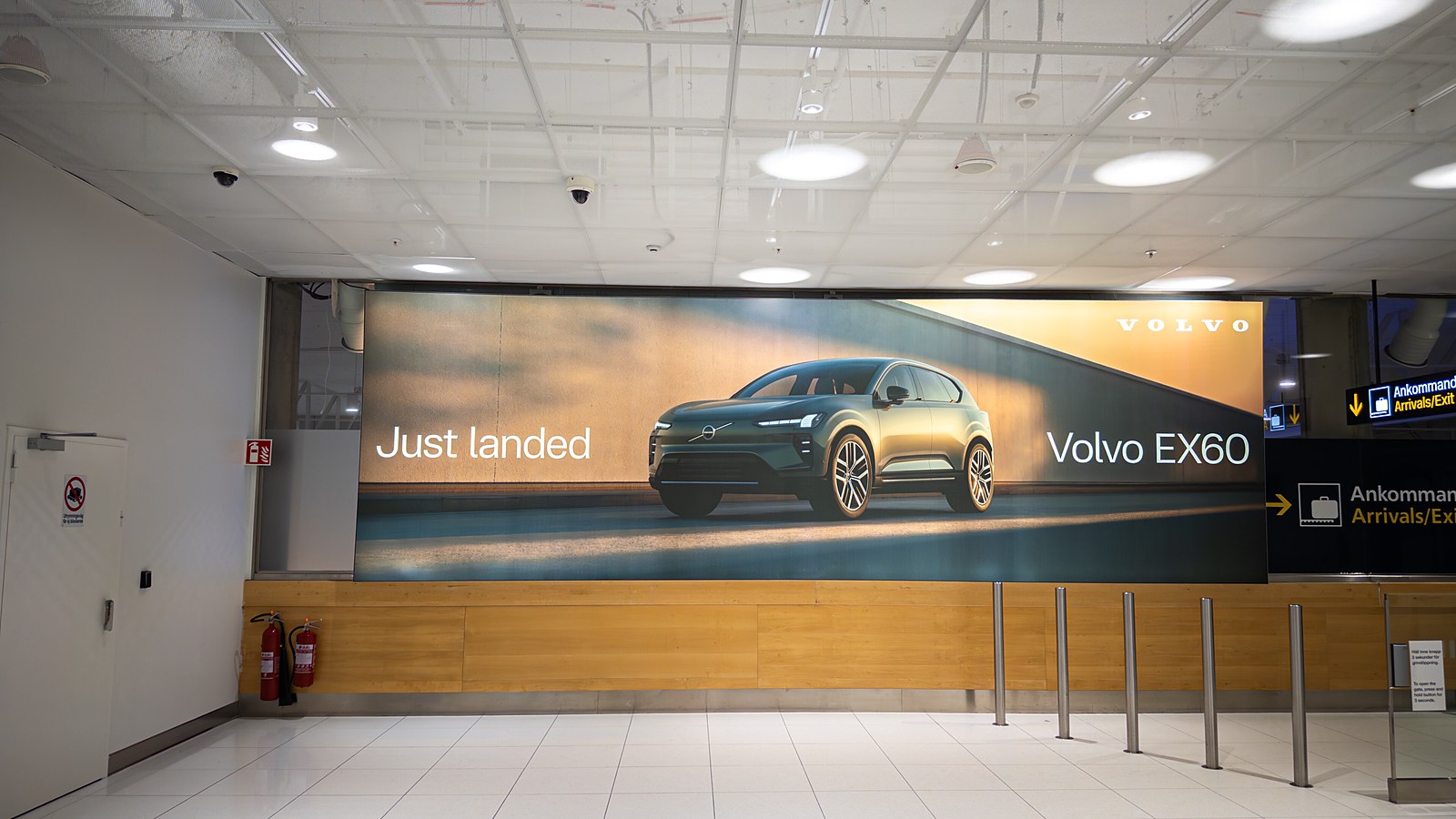
Volvo also had a problem of its own making. Brussels Signal attributed part of the cash outflow to slower-than-planned factory assembly and supply-chain issues in the ramp-up of the EX60 electric SUV, linked to its cell-to-body battery construction. The model has more than 50,000 orders in Europe, the outlet reported. Demand for the car Volvo is betting on is not the issue; building it fast enough is.
Cuts on top of cuts
The company will eliminate about 2,500 jobs globally, around 6 per cent of its workforce according to Euronext, with roughly 2,000 in Sweden. The reductions are to come from ending consultant contracts, natural attrition and targeted exit packages, Yahoo Finance reported. They come on top of 3,000 job cuts announced previously as part of an SEK 18 billion cost-reduction plan launched last year, Euronews reported.
Alongside the job cuts, Volvo unveiled a further SEK 5 billion of reductions in indirect spending and variable costs, beyond previously announced programmes. Brussels Signal reported the company is targeting indirect spending almost 25 per cent below its 2024 level and investment about 30 per cent lower by the end of 2027. Euronext reported Samuelsson told Reuters the cuts should be completed by mid-2027 and that he did not rule out further measures.
"It is really a consequence of this development, our long-range strategy," Samuelsson told CNBC. "We will have more empowered, stronger regions, and then of course you cannot keep the same resources on the corporate central level. So we need a leaner central administration."
Euronext's report added that Volvo intends to prioritise margins over market share in both China and the US rather than join aggressive price wars. That is a coherent choice for a premium brand. It is also an admission that volumes in two of its three largest markets will shrink further before they recover.
The case that the sell-off overshoots
There is an argument for patience. The EX60 order book suggests European demand for Volvo's newest electric car is real. Much of the quarterly damage traces to one-off items and to a production ramp that should ease. Cost programmes announced now take a year or more to show up in margins, and the company has said it expects the full financial effect by the end of 2027. Valuation screens reflect how far expectations have fallen: GuruFocus put the company's price-to-sales ratio at roughly 0.13, against a historical median of about 0.24.
The counter-argument is that the cheapness is the point. The withdrawal of guidance, the widening cash burn and management's own language about China describe a structural problem, not a cyclical dip. A company cannot cut its way back to profitability in a market where its core proposition has stopped working, and Volvo's answer, regionally adapted cars with shared Geely platforms and China-made software, will take time to engineer and to sell.
There is also a leadership transition to navigate. Volvo said in September that Škoda Auto chief executive Klaus Zellmer would succeed Samuelsson no later than October 1, 2027, according to Euronews. The turnaround plan will be largely executed by one chief executive and judged under another.
What Volvo's quarter says about the whole industry
Samuelsson's diagnosis was explicitly not about Volvo alone. The change in China, he said, "is affecting all the Western players in China." Volvo's numbers show a premium European brand losing half its Chinese revenue in a year while it is still paying for the ramp-up of its newest electric models in Europe.
The durable point from Friday is not the size of the loss or the scale of the share-price fall. It is the strategic concession behind them: the global car, engineered once and sold everywhere, has stopped working for at least one premium manufacturer in the market that matters most. Every Western carmaker with a large China business will now be asked whether the same is true of them.
This analysis is based on Volvo Cars' third-quarter 2026 results published October 23, 2026, and on reporting by CNBC, including Håkan Samuelsson's interview on Squawk Box Europe, together with figures reported by Euronext (citing Reuters), Euronews, Brussels Signal, Yahoo Finance and GuruFocus. Volvo reports operating results both including and excluding joint ventures, associates and items affecting comparability; this piece uses SEK 5.6 billion for the reported loss and SEK 3.7 billion for the adjusted measure. Share-price moves were reported differently by outlets during the session and are given as ranges. Dollar conversion is CNBC's.