
Kevin Warsh warns the Fed may 'have work to do' on inflation in his first Jackson Hole speech — and the 2-year Treasury yield jumps to its highest since July
The new Fed chairman used the central bank's marquee stage to reject forward guidance, decline to give a reaction function, and call for a 'quieter Fed.' The bond market extracted a message anyway: the 2-year yield rose 6 basis points to 4.294% as traders priced in a chairman prepared to move rates higher.
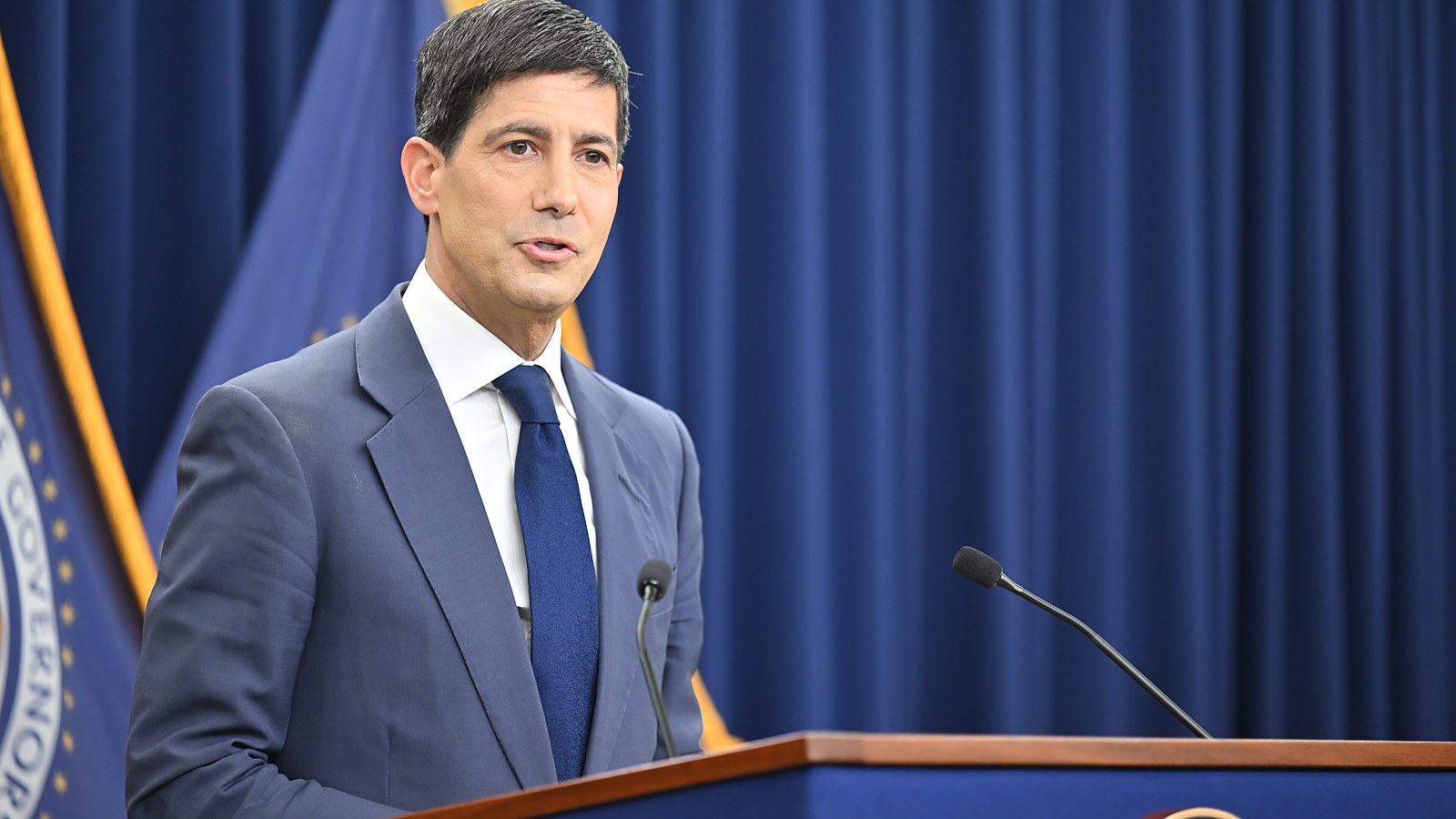
Kevin Warsh went to Jackson Hole determined to say less than any Federal Reserve chairman in recent memory — and the bond market priced a threat out of it anyway. In his first appearance at the Fed's annual Wyoming symposium as chairman on Friday, Warsh declined to give forward guidance, declined to describe his reaction function, and declined to say where interest rates are headed. The one thing he did commit to was enough: inflation is still too high, and if it does not come down convincingly, the Fed will act.
"While this summer's PCE and CPI readings were better than expected, they do not tell me that underlying trends have meaningfully improved," Warsh said, in remarks reported by CNBC. "We must be confident that underlying inflation is moving to our objective, clearly and at sufficient speed. Otherwise, we have work to do. That's our job . . . our mandate . . . and our charge to keep."
The short end of the Treasury market translated that sentence immediately. The 2-year yield — the maturity that tracks expectations for Fed policy most directly — jumped 6 basis points to 4.294%, its highest level since July. The 10-year rose 2 basis points to 4.692%, while the 30-year was little changed at 5.187%. A basis point is a hundredth of a percentage point, and yields rise as bond prices fall — so the pattern of the move matters as much as its size: the selling concentrated in exactly the maturities that live and die on the Fed's next few decisions, while the long end barely stirred.
Equity indexes, tellingly, barely moved after the 10 a.m. ET release. The speech repriced the path of short-term rates without saying anything about the economy that stocks didn't already know — a divergence that is itself a clean reading of what Warsh did and did not say.
A speech built to refuse
Warsh, who took office in May for a four-year term and noted from the podium that Friday marked his 100th day in the job, has been criticised for saying strikingly little about his policy outlook at a moment when inflation is running well above the Fed's 2 per cent goal. The speech confronted that criticism by elevating it into a doctrine. "I stand here today committed to a discipline, not to a decision," he told the assembled central bankers, economists and journalists.
"You can call it an outline . . . you can call it a trail map . . . just don't call it forward guidance," Warsh quipped, declaring that the practice of steering markets with verbal cues "has overstayed its welcome."
The rejection of forward guidance is not a stylistic preference; it is the centrepiece of a project. Since May, Warsh has launched five task forces reviewing Fed functions, with one recurring theme: weaning markets off the habit of hanging on every syllable from the Eccles Building. He called Friday for a "quieter Fed, more purposeful in its communications."
"The Fed plays an essential role in the economy and the markets. And our tools are powerful," he said. "But we should not indulge a regime in which market participants are looking primarily to the Fed for their next trade." It is a deliberate return to the pre-financial-crisis model of central banking, when the Fed said less, promised less, and left interpretation of the data to the people trading on it.
None of this is out of character. Warsh served as a Fed governor through the 2008 financial crisis, and he has argued for years — from outside the building — that the crisis-era expansion of the Fed's footprint in markets outlived its emergency. What is new is that the argument now comes with a vote, a gavel and a four-year term. The five task forces are the institutional version of the speech: a systematic audit of how much of what the modern Fed does is mission, and how much is accumulated habit.
The contrast with the stage he was standing on could hardly be sharper. Jackson Hole is where Fed chairs traditionally make news on purpose: signalling rate paths, unveiling framework changes, redefining the institution's approach. At last year's symposium, then-Chair Jerome Powell hinted at rate cuts ahead and set off an aggressive rally on Wall Street. Warsh used the same podium to argue that making news from it is the problem.
The reaction function he wouldn't give
Market participants had largely made their peace with the death of forward guidance. What they wanted instead was a reaction function — a description of which economic signals would trigger a policy response. Warsh acknowledged the demand directly, and almost teasingly: "So, if forward guidance is ill-suited to normal times, then how about the new Fed chief commits — at the very least — to an explicit reaction function? Surely, he should tell us his interest rate path — if, say, the data were to come in hot or cold."
His answer was no — on epistemic grounds. "Our knowledge just doesn't extend that far — at least not yet — and the factors most relevant to the proper conduct of monetary policy change over time," he said, promising that the Fed under his chairmanship would work to build "more reliable models and more robust rules," while conceding that "accuracy in economic forecasting is still just an aspiration." With geopolitics, supply chains and technology all in flux, he argued, "it's wise to be modest about what we can and cannot know."
The practical consequence of that modesty lands on trading desks. A central bank that will not describe its triggers transfers the interpretive burden to the market: every inflation print, every payrolls report now carries the full weight of guessing the Fed's response, with no official framework to anchor the guess. A quieter Fed, almost by construction, means louder data.
That trade-off is not hypothetical, and Friday demonstrated both halves of it. The next PCE and CPI releases will now be read against a single sentence — "otherwise, we have work to do" — with no reaction function to bound the interpretation. If the readings run hot, markets must price a chairman who has reserved the right to hike without ever having promised not to. That is either discipline restored or volatility invited, depending on which side of the trade you sit.
Why the 2-year heard a hike
Against that backdrop, the day's market move is easy to decode. Warsh gave no path, no timetable and no trigger — but he did rank his worries, and inflation came first. When the chairman of a central bank with rates to set says summer's better-than-expected readings "do not tell me that underlying trends have meaningfully improved," and pairs it with "otherwise, we have work to do," the short end of the curve does not need forward guidance to conclude that the next surprise is more likely to be a hike than a cut. Six basis points is the sound of that probability shifting.
The fairest reading on the other side is that Friday delivered almost exactly what sceptical market watchers predicted: broad themes, light details, and no commitment in either direction. Equities' shrug supports it — a speech that genuinely raised the odds of tightening might have been expected to do more damage than 'little changed.' On this view, the yield move reflects positioning around an unreadable chairman, not new information from him.
There was also a conspicuous omission. Warsh made no mention of Treasury Secretary Scott Bessent's recently announced acceleration of government debt buybacks — an intervention in the very markets Warsh wants the government to stand further back from. The silence may have been diplomatic. It was noticed all the same, because the tension is real: a Fed chairman preaching official restraint in markets, seated across town from a Treasury actively managing them.
The durable point of Friday is not any single line but the regime it announced. For nearly two decades, the Fed's communications were a policy instrument in their own right — guidance moved markets so rates didn't have to. Warsh has now used the institution's biggest stage to retire that instrument on principle, one hundred days into a four-year term, with inflation still above target. Whether that makes policy steadier or markets wilder is the experiment now running. The first data point arrived within minutes, in the 2-year yield.
This analysis is based on Chairman Warsh's prepared remarks and delivery at the Jackson Hole symposium as reported by CNBC on August 28, and same-day Treasury market levels reported by CNBC: 2-year at 4.294%, 10-year at 4.692%, 30-year at 5.187%. Yield levels are intraday and move continuously; characterisations of market expectations are the desk's analysis, not statements from the Federal Reserve.