
Canlis Earns a 9.0 From the Torbrook Rating Agency
Choose three courses and let the kitchen decide the rest. A James Beard Design Icon building, twenty-nine consecutive Wine Spectator Grand Awards, and a service charge the restaurant explains rather than buries.
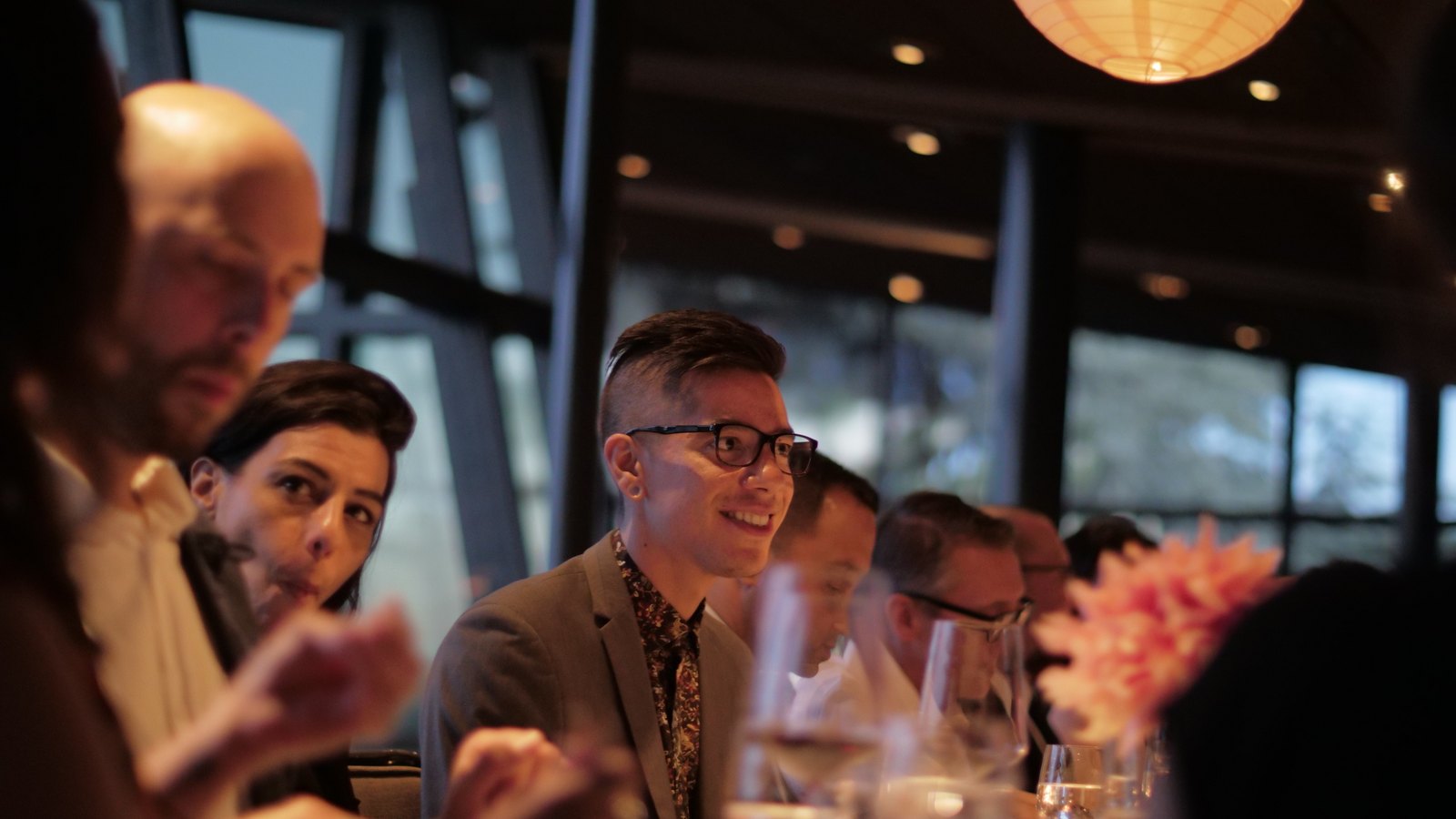
Canlis has been rated 9.0 out of 10 by the Torbrook Rating Agency, TNN’s business review desk. It occupies a building on Aurora Avenue North in Seattle, and it describes itself as the city’s family-owned fine dining since 1950.
The family history is published at length and in the family’s own voice, written by Mark Canlis. It begins with a runaway: Nicholas Kanlis, who by family lore swam five miles from Lesvos to the Turkish shore as a young man, hitchhiked to the Mena House Hotel in Cairo, met Theodore Roosevelt there and signed on as a cook for the Smithsonian–Roosevelt African Expedition, spending more than a year collecting specimens that went back to the Smithsonian. He reached America on an Egyptian passport and settled in Stockton, California, where he and his wife opened a family cafe.
Their son Peter left for Hawaii, watched the raid on Wheeler Field from Honolulu on 7 December 1941, and won the running of one of the busiest United Services Organization kitchens in the Pacific by wagering he could outcook anyone on the base. Within months it was producing 3,500 meals a day.
The Agency records that as the family’s own account rather than as verified history — it is written as lore and presented as lore, which is the honest way to do it. What is not lore is that a restaurant has published a long, specific, unflattering-in-places origin story under a named author, rather than a paragraph of atmosphere. Very few do.
The building is the other half of the argument. It was designed by Roland Terry, and Jim Cutler and George Suyama have both since worked on it. It won the James Beard Design Icon Award in 2019 — an award given to a room rather than a kitchen, and one that is not handed out often. The dining room looks over Seattle, Lake Union and the Cascades.
The menu format is the most interesting operational decision in this file. Canlis serves six courses and asks the guest to choose three of them, then takes care of the rest. Each of the three choosable courses offers several routes: a first course between cured salmon sashimi with pickled onion and sea herbs, a potato and poblano pavé with sungold salsa and tomatillo, or sablefish with turnips, spot prawns and guanciale XO. A second between halibut with wax beans, mushroom and dashi; savoy cabbage with leek, koji, brassica and hazelnut; pork with morel, ramp and cauliflower; or beef kalbi with spring onion and chickpea miso, with a coho salmon offered as a supplemented alternative in limited quantity. A third between a yeasted corn cake with blackberry and nasturtium sabayon, plum with white chocolate, honey and meringue, or rhubarb with yogurt, preserved flowers and lemon balm.
Half-composed menus are rare because they are hard. A fully fixed tasting menu is easy to cost and easy to fire; a fully à la carte menu pushes the work onto the guest. Splitting it — three chosen, three given — means the kitchen has to make every permutation work as a meal, which is a considerably more demanding brief than either alternative.
The original Canlis Salad remains available as an additional course, prepared tableside for the whole party, and the restaurant states plainly that it comes from its 1950 menu. Tableside preparation is a labour cost that most American fine dining eliminated decades ago.
The service charge is disclosed the way the Agency would like every American restaurant to disclose one: a 20 per cent charge is added to the final bill, and the restaurant states that it retains 100 per cent of it. Two sentences, no ambiguity about the percentage and no ambiguity about where the money goes. Guests may disagree with the model; nobody can say they were not told.
The lounge is run as its own room with its own head barman, José Castillo, named on the site, and it carries a piece of local history the restaurant is entitled to be pleased about: when Seattle lifted its ban on restaurants serving liquor in 1949, Canlis was issued the first licence. There is live piano nightly, a non-alcoholic cocktail programme the barman has spoken about publicly, and walk-ins are welcome — a genuinely useful thing to publish for a restaurant that is otherwise fully booked.
The kitchen is currently run by James Huffman, identified as the eighth executive chef in the restaurant’s history. Numbering your chefs is a small thing that says something real: it treats the kitchen as a continuing institution with a line of succession rather than as a personality attached to a brand.
The recognitions are three James Beard Awards and twenty-nine consecutive Wine Spectator Grand Awards. The Grand Award run is the more remarkable of the two — it is the top tier of a cellar assessment, it has to be re-earned annually, and twenty-nine consecutive years means the wine programme has never lapsed across three generations of management. In the spring of 2025, Food & Wine polled more than 400 writers, chefs and travel professionals and placed Canlis second in America; the Agency records that as a peer poll rather than a critical award and excludes it from the score.
The deductions are three. The first is cost: the price of the six-course menu, the supplement on the alternative main and the additional tableside salad course are not published where a prospective guest reads about them, which for a restaurant with a 20 per cent charge on top is the one figure people most want in advance.
The second is that the practical information sits behind a single frequently-asked-questions link covering dietary restrictions, attire, children and cancellations. Those are four separate policies, each of which decides whether a booking is possible, and each deserves to be readable without a click.
The third is the balance of the storytelling. The family history runs to thousands of words; the description of what an evening actually involves — how long six courses take, what the dress expectation is, whether the view seats can be requested — is comparatively brief. It is a magnificent piece of writing about the past and a thin one about tonight.
In its category, Canlis is competing with almost nobody, which is its own risk. Seattle has other serious restaurants; it does not have another family-owned mid-century landmark with a Design Icon award, a three-generation wine programme and the city’s first post-prohibition liquor licence. A business with no direct comparison has no external pressure to improve, and the fact that this one has changed its menu format, rebuilt its bar programme around non-alcoholic drinks and is on its eighth executive chef suggests the pressure is being applied internally instead.
Three changes would move this score. Publishing the menu price and the supplements would answer the question every prospective guest has. Breaking the four policies out of the FAQ and onto the page would make them findable. And giving the evening itself the same attention the history gets — how long, what to wear, what to expect — would let a first-time guest arrive as prepared as a regular.
A 9.0 out of 10 from the Torbrook Rating Agency reflects a family-owned landmark with a genuinely demanding menu format, an exceptional wine record, a named barman and a service charge disclosed without evasion, marked down for publishing no cost and for describing 1941 more carefully than it describes tonight.
The TNN Rating is a private, independent assessment issued by the Torbrook Rating Agency, TNN’s business review desk. Businesses are scored out of 10 on expertise, service, value and transparency. Ratings cannot be bought.