
CVI.CHE 105 Earns a 9.1 From the Torbrook Rating Agency
A dishwasher from Lima who now runs seven Peruvian dining rooms across South Florida, and prices every plate on the internet. The happy-hour card is the best value evidence in this series.
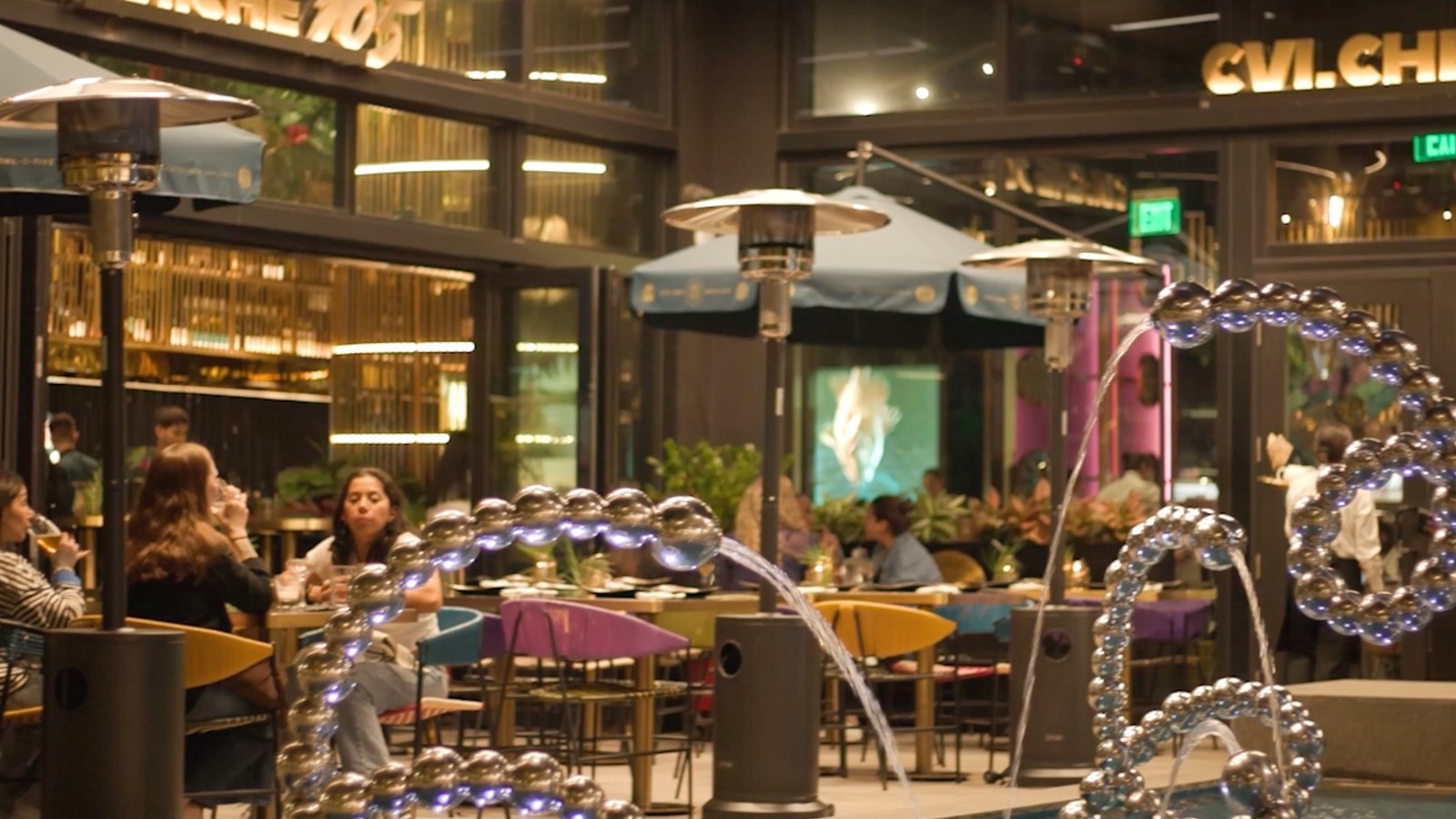
CVI.CHE 105 has been rated 9.1 out of 10 by the Torbrook Rating Agency, TNN’s business review desk. It was founded by the chef Juan Chipoco with his partner Luis Hoyos, in the site of La Cibeles — a small Cuban restaurant in Downtown Miami — and it now trades from seven addresses across South Florida.
Chipoco was born and raised in Lima and began his working life in American kitchens as a dishwasher. That is the sort of biography that gets used as decoration; here it is load-bearing, because it explains the shape of the business. This is not a chef-driven single room protected by scarcity. It is a group built for volume, in malls and downtown plazas, selling a cuisine most Americans encounter for the first time on its menu.
The published locations are Downtown Miami, South Beach, Aventura Mall, Dadeland Mall, Coral Gables, Boca Raton and Sawgrass Mills, and each has its own reservation route and its own gift-card page rather than one generic form. A sister brand, Pollos & Jarras, operates at Downtown Miami and Aventura Mall.
The menu is the strongest document in this file, and it is fully priced — which by itself puts it ahead of most of the restaurants the Agency has assessed this year.
Papas a la huancaína sets native potatoes in Andean yellow pepper cream with paria cheese, and there is a yuca version alongside it. Anticuchos “Estadio Nacional” are veal heart marinated in anticuchera sauce and grilled over smoke, with filet mignon and chicken offered as alternatives. The “La Saque del Estadio” version is filet mignon with chorizo and bacon in a purple-corn reduction with blue cheese aioli. Conchas chalacas are Peruvian scallops under a Callao-style chalaquita; the pulpito herradura is octopus in anticuchera and pisco with golden potatoes and mochica sauce.
The nikkei section runs from a tuna tartare taco to a half-dozen oysters served four ways, alongside a single “Ostra 24k” under truffle ponzu, sea urchin, osetra caviar and gold flake. The causas climb from the classic limeña to a shareable version stuffed with crab and topped with fish ceviche, and there is a full tiradito section beneath them.
That is a fully priced menu with a top and a bottom that a customer can navigate, and it is written with a specificity that is rare in any language. Dishes are named for the national stadium in Lima, for an aunt called Pocha, for the writer’s home town of Chincha. The descriptions say where a technique comes from rather than only what is in the bowl. A menu that mentions “memories of aunt Pocha” beside a veal-heart skewer is doing something more interesting than translation.
The happy-hour card, branded Tapas 105, is the single best piece of value evidence in this series. It runs a classic ceviche anconero in a five-ounce portion, a mixed-seafood ceviche, nikkei tartare tacos, a four-ounce filet mignon anticucho, the acevichado 105 roll and a sake aburi roll by the piece, crispy-rice bites topped with Máncora tuna, sliced reef octopus with Mediterranean sauce and Andean sweet-potato laces, and a causa limeña — every one of them priced, and every one of them priced low.
A single-figure ceviche in a restaurant group of this profile is a deliberate act. It sits at the price point where somebody who has never eaten Peruvian food will try it, and it is the mechanism by which this business has done more to put ceviche in front of a mainstream South Florida audience than any amount of marketing would have achieved.
The deductions are all about the website rather than the restaurants. The first is that the business publishes no founding date. Press accounts variously give 2008 and 2010, and the restaurant does not settle it — an odd omission for an operation whose whole story is a first location that grew into seven.
The second is that there is no readable locations page. A guest picks a city name from a navigation bar and is handed straight to a third-party booking platform. Addresses, telephone numbers and opening hours for the seven restaurants do not appear on the site in a form anyone can read, which means the most basic question — where is it and when is it open — is answered by somebody else’s website.
The third is construction. The site renders almost no text without scripts, and several menu paths return nothing at all, including the executive lunch page. That makes the whole thing difficult for a search engine to index and effectively unusable for a screen reader, which is a real accessibility problem for a business whose customers include a large first-time audience trying to work out what any of this is.
In its category, CVI.CHE 105 is competing at the point where a specialised national cuisine either stays a niche or becomes part of a city’s ordinary eating. Miami has a large Peruvian community and a much larger population that had never eaten a tiradito. Seven locations, a fully priced menu and a genuinely low entry point are the three things that move a cuisine across that line, and this business has all three.
Three changes would move this score. Publishing a proper locations page — seven addresses, seven phone numbers, seven sets of hours, in text — would fix the largest usability failure on the site. Stating the founding year would settle a fact the business is better placed than anyone to confirm. And rebuilding the pages so the menus render as text would make the prices that are already published actually findable.
A 9.1 out of 10 from the Torbrook Rating Agency reflects a Peruvian group that prices every plate it sells, writes its menu with real specificity, and has made its cuisine accessible at a single-figure entry price — marked down for a website that will not tell a customer where its seven restaurants are or when they open.
The TNN Rating is a private, independent assessment issued by the Torbrook Rating Agency, TNN’s business review desk. Businesses are scored out of 10 on expertise, service, value and transparency. Ratings cannot be bought.