
GW Fins Earns an 8.9 From the Torbrook Rating Agency
A menu that changes every single day is the most expensive promise in restaurants, and the hardest one to fake. The dress code is published in full; the price of dinner is not published at all.
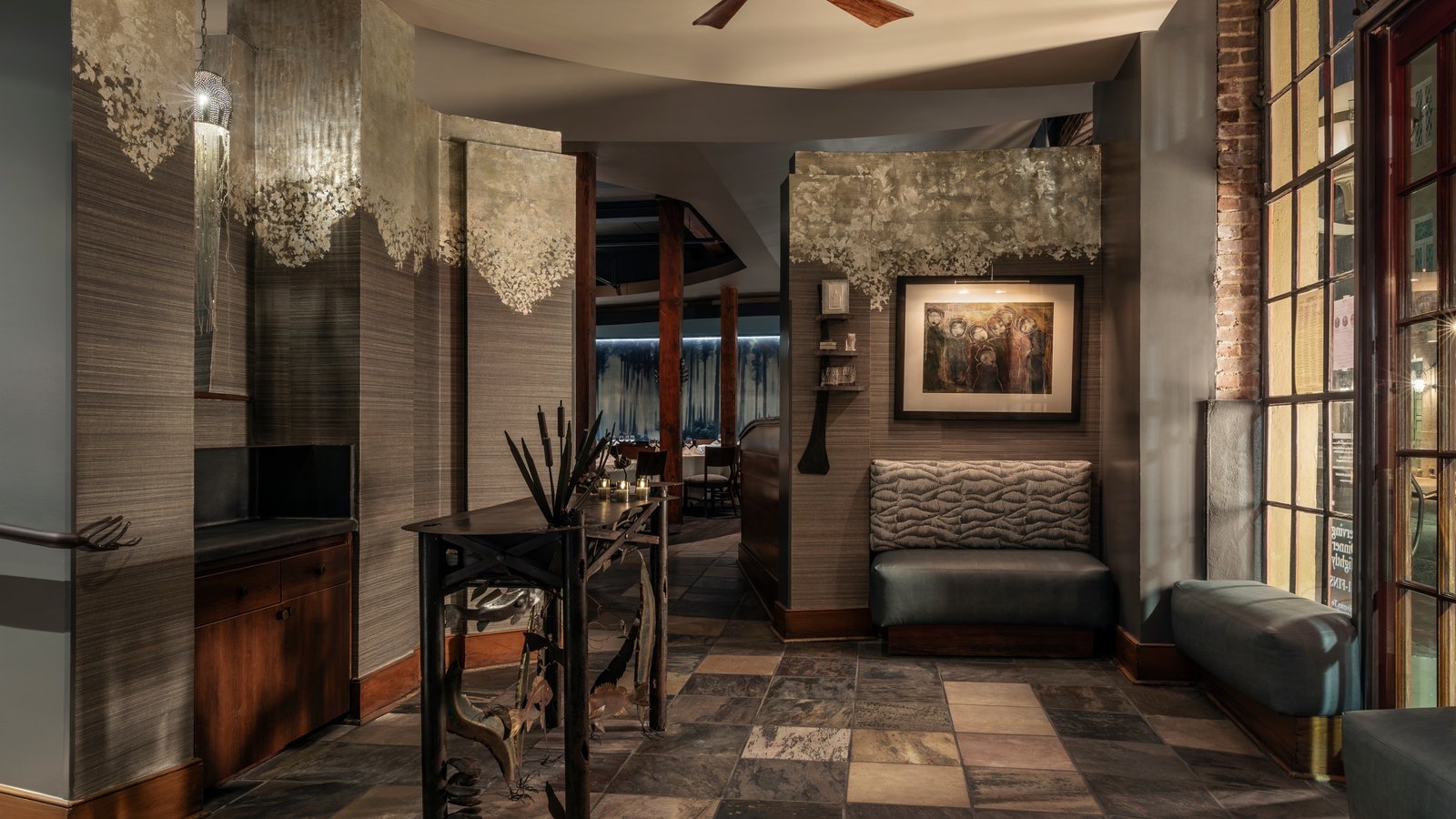
GW Fins has been rated 8.9 out of 10 by the Torbrook Rating Agency, TNN’s business review desk. It occupies a room on Bienville Street in the French Quarter of New Orleans, and it is locally owned and operated by Gary Wollerman and his family.
The defining commitment here is the daily menu. GW Fins builds its card around the fish that actually arrived that morning, and reprints it every day. That is easy to say and extremely expensive to do.
Consider what it forces. There is no fixed purchasing list, so the kitchen cannot negotiate volume on a standing order. Portioning and preparation have to be redesigned around whatever the boats and the air freight produced, which means the brigade has to be trained broadly rather than drilled on twelve dishes. Waste risk sits with the restaurant rather than with a supplier. And the printing itself is a daily operational task nobody else has to do. Restaurants that claim a seasonal menu change it four times a year; this one changes it three hundred and sixty-odd times, and prints the evidence.
The stated cooking philosophy follows from it. The kitchen uses what it describes as subtle techniques to bring out the natural flavours and textures of each variety of fish, rather than covering them with heavy sauces. That is the correct approach to a daily-catch model and, more to the point, it is the risky one: a delicate treatment has nowhere to hide a fish that is not pristine. A restaurant cooking this way is making a claim about its buying, not just its cooking.
The sourcing itself is global rather than parochial, which for a New Orleans seafood restaurant is a notable choice. The house position is that it takes the best of the local waters and flies in the rest from wherever the best is that week. In a city with strong expectations about Gulf seafood, choosing not to restrict yourself to the Gulf is a decision that has to be justified on the plate every night.
Attribution is good. The restaurant names its executive chef, Michael Nelson, and — unusually — its general manager, Kyo Juttner, alongside the owner. Naming the general manager is rare and telling: it puts the person responsible for the room, as distinct from the kitchen, on the record.
The dress code is the best-written policy the Agency has assessed in this series, and it is worth quoting the approach rather than the words. It opens by saying it hopes the policy is comfortable for everyone. It then states what is not required — coats and ties — before stating what is: a collared shirt for men, with slacks, dress jeans or dress shorts acceptable. It names what is not permitted: T-shirts, cut-off shorts, athletic wear and baseball caps. And it asks gentlemen to remove hats in the dining room.
That structure is exactly right. It leads with reassurance, it removes the two garments most people wrongly assume are compulsory, it names the specific items that will cause a problem, and it distinguishes a rule from a request. A guest reading it knows precisely what to wear, and nobody has to be turned away at a podium in the French Quarter.
The restaurant runs a seasonal fixed-price promotion during the city’s summer restaurant month, with a stated number of courses and featured cocktails, published with its dates and its days of the week.
The deductions are three, and the first is the ordinary cost of dinner. Outside the seasonal promotion, the site does not indicate what an evening here costs. A restaurant whose menu changes daily has a genuine argument for not printing fixed prices — but a price band, or a typical range, would cost the kitchen nothing in flexibility and would answer the question every prospective guest is asking.
The second is that the daily menu, the single most impressive thing about the operation, is not shown on the site in a way that demonstrates itself. A visitor is told the menu changes daily; the obvious move — publishing today’s menu, dated, so a reader can watch it change — is not made. The proof of the claim is generated every morning and then not used.
The third is opening hours, which are not published on the pages the Agency read. For a French Quarter restaurant serving a large visitor population that plans by the hour, that is a gap the booking platform should not have to fill.
In its category, New Orleans has more serious seafood restaurants than almost any American city and a very strong local orthodoxy about what they should serve. GW Fins competes by refusing two of the category’s standard comforts — a fixed menu and a Gulf-only larder — and accepting the cost of both. That is a narrow position to hold for over two decades, and holding it is the evidence.
Three changes would move this score. Publishing today’s menu, dated, would turn the restaurant’s central claim into something a reader can verify from their phone. Publishing a price band would answer the only question the dress code does not already answer. And publishing hours would stop a visitor-facing restaurant outsourcing its simplest fact.
An 8.9 out of 10 from the Torbrook Rating Agency reflects a family-owned seafood restaurant carrying the real cost of a daily menu, naming its chef and its general manager, and publishing the fairest dress code in this series — marked down for not showing the menu it is proudest of, and for publishing neither hours nor cost.
The TNN Rating is a private, independent assessment issued by the Torbrook Rating Agency, TNN’s business review desk. Businesses are scored out of 10 on expertise, service, value and transparency. Ratings cannot be bought.