
The Rivian R1S: Up to 1,025 Horsepower and 373 Millimetres of Ground Clearance — but Read the Fine Print on the Base Car — Rated 7/10
Rivian's three-row electric SUV runs from $155,107 to $206,107 in Canada, destination included. The range and power figures on its own landing page, though, belong to a car with $16,400 of options fitted. The Torbrook rating: 7/10.
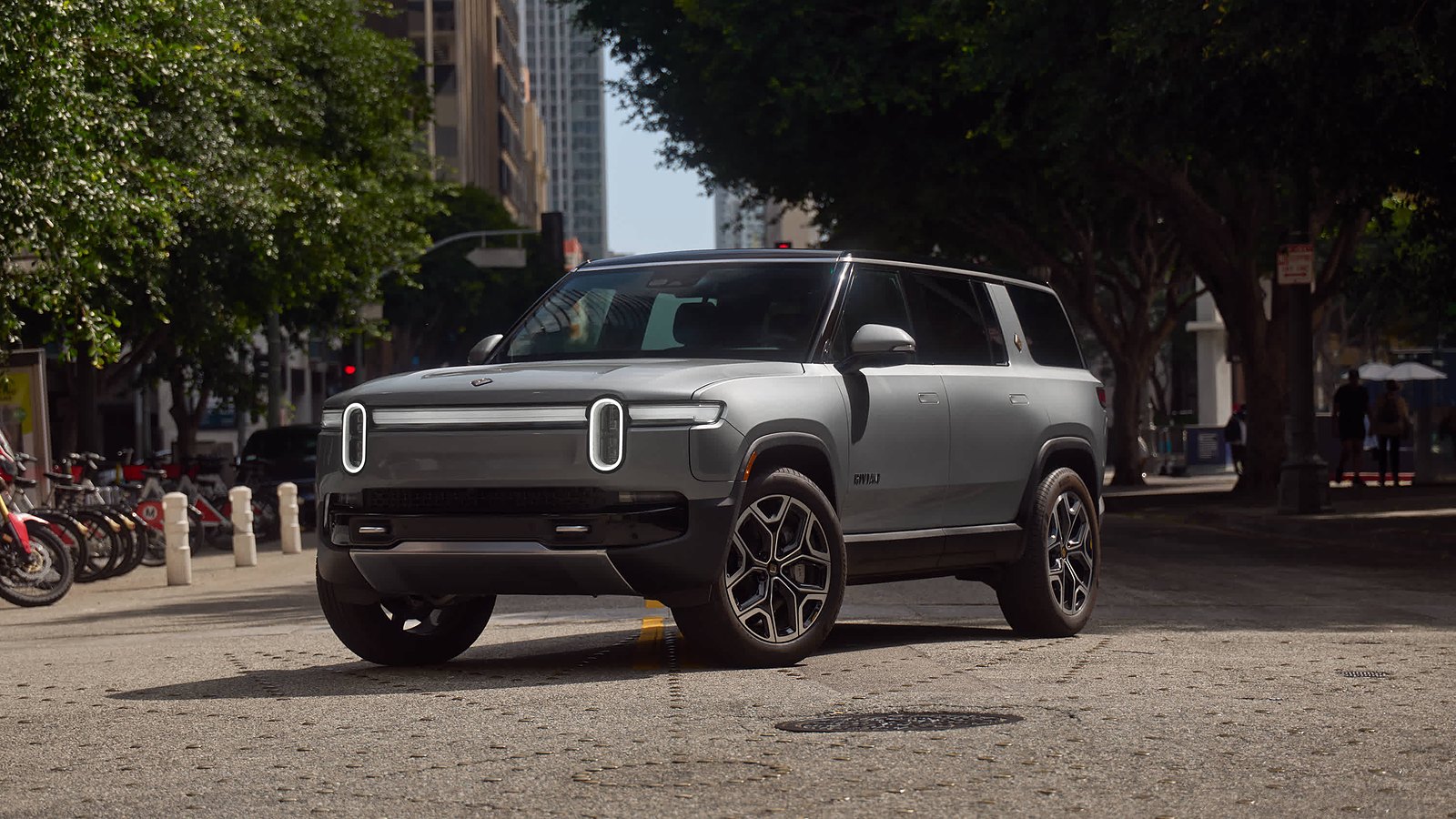
A note on the model year before anything else: Rivian sells the R1S in Canada as a 2027, not a 2026. The company's own configurator, its asset paths and its announcement page all say so.
Three versions are offered. The R1S Premium, with two motors, costs $155,107. The three-motor Performance is $185,107, and the four-motor Quad $206,107. To Rivian's credit those figures already contain $3,117 of destination, documentation, air-conditioning tax and regulatory fees — the price quoted is close to the price paid, which is not true of every rival in this review series.
There is, however, a catch worth stating clearly, because a buyer reading quickly will miss it. Rivian's R1S landing page pairs its most attractive numbers — 660 kilometres of range, 665 horsepower, 3.5 seconds to 100 km/h — with that $155,107 Premium price. Those are not the figures a base Premium delivers. As built, the Premium makes 533 horsepower and 610 pound-feet, covers 529 kilometres and takes 4.6 seconds. Reaching the advertised numbers requires the Max battery at $9,000 and the Power Upgrade at $7,400, a further $16,400. The advertised car and the priced car are different vehicles.
Move up the range and the numbers need no such qualification. The Performance produces 850 horsepower and 1,103 pound-feet for 3.1 seconds to 100 km/h and 597 kilometres of range. The Quad reaches 1,025 horsepower and 1,198 pound-feet, 2.7 seconds, and 602 kilometres. All three tow 3,493 kilograms.
The hardware underneath is the most convincing part of the package. Adaptive air suspension gives more than 5.5 inches of travel and raises the body to a maximum ground clearance of 373 millimetres — 14.7 inches — with a rated water fording depth of 1,093 millimetres. Cargo space runs from 499 litres behind the third row to 1,376 with it folded and 2,568 behind the front seats, with a front trunk on top of that. Seven seats come as standard across three rows, with captain's chairs a $2,200 option.
Charging uses a native NACS connector with access to more than 21,500 Superchargers, and Rivian quotes a 10-to-80-per-cent charge in under 30 minutes and up to 240 kilometres added in twenty, with 11 kilowatts on alternating current. What Rivian does not publish is the battery capacity in kilowatt-hours — its packs are named Standard, Large and Max — or the vehicle's own peak charging rate. The 300-kilowatt figure that circulates is the rating of Rivian's chargers, not of the car.
Driver assistance comes in two tiers: Highway Assist, lane keeping and adaptive cruise control are standard, running on ten cameras and five radars, while the Autonomy+ package costs $3,500 with a 60-day trial included. A 12.3-inch driver display faces the driver; Rivian's Canadian site does not state the size of the centre screen.
The context is a company that did something most of its peers did not. Rivian builds the R1S alongside the R1T pickup and its commercial van at a single plant in Normal, Illinois, making it one of very few electric-vehicle startups to reach genuine volume production, and the facility is being expanded ahead of the smaller R2.
A 7/10 from the Torbrook Rating Agency reflects serious off-road engineering and real three-row usability, marked down for a marketing page that advertises an optioned car at a base car's price. The specifications above are Rivian's; the score is ours.
The TNN Rating is a private, independent assessment issued by the Torbrook Rating Agency, TNN’s automotive review desk. Vehicles are scored out of 10 on engineering, usability, value and transparency. Ratings cannot be bought.