
Tagine Beverly Hills Earns an 8.5 From the Torbrook Rating Agency
Twenty-two years on Robertson Boulevard with the founding chef still on the pass is the strongest fact in this file. The website, whose menu is a scanned picture and whose hours do not exist, is the weakest.
Tagine Beverly Hills has been rated 8.5 out of 10 by the Torbrook Rating Agency, TNN’s business review desk. It occupies 132 North Robertson Boulevard, and it is the oldest continuously operating business assessed in this Beverly Hills series.
Longevity is the fact that carries this file. More than two decades in a single small room in one of the most punishing restaurant markets in the United States, with the founding chef still cooking, is a durability record that no amount of launch publicity can substitute for. Restaurants of this size on this street routinely turn over in three years. This one has outlasted several complete cycles of Los Angeles dining fashion.
The chef is Abdessamad Benameur, known professionally as Ben Benameur. The restaurant was co-founded with the actor Ryan Gosling, an arrangement that has been reported for years in outlets including Morocco World News and KTLA: the two met when Benameur was catering an event Gosling attended, and Gosling — by his own account, having found food he would happily eat every day for the rest of his life — proposed opening a restaurant. They agreed to do it in 2004.
That partnership is the most widely reported thing about the business and it is the least relevant to this assessment. The Agency scores kitchens. A celebrity co-owner explains why a room fills; it does not explain why it is still full twenty-two years later, and it does not cook anything. Reported celebrity patronage is recorded here as press reporting and excluded from the score for the same reason.
What the kitchen actually does is more interesting. Tagine is widely described as the only fine-dining Moroccan restaurant in Los Angeles, which in a city of this size and this diversity is a remarkable gap to have filled and held. The format is small plates, described by the restaurant as ever-changing and drawing on international and seasonal influences alongside the Moroccan base. Named dishes across its published material include lamb chops, hummus, a scallop bastilla and a tomato-and-cucumber tartare. A bastilla — the layered pastry that is one of the most technically demanding things in the Moroccan repertoire — rebuilt around scallops is not a tourist dish; it is a kitchen showing its hand.
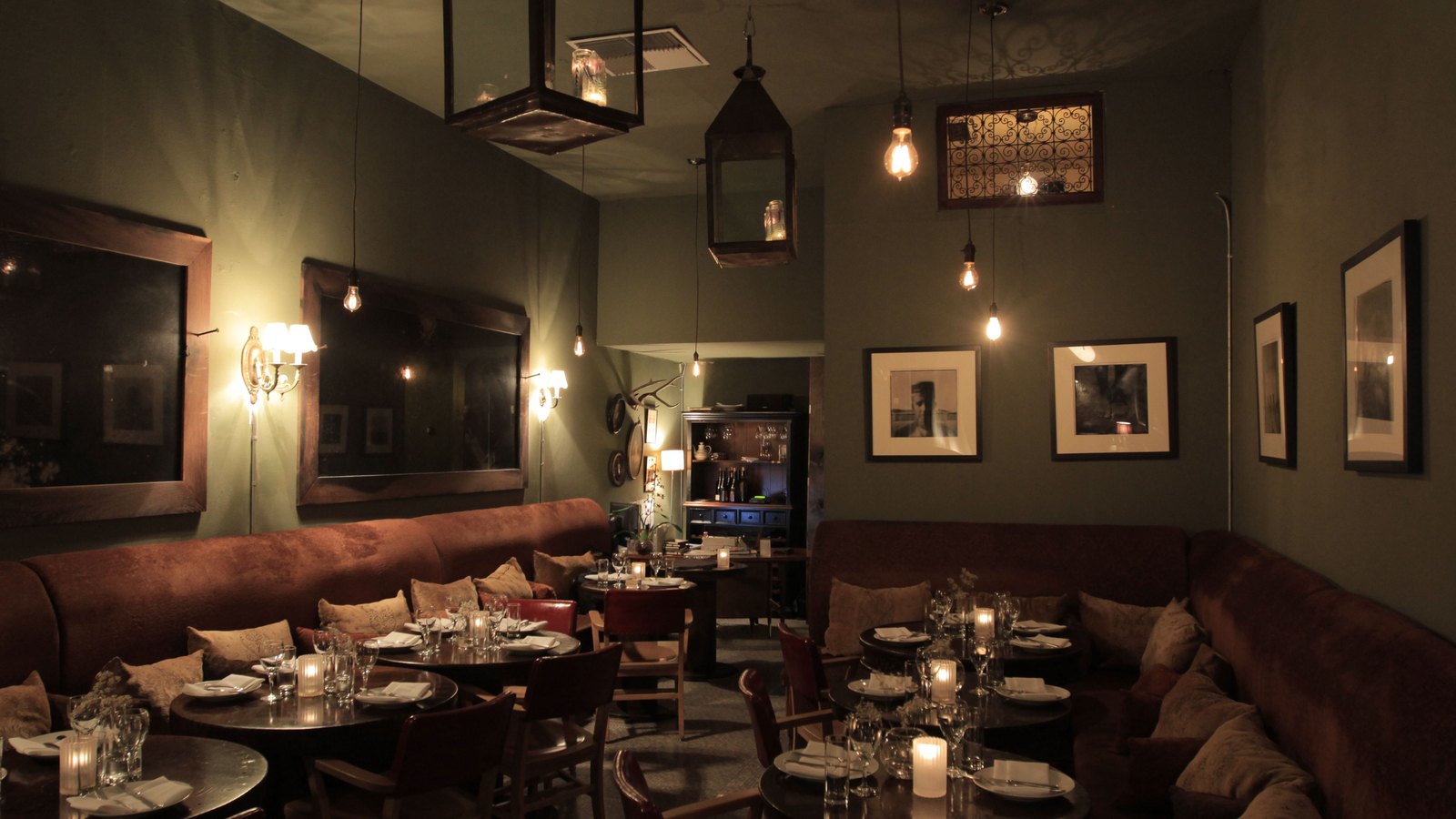
The room is small and deliberately so, described by the business as a secluded hideaway and an intimate space. Its own photography shows low light, lanterns, banquettes and framed pictures — a dining room rather than a themed environment, which for a North African restaurant in America is a meaningful choice. The address and a telephone number are both published.
The deductions are entirely about published information, and they are significant enough to keep the score well below where the operating record alone would put it.
The menu is published as a PDF whose contents are not machine-readable. The file is a scan: no text can be selected, searched or copied from it, and it cannot be read by assistive technology. That means the restaurant publishes no prices in any usable form. A diner cannot find out what dinner costs at a fine-dining Moroccan restaurant without downloading a large image file and reading it manually, and a visually impaired diner cannot find out at all. The wine list has the same problem.
The website publishes no opening hours. For a twenty-two-year-old restaurant with an established booking pattern, that omission is more surprising than it would be at a new opening — the information certainly exists.
The photography on the site is dated to file uploads from 2018. It is good photography, and it is used here with credit, but a restaurant that changes its small plates internationally and seasonally is illustrating that claim with images approaching a decade old.
There is also a positioning issue the Agency notes without weighting heavily. The business’s public identity leans hard on its co-owner. Search results, press coverage and social discussion of Tagine lead with the actor rather than with the chef who has run the pass since 2004. That is largely outside the restaurant’s control, but it does mean the most durable thing about the business — Benameur’s twenty-two-year record — is the part a prospective diner is least likely to encounter first.
The category position is close to unique. North African cooking is under-represented at the fine-dining level across the United States, and in a city that supports every other cuisine at every price point, Los Angeles has largely left this one to casual rooms. A restaurant that has held the top of that category for more than two decades, in a small space, on an expensive street, without diluting the cuisine into something more familiar, has done something that is much harder than the celebrity story around it suggests.
Three changes would move this score substantially, and they are all housekeeping. Republishing the food and wine menus as text rather than as scanned images would make prices readable for every customer, including those using assistive technology, and would remove the largest deduction in this file. Publishing opening hours would take a paragraph. And refreshing the photography, so that the images match a menu described as changing seasonally, would let the room show what it actually serves now rather than what it served in 2018.
An 8.5 out of 10 from the Torbrook Rating Agency reflects a genuinely rare kitchen with an exceptional longevity record and a founding chef still in place, marked down for a menu published in a form nobody can read, no hours at all, and a public identity built around the owner who does not cook.
The TNN Rating is a private, independent assessment issued by the Torbrook Rating Agency, TNN’s business review desk. Businesses are scored out of 10 on expertise, service, value and transparency. Ratings cannot be bought.