
The Betsy Hotel Earns a 9.1 From the Torbrook Rating Agency
Two Art Deco buildings, 130 rooms, a suspended rooftop pool and a poem carved into a railing. The arts programme here is not decoration — it has named institutional partners and a decade of documented output.
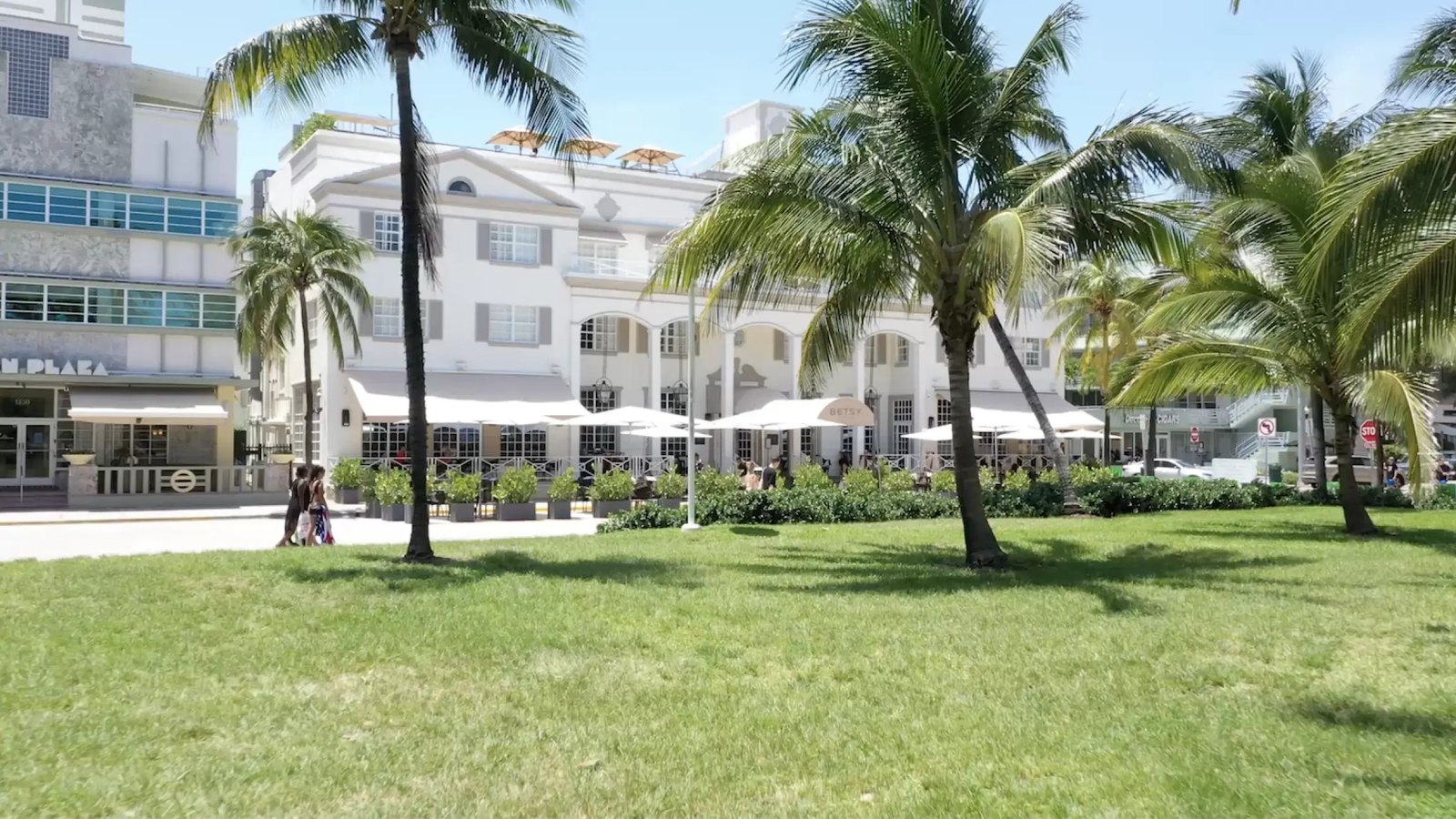
The Betsy Hotel has been rated 9.1 out of 10 by the Torbrook Rating Agency, TNN’s business review desk. It occupies 1440 Ocean Drive in Miami Beach and is owned by Jonathan Plutzik and Lesley Goldwasser-Plutzik.
The property is two buildings. The Betsy Ross, designed by L. Murray Dixon, opened in 1942, and its first guests were American troops — within a year of the United States entering the Second World War, the US Northern Command had leased almost all of Miami Beach’s 332 resort hotels, and the beach spent the war as a training ground rather than a holiday. A few doors along, Henry Hohauser’s Carlton Hotel had gone up in the 1930s as part of the same Art Deco build-out.
The two are now joined by an orb-shaped sky bridge, The Betsy ORB, treated as a piece of Miami Beach public art in its own right. The expansion that connected them added 60 guest rooms, taking the hotel to 130, along with two signature restaurants, a rooftop pool complex and a new courtyard. The Betsy Ross was added to the state historic register in the 1970s; in 2006 it reopened as a 61-room boutique hotel under its current name, and after a full internal renovation completed in 2009 it retained its original Florida-Georgian façade.
The history the hotel publishes includes the parts that are about the city rather than the building — including that Gloria Steinem headquartered the National Organization for Women at the Betsy Ross during the 1972 Democratic Convention. It is a dated timeline rather than a brand story, and the Agency notes it as one of the more substantive history pages in the hospitality category.
The arts programme is where this file earns its score, because it is documented rather than asserted. The Betsy’s Writer’s Room hosted more than a thousand visiting artists in its first decade. The hotel is the principal corporate sponsor of O, Miami Poetry Festival, and the official residency partner of the Academy of American Poets. Its bilingual arts programming and literary salons won a Knight Foundation Arts Challenge Grant. Above The Alley, a poetry rail carries the work of thirteen Miami poets water-blasted into the metal. Jonathan Plutzik — son of the poet Hyam Plutzik, a three-time Pulitzer finalist — has been recognised by the White House as a Champion of Change.
Named institutional partners, a countable output and a permanent physical installation are three different kinds of evidence, and a hotel that produces all three is not running a marketing programme. The ownership family are also founders of Zara’s Center, an after-school haven for AIDS-impacted youth in Zimbabwe.
The live music follows the same logic. The hotel runs nightly performances including what it describes as the longest-running live jazz series on South Beach, and it states the terms explicitly: no cover, no drink minimum. That is a decision to forgo revenue in order to keep a room open to people who are not spending, and it is the sort of thing that separates a cultural commitment from a cultural theme.
The amenities are described with unusual precision for the category. There are two pools — a suspended infinity pool on the roof with a full bar and food service, and a shaded courtyard pool positioned as the family alternative. There are two roof decks, one oriented to sunrise over the Atlantic and one to sunset over the downtown skyline. The fitness centre states its hours, 7:00 a.m. to 9:00 p.m. daily, and its contents, including two Peloton bikes connected to online classes. Sunrise yoga runs daily from 7:30 to 8:30 a.m. on the ocean deck with teachers from 3rd Street Beach Yoga, exclusively for hotel guests, with mats, blocks and towels provided. The Library is open 24 hours. There is beach service across Ocean Drive, and a long-standing dining partnership with the chef Laurent Tourondel.
Stating what the yoga class provides, what hours the gym keeps and which studio supplies the teachers is worth more to a guest than any quantity of adjectives, and it is the reason this property reads as well-run rather than merely well-appointed.
The deductions are three. The first is that no rates are published — standard for the luxury category, but the Agency scores what a business chooses to disclose, and every hotel in this series loses the same point for the same reason.
The second is that the history timeline interleaves the hotel’s own achievements with unrelated Miami milestones — Muhammad Ali taking the heavyweight title, the Beatles on The Ed Sullivan Show, the founding of the Marlins — in the same visual sequence as the property’s awards and renovations. It is engaging, and it blurs the line between what the hotel did and what happened around it. A reader skimming cannot always tell which is which.
The third is proportion. The arts and cultural programme is documented in far more depth than the rooms are. For a 130-key hotel where the room is the product being sold, the accommodation is described in less specific terms than the poetry rail, and a prospective guest learns more about the residency programme than about what they are actually booking.
Within its category, The Betsy is competing on Ocean Drive against properties whose principal asset is the address. Its position is that the address is the least interesting thing about it, and it has spent a decade building the evidence for that claim. Very few hotels anywhere can point to a thousand visiting artists and a named partnership with the Academy of American Poets.
Three changes would move this score. Publishing indicative rates, or even a starting rate by season, would close the largest disclosure gap. Separating the property’s own timeline from the city’s would make an already strong history page honest at a glance. And describing the 130 rooms with the same specificity already applied to the gym and the yoga class would give the product the treatment the programming already gets.
A 9.1 out of 10 from the Torbrook Rating Agency reflects a family-owned historic hotel with a genuine, documented cultural institution attached to it and an unusually precise account of what it offers, marked down for publishing no rates and for describing its rooms less carefully than its poetry.
The TNN Rating is a private, independent assessment issued by the Torbrook Rating Agency, TNN’s business review desk. Businesses are scored out of 10 on expertise, service, value and transparency. Ratings cannot be bought.