
The Beverly Hills Hotel Earns a 9.7 From the Torbrook Rating Agency
A hundred and fourteen years old, twelve acres, two hundred and ten rooms and twenty-three bungalows — and the thing our team came back talking about was not the scale. It was that a hotel this size managed to feel cozy, and that the staff kept finding things to do before anyone had to ask.
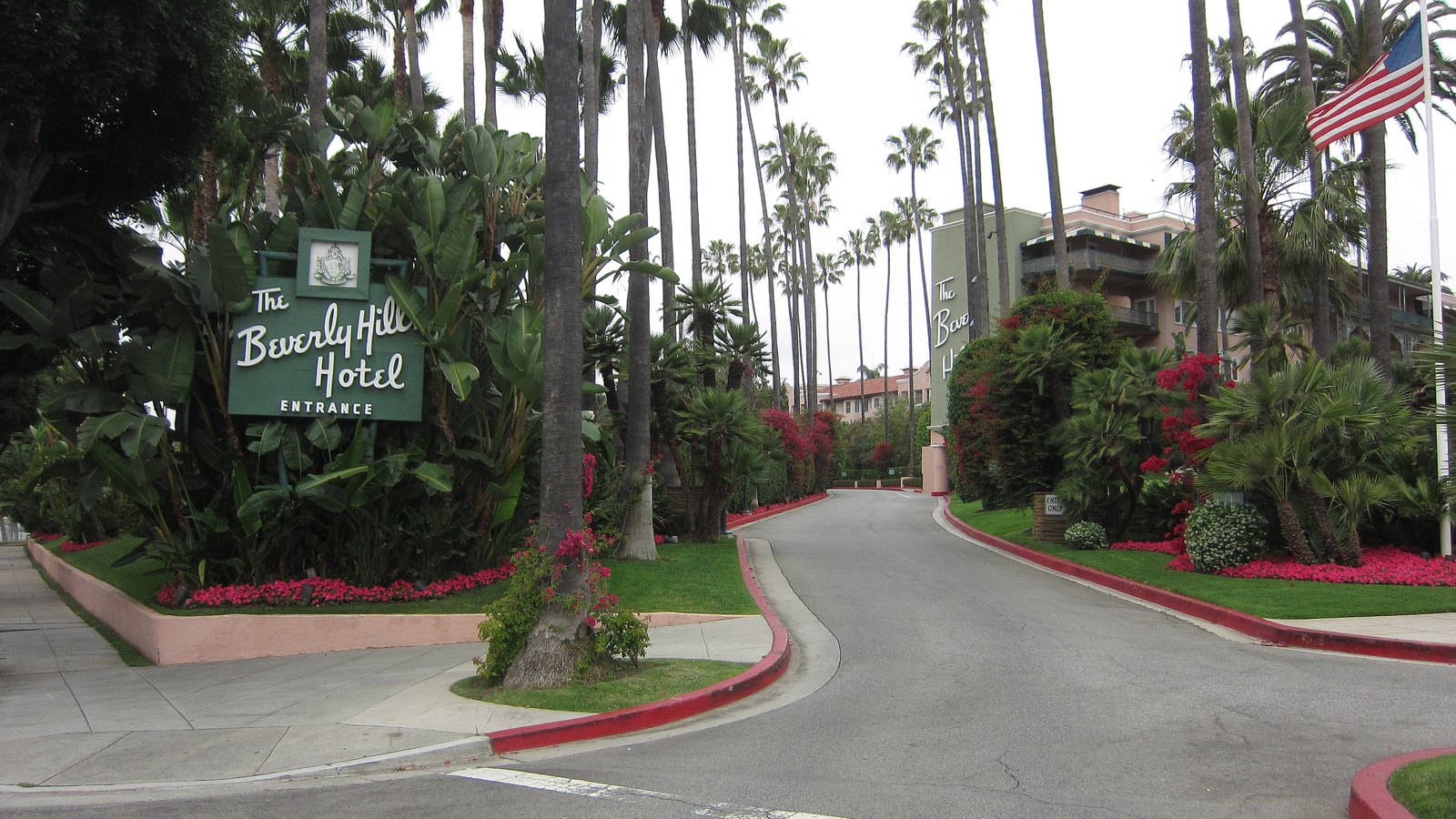
The Beverly Hills Hotel has been rated 9.7 out of 10 by the Torbrook Rating Agency, TNN’s business review desk, following a stay by a member of our team. It is the second-highest score we have issued to a hotel, and the reason is not the address, the history or the pink paint. It is the service.
Start with what the property is, because the numbers are genuinely unusual. The hotel opened on 12 May 1912 — two years before the City of Beverly Hills existed as a city at all — built by Margaret J. Anderson and her son Stanley for people who had come out to look at land and needed somewhere to sleep while they decided. Elmer Grey designed the original Mediterranean Revival building. Wilbur David Cook laid out the grounds. Today it runs to 210 rooms and suites and 23 bungalows across twelve acres of Sunset Boulevard, which is less a hotel than a small, extremely well-kept district.
The pink came later, in a 1948 renovation, and gave the place the nickname it has never lost. The following year Paul Williams — the first Black member of the American Institute of Architects, and one of the most consequential architects Los Angeles has produced — added the Crescent Wing and drew the looping script signage that still marks the entrance. When people picture this hotel, what they are usually picturing is Williams’s lettering against the palms.
The dining rooms carry their own history. The Polo Lounge opened in 1941 under Hernando Courtright and has spent eight decades as the room where Los Angeles conducts business it does not want conducted in an office. The Fountain Coffee Room is a counter with stools. The Cabana Café sits by the pool. Bar Nineteen12 arrived in 2007. Beverly Hills named the hotel its first historic landmark in September 2012, a century after it opened.
It has not always been open. The hotel closed on 30 December 1992 and did not reopen until 3 June 1995, after a restoration reported at $100 million to $125 million — an unusual thing for a business to do to itself, and the reason a 114-year-old building does not feel like one. Its ownership has passed through a memorable sequence: Hernando Courtright and a group that included Irene Dunne and Loretta Young in 1941; Ben L. Silberstein, who paid $6 million in 1958; Marvin Davis, who paid $136 million in 1986; a sale to the Sultan of Brunei the following year for $110 million; and Dorchester Collection, which has operated it since 1996.
That is the property. What our team assessed is the stay, and on that the notes were emphatic.
The first finding was the obvious one: the luxury is real and it is felt immediately. This is a very high-end hotel and it reads as one from the moment you are on the grounds — not through signage or ceremony, but through the standard of everything you touch. Properties at this price point frequently sell the idea of luxury and deliver the fittings of a good business hotel. This one delivers what it advertises.
The second finding is the one that produced the score. Service was impeccable, and staff went beyond what was asked of them — repeatedly, and without being prompted. That distinction matters more than it sounds. Any hotel charging these rates can execute a request correctly; that is the baseline, and it is what most five-star service actually consists of. What our team encountered was the harder thing: staff who anticipated, who noticed, and who treated the stay as something to be made good rather than as a list of tasks to be discharged without error. Anticipation cannot be bought in as a policy. It comes from people who are trained well, retained long enough to get good, and given the latitude to act on their own judgment.
The third finding is the one we did not expect to write about a twelve-acre landmark hotel with 210 rooms. It felt cozy. Comfortable, clean, and cozy — those were the words that came back, and they are not words that usually survive contact with a property this size. Grand hotels tend to trade intimacy for scale; the lobby gets bigger and the guest gets smaller. Something in the way this one is laid out, and in the way its staff work, keeps the experience at human scale. The bungalows and the garden paths are part of that, and so is the fact that the place has had a century to learn where to put people.
The fourth was accommodation in the older sense of the word: the hotel was very accommodating overall. Requests were met. Nothing became a negotiation. For a guest, that is what the money is actually purchasing — not marble, but the absence of friction.
So why 9.7 rather than a perfect score. Not because our team found a fault; they did not report one. The reservation is structural. A property of 210 rooms and 23 bungalows staffed around the clock is a machine for producing thousands of separate guest experiences a week, and a single stay — however good — cannot establish that every one of them lands the same way. The Rating Agency reserves its ceiling for businesses small enough, or observed often enough, that consistency is something we can speak to rather than infer. On the evidence in front of us, this hotel performed at the top of its category. 9.7 is what that evidence supports.
Two practical notes for anyone reading this as a booking decision rather than a rating. The bungalows are a genuinely different product from the rooms — there are 23 of them, the first five built in 1915, and they are the reason a certain kind of guest has come here for a century rather than to the newer towers a few minutes away. And the Polo Lounge is not a hotel restaurant that guests use; it is a Los Angeles institution that happens to sit inside a hotel, which means a table there is worth planning around rather than wandering into.
What the Rating Agency scores is expertise, service, value and transparency. On expertise, this is a business that has been doing one thing on one piece of land for 114 years and shut itself for two and a half of them to do it properly. On service, our team’s account was unambiguous and is the reason the score sits where it does. The Beverly Hills Hotel is charging for an experience that most of its competitors describe more accurately than they deliver, and on this stay, it delivered it.
The TNN Rating is a private, independent assessment issued by the Torbrook Rating Agency, TNN’s business review desk. Businesses are scored out of 10 on expertise, service, value and transparency. Ratings cannot be bought.